Savarin Carine, Hinton David R, Valentin-Torres Alice, Chen Zhihong, Trapp Bruce D, Bergmann Cornelia C, Stohlman Stephen A
Department of Neurosciences NC-30, Lerner Research Institute, The Cleveland Clinic, 9500 Euclid Avenue, Cleveland, OH, 44195, USA.
Department of Pathology, Keck School of Medicine, University of Southern California, Los Angeles, CA, 90033, USA.
J Neuroinflammation. 2015 Apr 22;12:79. doi: 10.1186/s12974-015-0293-9.
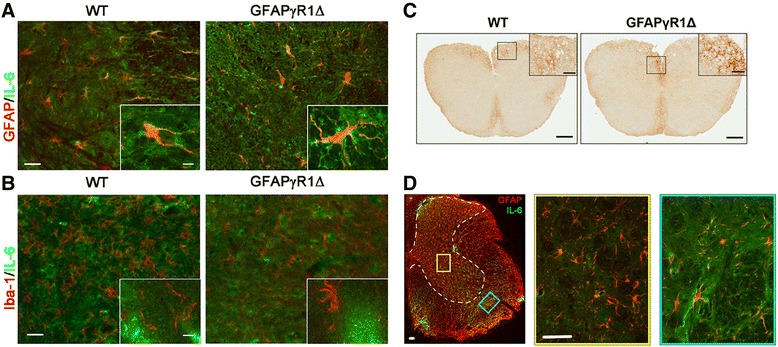
Therapeutic modalities effective in patients with progressive forms of multiple sclerosis (MS) are limited. In a murine model of progressive MS, the sustained disability during the chronic phase of experimental autoimmune encephalomyelitis (EAE) correlated with elevated expression of interleukin (IL)-6, a cytokine with pleiotropic functions and therapeutic target for non-central nervous system (CNS) autoimmune disease. Sustained IL-6 expression in astrocytes restricted to areas of demyelination suggested that IL-6 plays a major role in disease progression during chronic EAE.
A progressive form of EAE was induced using transgenic mice expressing a dominant negative interferon-γ (IFN-γ) receptor alpha chain under control of human glial fibrillary acidic protein (GFAP) promoter (GFAPγR1Δ mice). The role of IL-6 in regulating progressive CNS autoimmunity was assessed by treating GFAPγR1Δ mice with anti-IL-6 neutralizing antibody during chronic EAE.
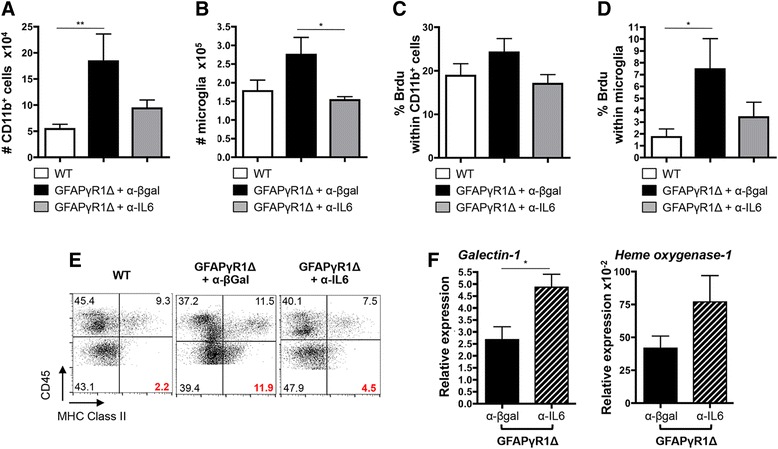
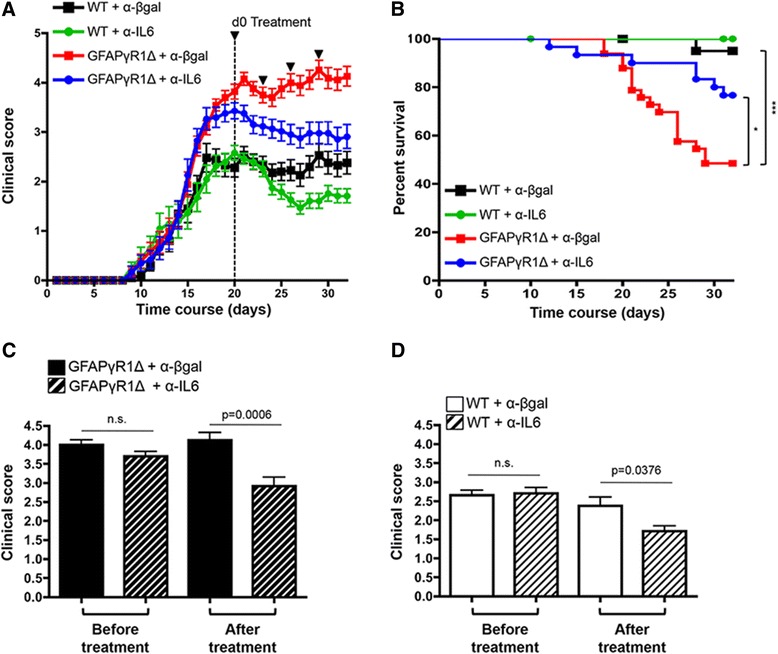
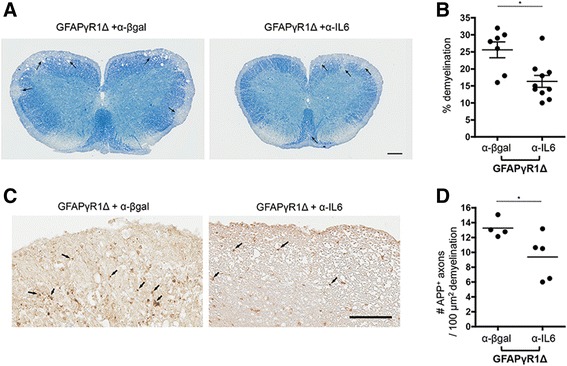
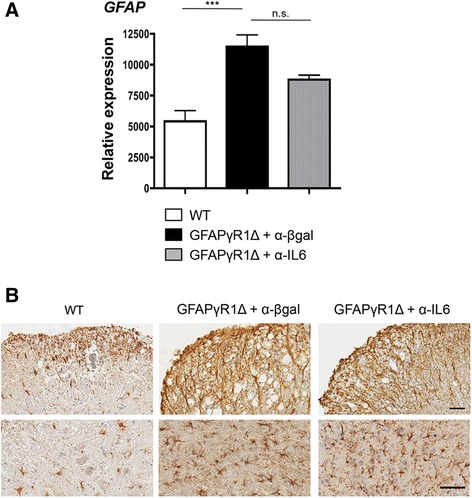
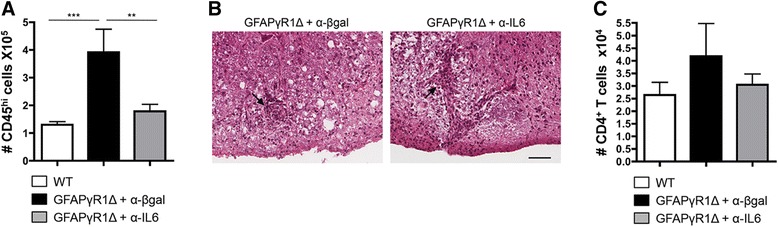
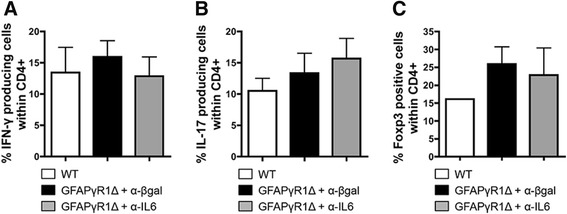
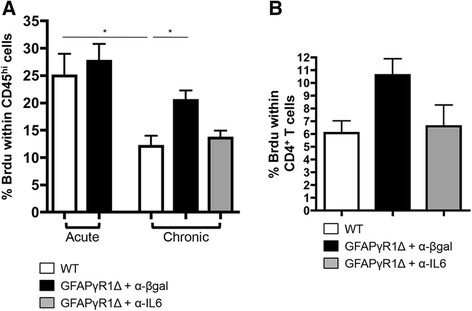
IL-6 neutralization restricted disease progression and decreased disability, myelin loss, and axonal damage without affecting astrogliosis. IL-6 blockade reduced CNS inflammation by limiting inflammatory cell proliferation; however, the relative frequencies of CNS leukocyte infiltrates, including the Th1, Th17, and Treg CD4 T cell subsets, were not altered. IL-6 blockade rather limited the activation and proliferation of microglia, which correlated with higher expression of Galectin-1, a regulator of microglia activation expressed by astrocytes.
These data demonstrate that astrocyte-derived IL-6 is a key mediator of progressive disease and support IL-6 blockade as a viable intervention strategy to combat progressive MS.
对进展型多发性硬化症(MS)患者有效的治疗方式有限。在进展型MS的小鼠模型中,实验性自身免疫性脑脊髓炎(EAE)慢性期的持续残疾与白细胞介素(IL)-6的表达升高相关,IL-6是一种具有多效功能的细胞因子,也是非中枢神经系统(CNS)自身免疫性疾病的治疗靶点。星形胶质细胞中局限于脱髓鞘区域的持续IL-6表达表明,IL-6在慢性EAE疾病进展中起主要作用。
使用在人胶质纤维酸性蛋白(GFAP)启动子控制下表达显性负性干扰素-γ(IFN-γ)受体α链的转基因小鼠(GFAPγR1Δ小鼠)诱导出进展型EAE。通过在慢性EAE期间用抗IL-6中和抗体治疗GFAPγR1Δ小鼠,评估IL-6在调节进展型CNS自身免疫中的作用。
IL-6中和限制了疾病进展,降低了残疾程度、髓鞘损失和轴突损伤,且不影响星形胶质细胞增生。IL-6阻断通过限制炎症细胞增殖减轻了CNS炎症;然而,包括Th1、Th17和Treg CD4 T细胞亚群在内的CNS白细胞浸润的相对频率并未改变。IL-6阻断反而限制了小胶质细胞的激活和增殖,这与星形胶质细胞表达的小胶质细胞激活调节剂半乳糖凝集素-1的较高表达相关。
这些数据表明,星形胶质细胞衍生的IL-6是进展型疾病的关键介质,并支持将IL-6阻断作为对抗进展型MS的可行干预策略。