Wu Xiujuan, Li Chunrong, Zhang Bing, Shen Donghui, Li Ting, Liu Kangding, Zhang Hong-Liang
Neuroscience Center, Department of Neurology, the First Hospital of Jilin University, Jilin University, Xinmin Street 71#, 130021, Changchun, China.
Department of Neurobiology, Care Sciences and Society, Karolinska Institute, Stockholm, Sweden.
Crit Care. 2015 Sep 2;19(1):310. doi: 10.1186/s13054-015-1037-z.
Guillain-Barré syndrome (GBS) is an immune-mediated disorder of the peripheral nervous system. Respiratory failure requiring mechanical ventilation (MV) is a serious complication of GBS. Identification of modifiable risk factors for MV and poor short-term prognosis in mechanically ventilated patients with GBS may contribute to the individualized management and may help improve the outcome of the patients.
We retrospectively analyzed the clinical data of 541 patients who were diagnosed with GBS from 2003 to 2014. Independent predictors for MV and short-term prognosis in mechanically ventilated patients were identified via multivariate logistic regression analysis.
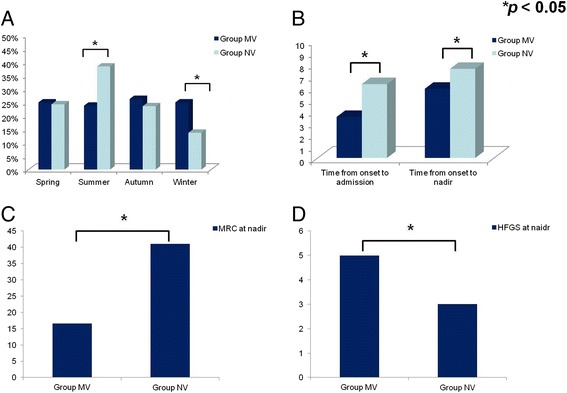
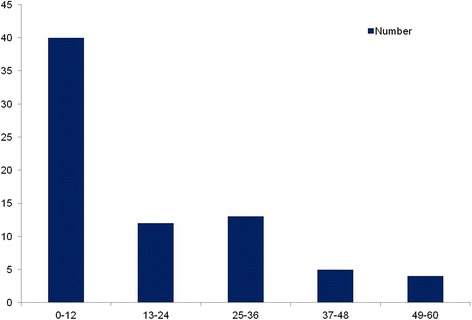
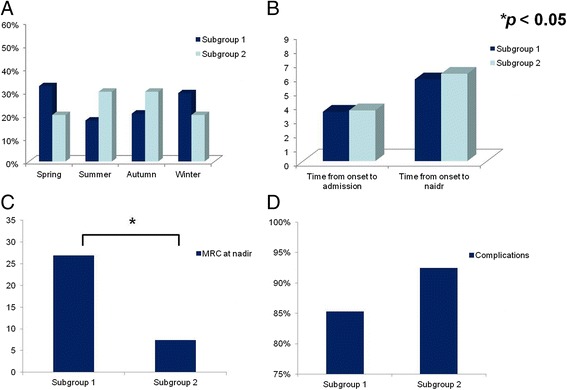
The mean age was 41.6 years with a male predilection (61.2%). Eighty patients (14.8%) required MV. Multivariate analysis revealed that shorter interval from onset to admission (p < 0.05), facial nerve palsy (p < 0.01), glossopharyngeal and vagal nerve deficits (p < 0.01) and lower Medical Research Council (MRC) sum score at nadir (p < 0.01) were risk factors for MV; disease occurrence in summer (p < 0.01) was a protective factor. As to prognostic factors, absence of antecedent infections (p < 0.01) and lower MRC sum score at nadir (p < 0.01) were predictors of poor short-term prognosis in mechanically ventilated patients regardless of treatment modality. We further investigated the predictors of poor short-term prognosis in patients requiring MV with different nadir MRC sum scores. Combined use of intravenous corticosteroids with intravenous immunoglobulin (odds ratio 10.200, 95% confidence interval 1.068-97.407, p < 0.05) was an independent predictor of poor short-term prognosis in mechanically ventilated patients with a nadir MRC sum score from 0 to 12 points, regardless of existence of antecedent infection.
Clinical predictors of MV and poor short-term prognosis in mechanically ventilated GBS patients were distinct. Add-on use of intravenous corticosteroids was a risk factor for poor short-term prognosis in mechanically ventilated patients with a nadir MRC sum score from 0 to 12 points.
吉兰-巴雷综合征(GBS)是一种免疫介导的周围神经系统疾病。需要机械通气(MV)的呼吸衰竭是GBS的严重并发症。识别GBS机械通气患者MV及短期预后不良的可改变危险因素,可能有助于个体化管理,并有助于改善患者的预后。
我们回顾性分析了2003年至2014年诊断为GBS的541例患者的临床资料。通过多因素逻辑回归分析确定机械通气患者MV及短期预后的独立预测因素。
平均年龄为41.6岁,男性居多(61.2%)。80例患者(14.8%)需要MV。多因素分析显示,起病至入院间隔时间较短(p<0.05)、面神经麻痹(p<0.01)、舌咽及迷走神经功能缺损(p<0.01)以及最低点时医学研究委员会(MRC)总分较低(p<0.01)是MV的危险因素;夏季发病(p<0.01)是保护因素。关于预后因素,无论治疗方式如何,无前驱感染(p<0.01)以及最低点时MRC总分较低(p<0.01)是机械通气患者短期预后不良的预测因素。我们进一步研究了不同最低点MRC总分的MV患者短期预后不良的预测因素。静脉注射皮质类固醇与静脉注射免疫球蛋白联合使用(比值比10.200,95%置信区间1.068-97.407,p<0.05)是最低点MRC总分在0至12分的机械通气患者短期预后不良的独立预测因素,无论是否存在前驱感染。
GBS机械通气患者MV及短期预后不良的临床预测因素不同。静脉注射皮质类固醇的附加使用是最低点MRC总分在0至12分的机械通气患者短期预后不良的危险因素。