Geng Wei, Lo Chung-Mau, Ng Kevin T P, Ling Chang-Chun, Qi Xiang, Li Chang-Xian, Zhai Yuan, Liu Xiao-Bing, Ma Yuen-Yuen, Man Kwan
Department of Surgery, The University of Hong Kong, Hong Kong, China.
Department of Transplantation and Hepatic Surgery, Renji Hospital, School of Medicine, Shanghai Jiaotong University, Shanghai, China.
Oncotarget. 2015 Sep 29;6(29):28042-56. doi: 10.18632/oncotarget.4832.
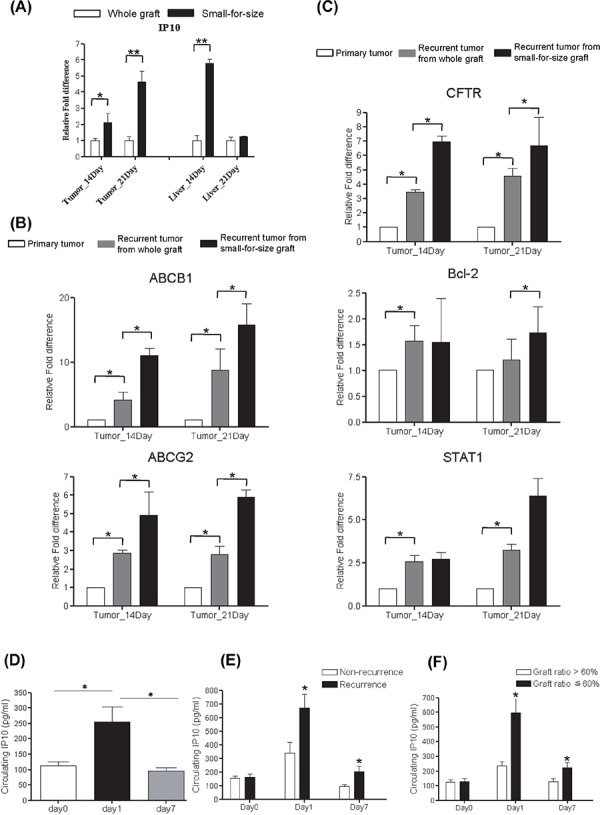
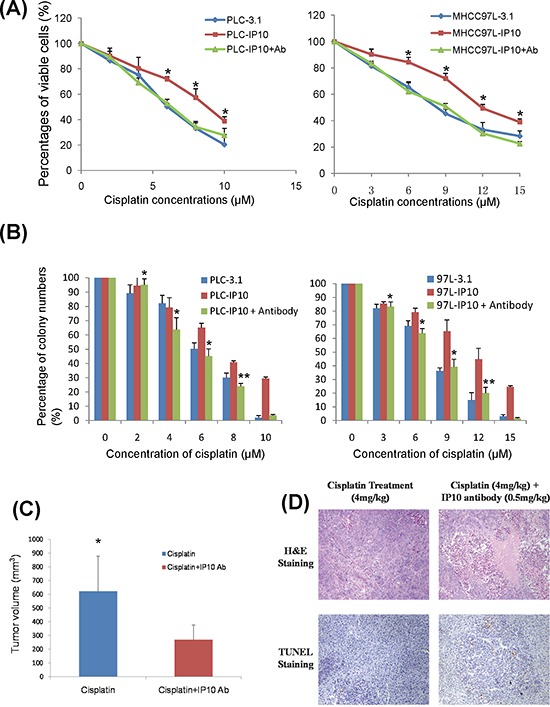
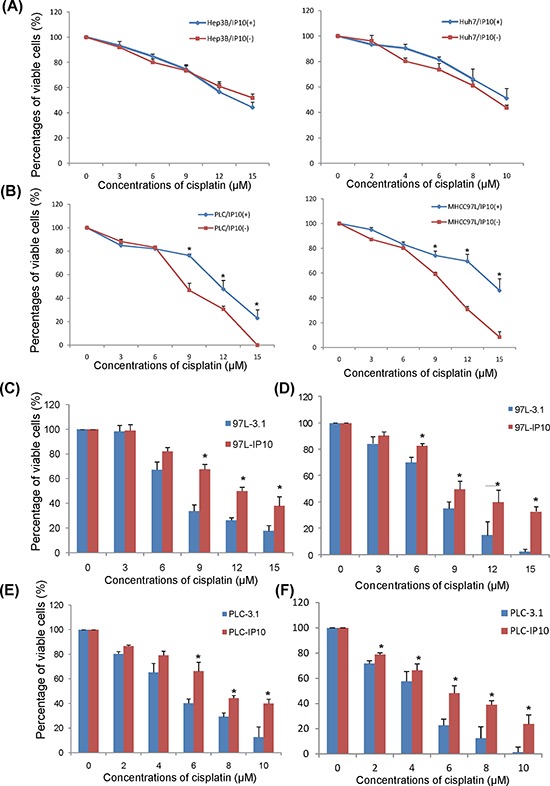
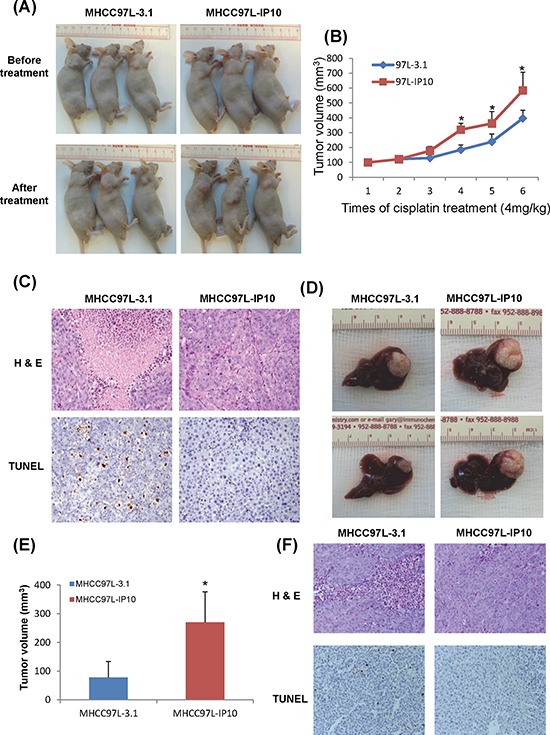
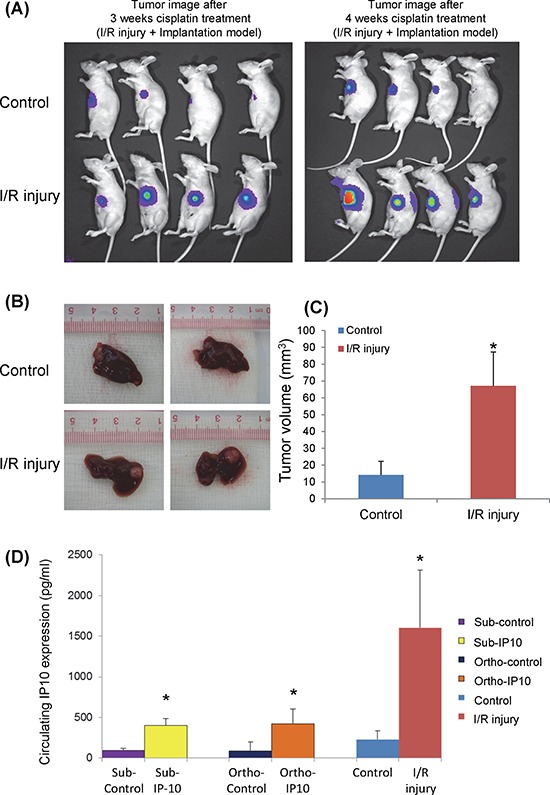
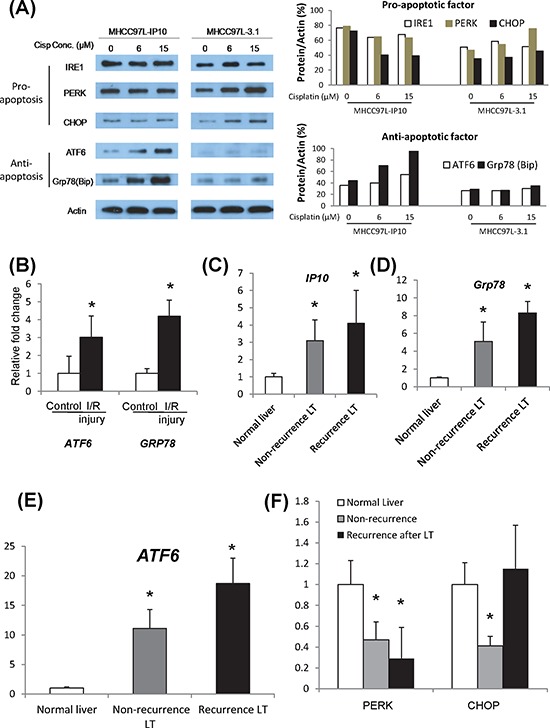
Tumor recurrence remains an obstacle after liver surgery, especially in living donor liver transplantation (LDLT) for patients with hepatocellular carcinoma (HCC). The acute-phase liver graft injury might potentially induce poor response to chemotherapy in recurrent HCC after liver transplantation. We here intended to explore the mechanism and to identify a therapeutic target to overcome such chemoresistance. The associations among graft injury, overexpression of IP10 and multidrug resistant genes were investigated in a rat liver transplantation model, and further validated in clinical cohort. The role of IP10 on HCC cell proliferation and tumor growth under chemotherapy was studied both in vitro and in vivo. The underlying mechanism was revealed by detecting the activation of endoplasmic reticulum (ER) stress signaling pathways. Moreover, the effect of IP10 neutralizing antibody sensitizing cisplatin treatment was further explored. In rat liver transplantation model, significant up-regulation of IP10 associated with multidrug resistant genes was found in small-for-size liver graft. Clinically, high expression of circulating IP10 was significant correlated with tumor recurrence in HCC patients underwent LDLT. Overexpression of IP10 promoted HCC cell proliferation and tumor growth under cisplatin treatment by activation of ATF6/Grp78 signaling. IP10 neutralizing antibody sensitized cisplatin treatment in nude mice. The overexpression of IP10, which induced by liver graft injury, may lead to cisplatin resistance via ATF6/Grp78 ER stress signaling pathway. IP10 neutralizing antibody could be a potential adjuvant therapy to sensitize cisplatin treatment.
肝切除术后肿瘤复发仍是一个障碍,尤其是在肝细胞癌(HCC)患者的活体肝移植(LDLT)中。急性期肝移植损伤可能会诱导肝移植后复发性HCC对化疗疗效不佳。我们旨在探索其机制,并确定一个克服这种化疗耐药性的治疗靶点。我们在大鼠肝移植模型中研究了移植损伤、IP10过表达与多药耐药基因之间的关联,并在临床队列中进一步验证。我们在体外和体内研究了IP10在化疗作用下对HCC细胞增殖和肿瘤生长的作用。通过检测内质网(ER)应激信号通路的激活来揭示其潜在机制。此外,进一步探索了IP10中和抗体增强顺铂治疗效果的作用。在大鼠肝移植模型中,在小体积肝移植中发现IP10与多药耐药基因显著上调有关。在临床上,循环IP10的高表达与接受LDLT的HCC患者的肿瘤复发显著相关。IP10的过表达通过激活ATF6/Grp78信号通路促进了顺铂治疗下的HCC细胞增殖和肿瘤生长。IP10中和抗体增强了裸鼠顺铂治疗的效果。肝移植损伤诱导的IP10过表达可能通过ATF6/Grp78内质网应激信号通路导致顺铂耐药。IP10中和抗体可能是一种潜在的辅助治疗方法,可增强顺铂治疗效果。