Tian Yun, Qin Lijun, Qiu Huijuan, Shi Dingbo, Sun Rui, Li Wenbing, Liu Tianze, Wang Jingshu, Xu Tingting, Guo Wei, Kang Tiebang, Huang Wenlin, Wang Guowen, Deng Wuguo
Sun Yat-sen University Cancer Center, State Key Laboratory of Oncology in South China, Collaborative Innovation Center of Cancer Medicine, Guangzhou, China.
Department of Pediatrics, Sun Yat-sen Memorial Hospital, Sun Yat-sen University, Guangzhou China.
Oncotarget. 2015 Oct 6;6(30):29614-25. doi: 10.18632/oncotarget.4868.
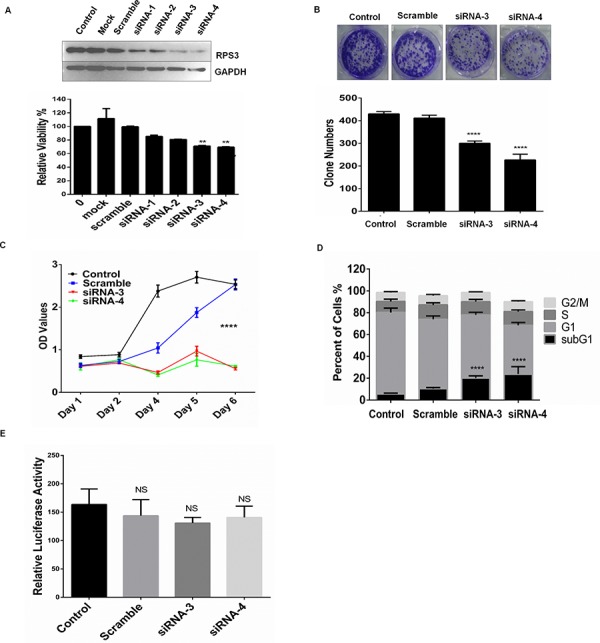
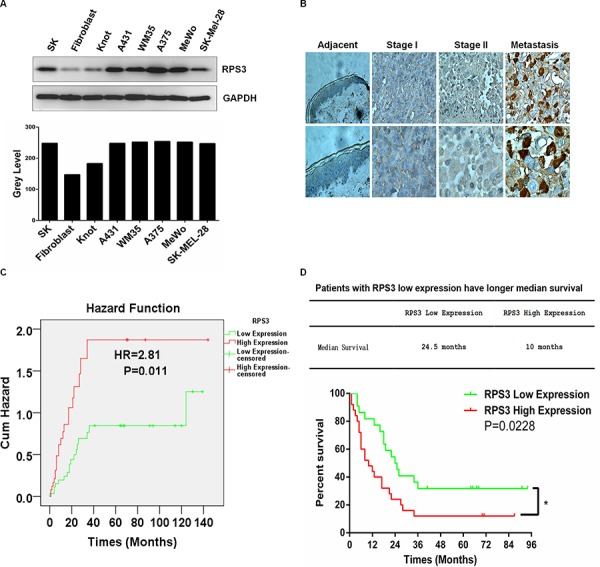
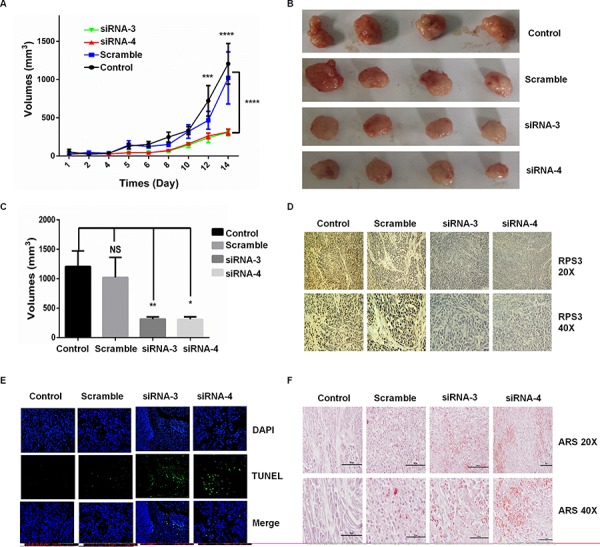
Melanoma is one of the most aggressive and lethal cancers. Discovery and identification of novel therapeutic targets is urgently needed. In this study, we demonstrated that ribosomal protein S3 (RPS3) was a potential target involved in melanoma growth. Knockdown of RPS3 by siRNA suppressed cell growth and induced apoptosis in melanoma cells. Further mechanism studies showed that RPS3 knockdown in melanoma cells triggered the release of cytochrome C (Cyto C) from mitochondrial, increased the location of BID on mitochondrial membrane and the cleavage of the pro-apoptotic proteins (PARP, caspase-3 and -9), promoted the opening of mitochondrial permeability transition pore and the flooding of calcium ions (Ca(2+)) into the mitochondrial, and decreased the expression of the Ca(2+) gatekeeper MICU1 and its location on the mitochondrial. We also found that knockdown of RPS3 significantly inhibited tumor growth in a melanoma xenograft mouse model. Furthermore, we showed that RPS3 was highly expressed in melanoma cell lines and melanoma tumor tissues, and overexpression of RPS3 was associated with the poor prognosis of melanoma patients. Our results therefore demonstrate that RPS3 regulates melanoma growth through the modulation of the Cyto C/Ca(2+)/MICU1 dependent mitochondrial signaling and suggest that RPS3 is a potential therapeutic target for melanoma treatment.
黑色素瘤是最具侵袭性和致命性的癌症之一。迫切需要发现和鉴定新的治疗靶点。在本研究中,我们证明核糖体蛋白S3(RPS3)是参与黑色素瘤生长的潜在靶点。通过小干扰RNA(siRNA)敲低RPS3可抑制黑色素瘤细胞的生长并诱导其凋亡。进一步的机制研究表明,黑色素瘤细胞中RPS3的敲低触发了细胞色素C(Cyto C)从线粒体的释放,增加了BID在线粒体膜上的定位以及促凋亡蛋白(PARP、半胱天冬酶-3和-9)的裂解,促进了线粒体通透性转换孔的开放以及钙离子(Ca(2+))流入线粒体,并降低了Ca(2+)守门蛋白MICU1的表达及其在线粒体上的定位。我们还发现,在黑色素瘤异种移植小鼠模型中,敲低RPS3可显著抑制肿瘤生长。此外,我们发现RPS3在黑色素瘤细胞系和黑色素瘤肿瘤组织中高表达,RPS3的过表达与黑色素瘤患者的不良预后相关。因此,我们的结果表明,RPS3通过调节Cyto C/Ca(2+)/MICU1依赖性线粒体信号传导来调节黑色素瘤生长,并提示RPS3是黑色素瘤治疗的潜在靶点。