Halstead Fenella D, Rauf Maryam, Moiemen Naiem S, Bamford Amy, Wearn Christopher M, Fraise Adam P, Lund Peter A, Oppenheim Beryl A, Webber Mark A
Queen Elizabeth Hospital, University Hospitals Birmingham NHS Foundation Trust, Birmingham, United Kingdom; NIHR Surgical Reconstruction and Microbiology Research Centre, Queen Elizabeth Hospital, Birmingham, United Kingdom; Institute of Microbiology and Infection, School of Biosciences, College of Medical and Dental Sciences, University of Birmingham, Edgbaston, Birmingham, United Kingdom.
Queen Elizabeth Hospital, University Hospitals Birmingham NHS Foundation Trust, Birmingham, United Kingdom; Birmingham Children's Hospital, Birmingham, United Kingdom; The Healing Foundation Burns Research Centre, Birmingham, United Kingdom.
PLoS One. 2015 Sep 9;10(9):e0136190. doi: 10.1371/journal.pone.0136190. eCollection 2015.
Localised infections, and burn wound sepsis are key concerns in the treatment of burns patients, and prevention of colonisation largely relies on biocides. Acetic acid has been shown to have good antibacterial activity against various planktonic organisms, however data is limited on efficacy, and few studies have been performed on biofilms.
We sought to investigate the antibacterial activity of acetic acid against important burn wound colonising organisms growing planktonically and as biofilms.
Laboratory experiments were performed to test the ability of acetic acid to inhibit growth of pathogens, inhibit the formation of biofilms, and eradicate pre-formed biofilms.
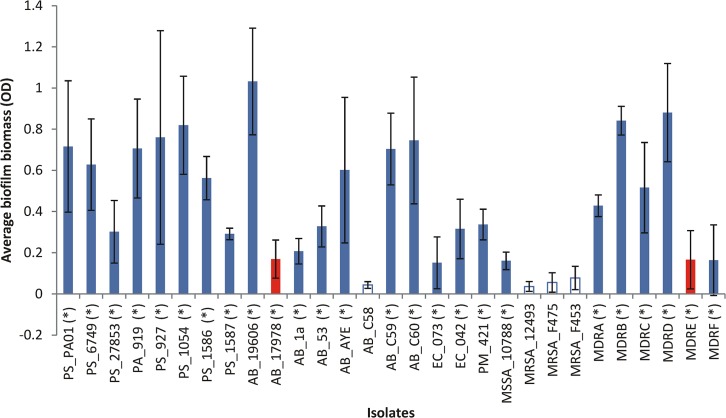
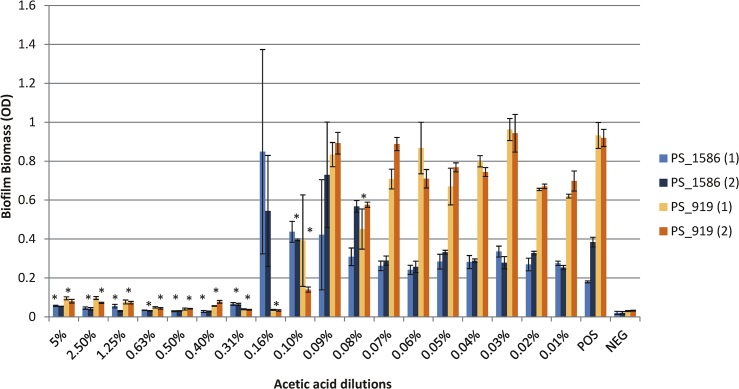
Twenty-nine isolates of common wound-infecting pathogens were tested. Acetic acid was antibacterial against planktonic growth, with an minimum inhibitory concentration of 0.16-0.31% for all isolates, and was also able to prevent formation of biofilms (at 0.31%). Eradication of mature biofilms was observed for all isolates after three hours of exposure.
This study provides evidence that acetic acid can inhibit growth of key burn wound pathogens when used at very dilute concentrations. Owing to current concerns of the reducing efficacy of systemic antibiotics, this novel biocide application offers great promise as a cheap and effective measure to treat infections in burns patients.
局部感染和烧伤创面脓毒症是烧伤患者治疗中的关键问题,预防细菌定植很大程度上依赖于杀菌剂。乙酸已被证明对各种浮游生物具有良好的抗菌活性,然而其疗效数据有限,且针对生物膜的研究较少。
我们试图研究乙酸对烧伤创面重要定植菌浮游生长和生物膜生长的抗菌活性。
进行实验室实验以测试乙酸抑制病原体生长、抑制生物膜形成以及根除预先形成的生物膜的能力。
测试了29株常见伤口感染病原体的分离株。乙酸对浮游生长具有抗菌作用,所有分离株的最低抑菌浓度为0.16 - 0.31%,并且还能够预防生物膜形成(浓度为0.31%时)。暴露三小时后,观察到所有分离株的成熟生物膜均被根除。
本研究提供了证据表明,极稀浓度的乙酸可抑制关键烧伤创面病原体的生长。鉴于目前对全身用抗生素疗效降低的担忧,这种新型杀菌剂应用作为治疗烧伤患者感染的廉价有效措施具有很大前景。