Canver Matthew C, Smith Elenoe C, Sher Falak, Pinello Luca, Sanjana Neville E, Shalem Ophir, Chen Diane D, Schupp Patrick G, Vinjamur Divya S, Garcia Sara P, Luc Sidinh, Kurita Ryo, Nakamura Yukio, Fujiwara Yuko, Maeda Takahiro, Yuan Guo-Cheng, Zhang Feng, Orkin Stuart H, Bauer Daniel E
Division of Hematology/Oncology, Boston Children's Hospital, Department of Pediatric Oncology, Dana-Farber Cancer Institute, Harvard Stem Cell Institute, Department of Pediatrics, Harvard Medical School, Boston, Massachusetts 02115, USA.
Department of Biostatistics and Computational Biology, Dana-Farber Cancer Institute and Harvard School of Public Health, Boston, Massachusetts 02115, USA.
Nature. 2015 Nov 12;527(7577):192-7. doi: 10.1038/nature15521. Epub 2015 Sep 16.
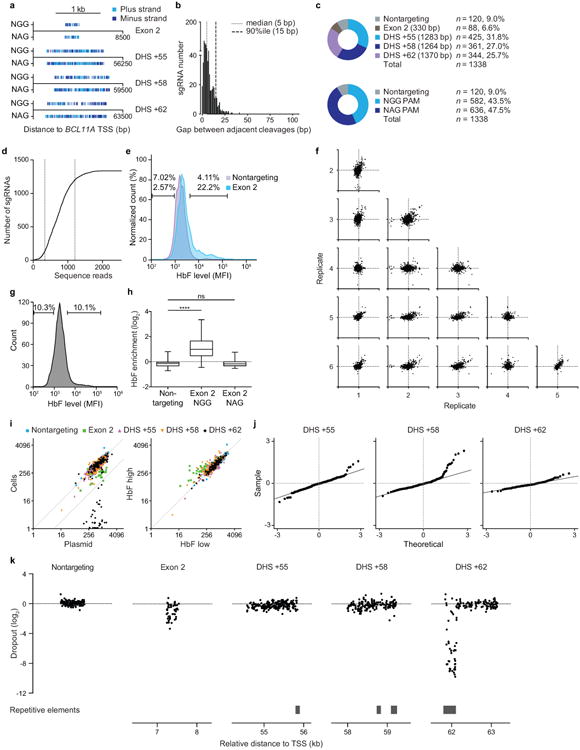
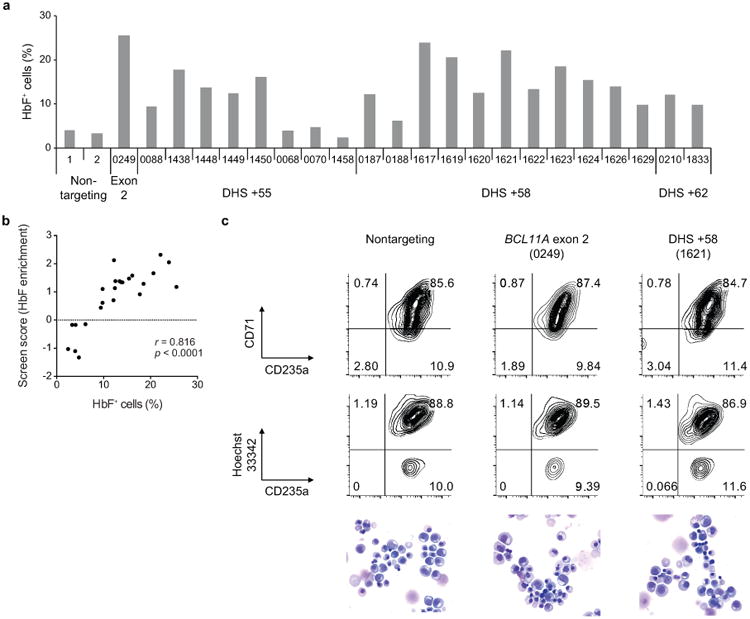
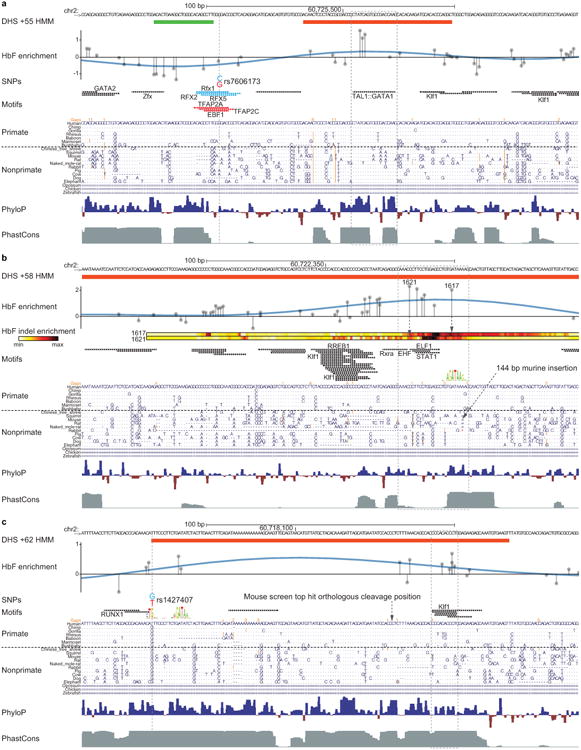
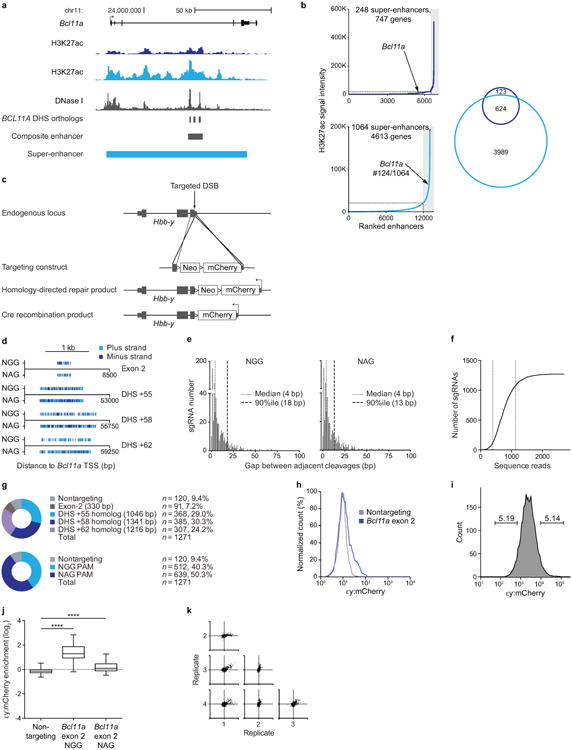
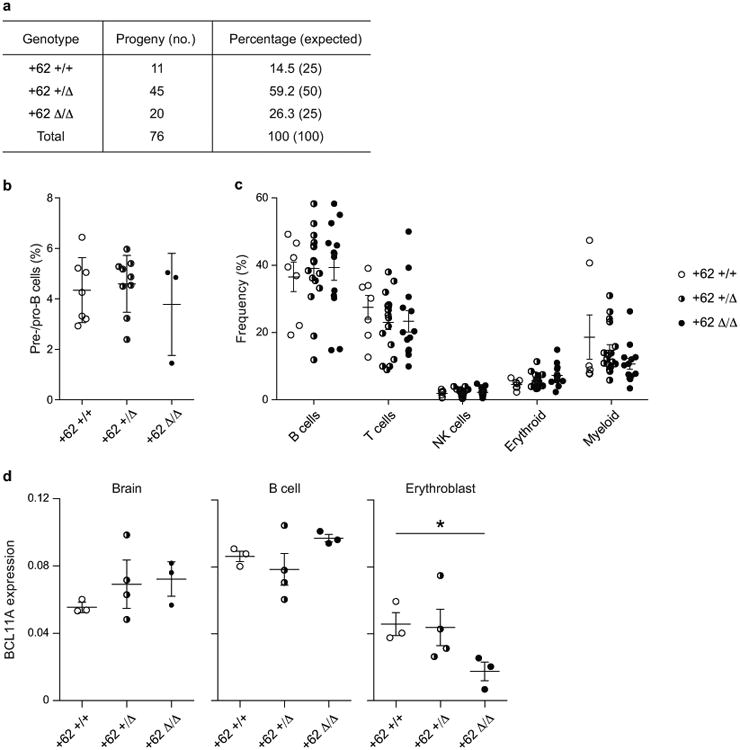
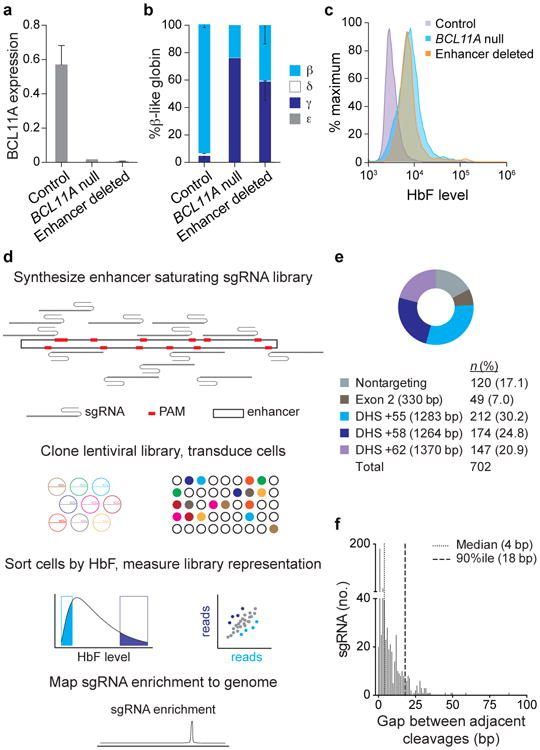
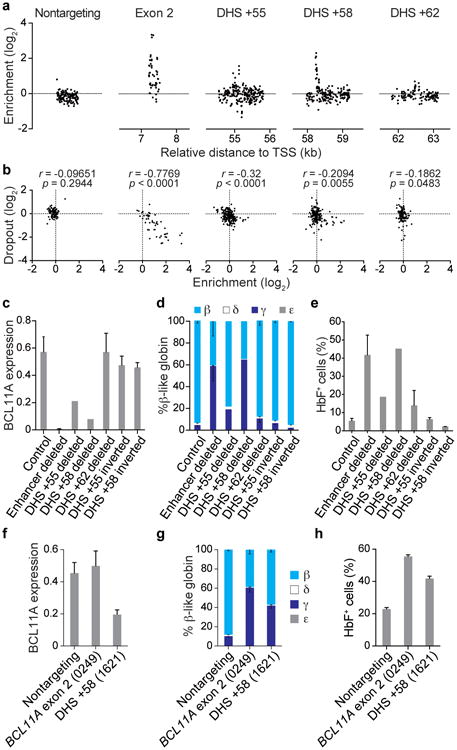
Enhancers, critical determinants of cellular identity, are commonly recognized by correlative chromatin marks and gain-of-function potential, although only loss-of-function studies can demonstrate their requirement in the native genomic context. Previously, we identified an erythroid enhancer of human BCL11A, subject to common genetic variation associated with the fetal haemoglobin level, the mouse orthologue of which is necessary for erythroid BCL11A expression. Here we develop pooled clustered regularly interspaced palindromic repeat (CRISPR)-Cas9 guide RNA libraries to perform in situ saturating mutagenesis of the human and mouse enhancers. This approach reveals critical minimal features and discrete vulnerabilities of these enhancers. Despite conserved function of the composite enhancers, their architecture diverges. The crucial human sequences appear to be primate-specific. Through editing of primary human progenitors and mouse transgenesis, we validate the BCL11A erythroid enhancer as a target for fetal haemoglobin reinduction. The detailed enhancer map will inform therapeutic genome editing, and the screening approach described here is generally applicable to functional interrogation of non-coding genomic elements.
增强子是细胞特性的关键决定因素,通常通过相关的染色质标记和功能获得潜力来识别,尽管只有功能丧失研究才能证明它们在天然基因组背景下的必要性。此前,我们鉴定出人类BCL11A的一个红系增强子,其与胎儿血红蛋白水平相关的常见基因变异有关,其小鼠直系同源物对于红系BCL11A的表达是必需的。在这里,我们开发了汇集的成簇规律间隔短回文重复序列(CRISPR)-Cas9向导RNA文库,以对人类和小鼠增强子进行原位饱和诱变。这种方法揭示了这些增强子的关键最小特征和离散的脆弱性。尽管复合增强子具有保守功能,但其结构却有所不同。关键的人类序列似乎是灵长类动物特有的。通过对原代人类祖细胞的编辑和小鼠转基因,我们验证了BCL11A红系增强子是胎儿血红蛋白再诱导的靶点。详细的增强子图谱将为治疗性基因组编辑提供信息,这里描述的筛选方法通常适用于非编码基因组元件的功能研究。