Pandya Deep, Mariani Marisa, He Shiquan, Andreoli Mirko, Spennato Manuela, Dowell-Martino Candice, Fiedler Paul, Ferlini Cristiano
Danbury Hospital Research Institute, Danbury Hospital, Danbury, Connecticut, United States of America.
PLoS One. 2015 Sep 16;10(9):e0136058. doi: 10.1371/journal.pone.0136058. eCollection 2015.
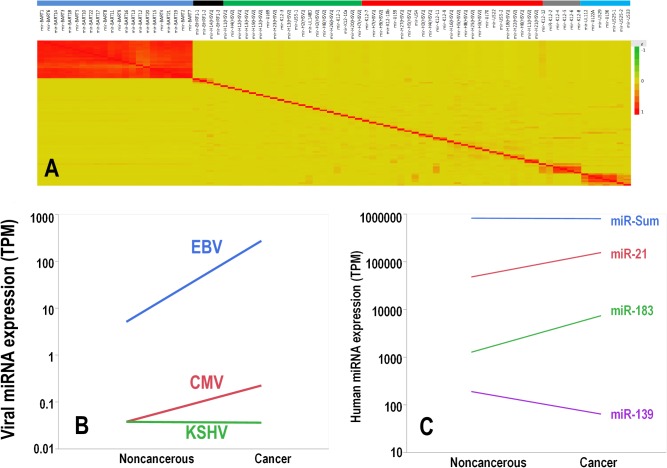
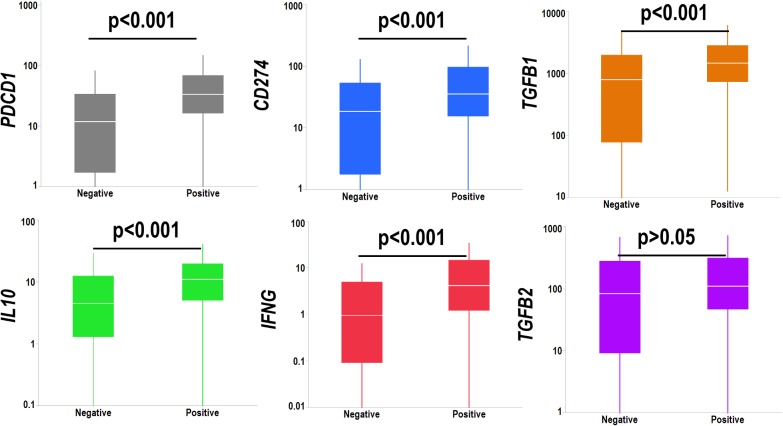
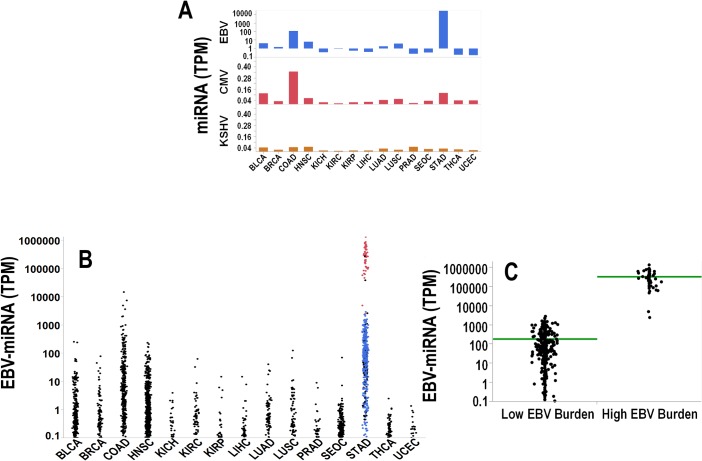
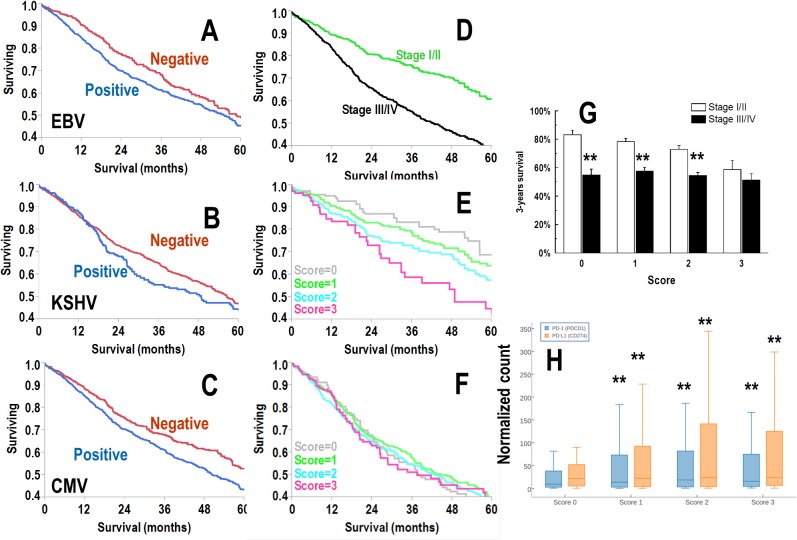
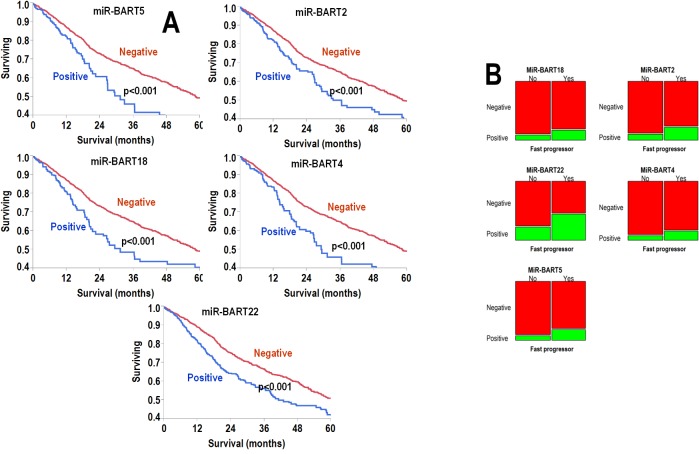
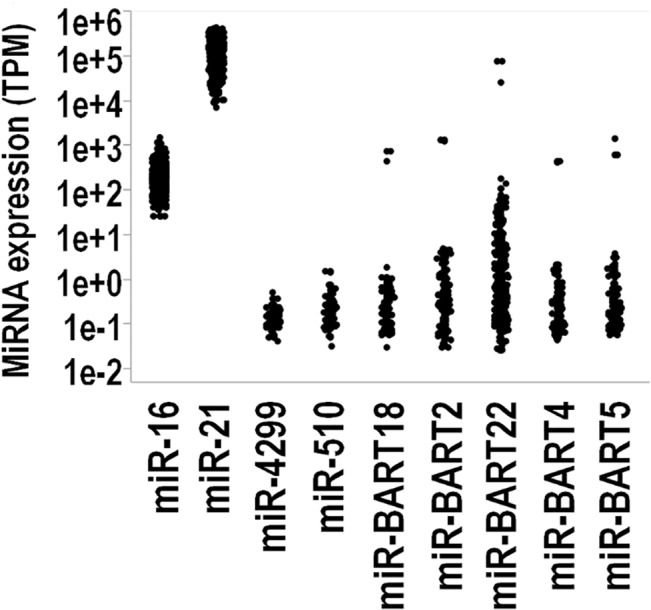
The Cancer Genome Atlas (TCGA) microRNA (miRNA) initiative has revealed a pivotal role for miRNAs in cancer. Utilizing the TCGA raw data, we performed the first mapping of viral miRNA sequences within cancer and adjacent normal tissues. Results were integrated with TCGA RNA-seq to link the expression of viral miRNAs to the phenotype. Using clinical data and viral miRNA mapping results we also performed outcome analysis. Three lines of evidence lend credence to an active role of viral miRNAs in solid malignancies. First, expression of viral miRNA is consistently higher in cancerous compared to adjacent noncancerous tissues. Second, viral miRNA expression is associated with significantly worse clinical outcome among patients with early stage malignancy. These patients are also featured by increased expression of PD1/PD-L1, a pathway implicated in tumors escaping immune destruction. Finally, a particular cluster of EBV-miRNA (miR-BART2, miR-BART4, miR-BART5, miR-BART18, and miR-BART22) is associated with expression of cytokines known to inhibit host response to cancer. Quantification of specific viral miRNAs may help identify patients who are at risk of poor outcome. These patients may be candidates for novel therapeutic strategies incorporating antiviral agents and/or inhibitors of the PD-1/PD-L1 pathway.
癌症基因组图谱(TCGA)微小RNA(miRNA)计划揭示了miRNA在癌症中的关键作用。利用TCGA原始数据,我们首次绘制了癌症组织及相邻正常组织中的病毒miRNA序列图谱。将结果与TCGA RNA测序整合,以将病毒miRNA的表达与表型联系起来。利用临床数据和病毒miRNA图谱结果,我们还进行了预后分析。有三条证据支持病毒miRNA在实体恶性肿瘤中发挥积极作用。第一,与相邻的非癌组织相比,病毒miRNA在癌组织中的表达始终更高。第二,在早期恶性肿瘤患者中,病毒miRNA表达与明显更差的临床预后相关。这些患者还具有PD1/PD-L1表达增加的特征,这是一条与肿瘤逃避免疫破坏有关的途径。最后,一组特定的EBV-miRNA(miR-BART2、miR-BART4、miR-BART5、miR-BART18和miR-BART22)与已知抑制宿主对癌症反应的细胞因子的表达有关。对特定病毒miRNA进行定量分析可能有助于识别预后不良风险较高的患者。这些患者可能是采用抗病毒药物和/或PD-1/PD-L1途径抑制剂的新型治疗策略的候选对象。