Ryu Eun Kyung, Kim Tae-Hyun, Jang Eun Jeong, Choi Yoon Suk, Kim Seon Tae, Hahm Ki Baik, Lee Ho-Jae
Laboratory of Chemoprevention, Lee Gil Ya Cancer and Diabetes Institute, Gachon University, Incheon 406-840, Korea.
Department of Otolaryngology, Gil Medical Center, School of Medicine, Gachon University, Incheon 405-760, Korea.
J Clin Biochem Nutr. 2015 Sep;57(2):105-12. doi: 10.3164/jcbn.15-45. Epub 2015 Jul 30.
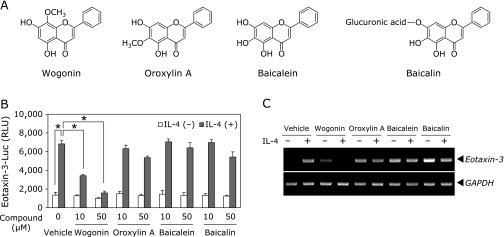
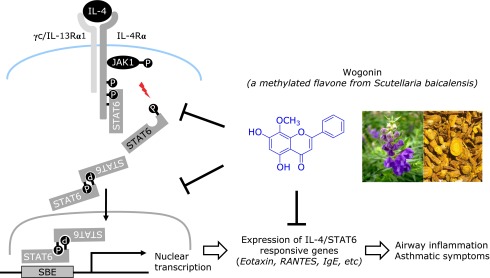
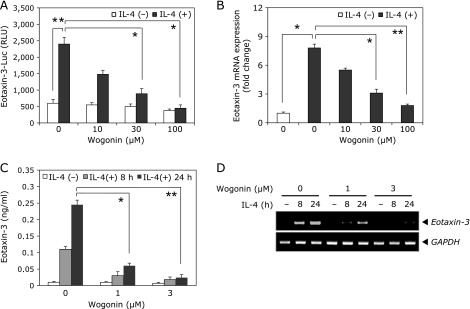
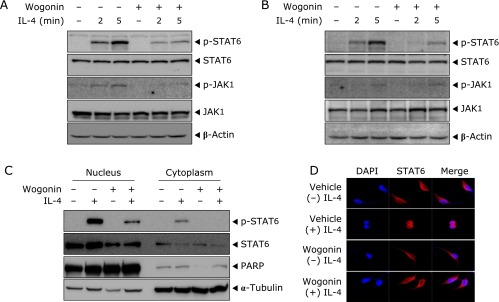
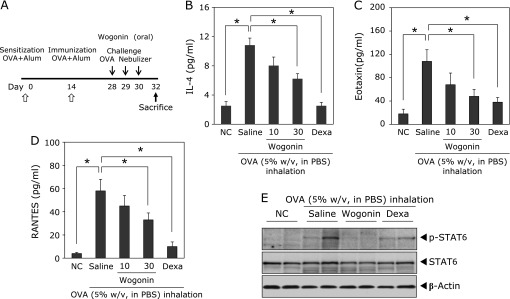
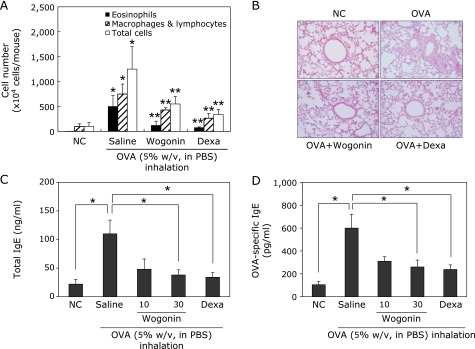
Bronchial asthma is a chronic inflammatory disease of the airways characterized by a marked infiltration of eosinophils at the site of inflammation. Eotaxins are potent chemoattractants for eosinophils and play important roles in pathogenesis of asthma. In the course of screening for eotaxin-3 inhibitors, we found that wogonin showed potent inhibitory activity of interleukin-4 (IL-4)-induced eotaxin-3 expression in BEAS-2B cells. In this study, we examined the effects of wogonin on IL-4/STAT6 signaling pathway and biological implication in a mouse model of asthma. Wogonin inhibited IL-4-induced activation and nuclear translocation of STAT6 which plays a key role in either the transcription of STAT6-response genes or Th2 cytokine-mediated inflammation. Oral administration of wogonin significantly reduced activation of STAT6 in the lung and the expression of eotaxin and RANTES in bronchoalveolar lavage fluids. Histological examination of lung tissue demonstrated that wogonin significantly inhibited allergen-induced eosinophilic inflammation. Administration of wogonin reduced the total IgE and ovalbumin-specific IgE levels compared with the ovalbumin-challenged group. All of these data demonstrated that wogonin could alleviate airway inflammation through inhibition of STAT6 activation induced by Th2 cytokines. Our finding implicates a potential therapeutic value of wogonin in the treatment of asthma through regulation of IL-4/STAT6 signaling pathway.
支气管哮喘是一种气道慢性炎症性疾病,其特征为炎症部位有明显的嗜酸性粒细胞浸润。嗜酸性粒细胞趋化因子是嗜酸性粒细胞的强效化学引诱剂,在哮喘发病机制中起重要作用。在筛选嗜酸性粒细胞趋化因子-3抑制剂的过程中,我们发现汉黄芩素对白细胞介素-4(IL-4)诱导的BEAS-2B细胞中嗜酸性粒细胞趋化因子-3的表达具有强效抑制活性。在本研究中,我们检测了汉黄芩素对哮喘小鼠模型中IL-4/信号转导和转录激活因子6(STAT6)信号通路的影响及其生物学意义。汉黄芩素抑制IL-4诱导的STAT6激活和核转位,STAT6在STAT6反应基因的转录或Th2细胞因子介导的炎症中起关键作用。口服汉黄芩素可显著降低肺中STAT6的激活以及支气管肺泡灌洗液中嗜酸性粒细胞趋化因子和调节激活正常T细胞表达和分泌的趋化因子(RANTES)的表达。肺组织的组织学检查表明,汉黄芩素可显著抑制变应原诱导的嗜酸性粒细胞炎症。与卵清蛋白激发组相比,给予汉黄芩素可降低总IgE和卵清蛋白特异性IgE水平。所有这些数据表明,汉黄芩素可通过抑制Th2细胞因子诱导的STAT6激活来减轻气道炎症。我们的发现表明汉黄芩素通过调节IL-4/STAT6信号通路在哮喘治疗中具有潜在的治疗价值。