Ramchandra Rohit, Barrett Carolyn J
Department of Physiology, The University of Auckland Auckland, New Zealand.
Front Physiol. 2015 Aug 25;6:238. doi: 10.3389/fphys.2015.00238. eCollection 2015.
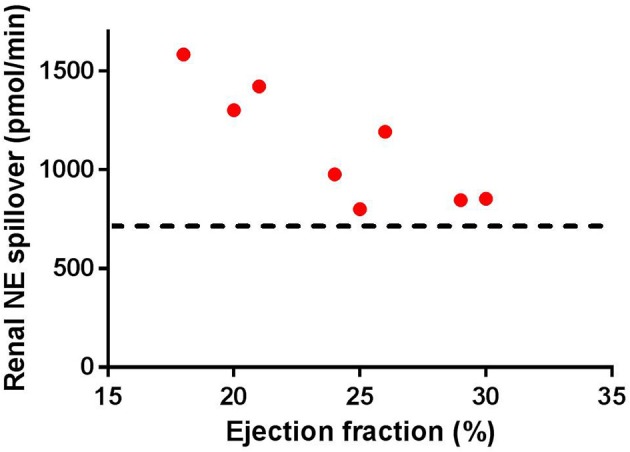
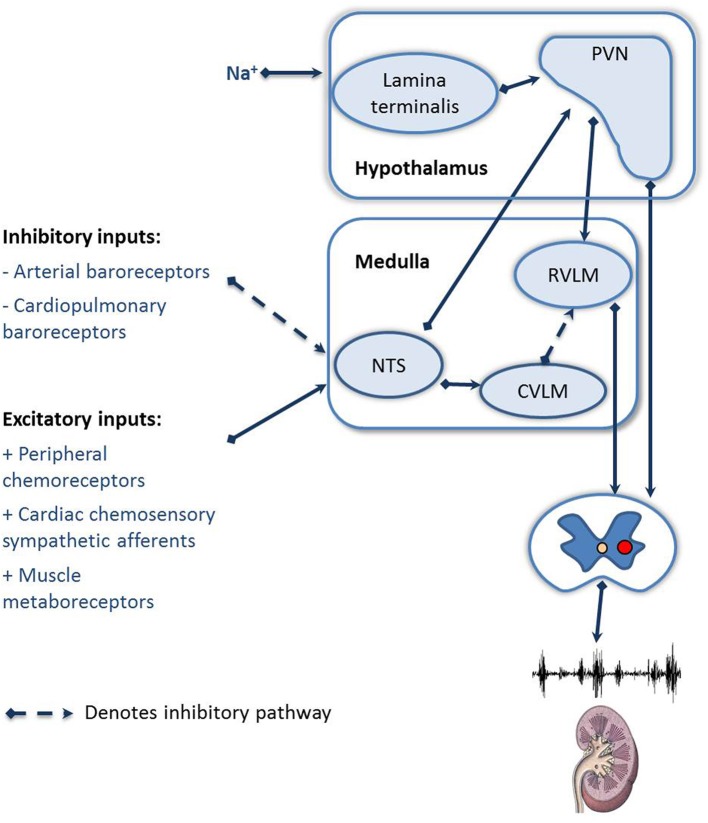
Heart failure (HF) is a serious debilitating condition with poor survival rates and an increasing level of prevalence. HF is associated with an increase in renal norepinephrine (NE) spillover, which is an independent predictor of mortality in HF patients. The excessive sympatho-excitation that is a hallmark of HF has long-term effects that contribute to disease progression. An increase in directly recorded renal sympathetic nerve activity (RSNA) has also been recorded in animal models of HF. This review will focus on the mechanisms controlling sympathetic nerve activity (SNA) to the kidney during normal conditions and alterations in these mechanisms during HF. In particular the roles of afferent reflexes and central mechanisms will be discussed.
心力衰竭(HF)是一种严重的使人衰弱的疾病,生存率低且患病率不断上升。HF与肾脏去甲肾上腺素(NE)溢出增加有关,这是HF患者死亡率的独立预测因素。作为HF标志的过度交感神经兴奋具有促进疾病进展的长期影响。在HF动物模型中也记录到直接记录的肾交感神经活动(RSNA)增加。本综述将重点关注正常情况下控制肾脏交感神经活动(SNA)的机制以及HF期间这些机制的改变。特别是将讨论传入反射和中枢机制的作用。