Yan Lily D, Chi Benjamin H, Sindano Ntazana, Bosomprah Samuel, Stringer Jeffrey Sa, Chilengi Roma
Primary Care and Health Systems Department, Center for Infectious Disease Research Zambia, Lusaka, Zambia.
Stanford University School of Medicine, Stanford, California, USA.
BMC Public Health. 2015 Sep 21;15:933. doi: 10.1186/s12889-015-2258-4.
Hypertension constitutes a growing burden of illness in developing countries like Zambia. Adequately screening and treating hypertension could greatly reduce the complications of stroke and coronary disease. Our objective was to determine the prevalence of hypertension and identify current treatment practices among adult patients presenting for routine care to rural health facilities in the Better Health Outcomes through Mentoring and Assessments (BHOMA) project.
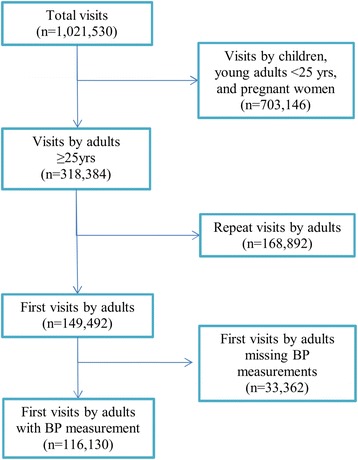
We conducted a retrospective analysis of routinely collected clinical data from 46 rural government clinics in Zambia. Our analysis cohort comprised patients ≥ 25 years with recorded blood pressure measurements, who sought care at primary health centers. Consistent with prior research, in our primary analysis, we only included data from first visits. Hypertension was defined as a systolic blood pressure ≥140 mmHg, or diastolic blood pressure ≥90 mmHg, or reported use of antihypertensive medication. A sensitivity analysis was performed using median blood pressure for individuals with multiple visits.
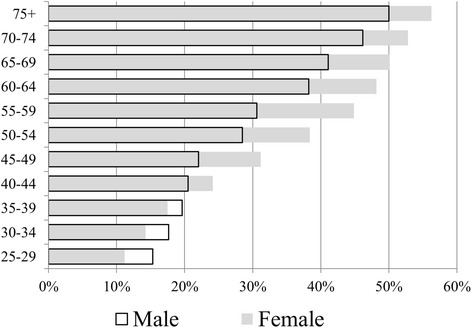
From January 2011 to December 2014, 116,130 first visits by adult patients met eligibility criteria. The crude prevalence of hypertension by onsite measurement or reported use of antihypertensive medication was 23.1% [95% CI: 22.8-23.3] (23.6% in females, 22.3% in males). The age standardized prevalence of hypertension across participating sites was 28.0 [95% CI: 27.7-28.3] (29.7% in females, 25.8% in males). Sensitivity analysis revealed a similar prevalence using data from all visits. Only 5.6% of patients had a diagnosis of hypertension documented in their medical record. Among patients with hypertension, only 18.0% had any antihypertensive drug prescribed, with nifedipine (8.9%), furosemide (8.3%), and propranolol (2.4%) as the most common.
Age standardized prevalence of hypertension in rural primary health clinics in Zambia was high compared to other studies in rural Africa; however, we diagnosed hypertension with only one measurement and this may have biased our findings. Future efforts to improve hypertension control should focus on population preventive care and primary healthcare provider education on individual management.
在赞比亚等发展中国家,高血压造成的疾病负担日益加重。对高血压进行充分筛查和治疗可大幅降低中风和冠心病并发症的发生率。我们的目标是通过“通过指导与评估改善健康结果”(BHOMA)项目,确定在农村卫生机构接受常规护理的成年患者中高血压的患病率,并确定当前的治疗方法。
我们对赞比亚46家农村政府诊所常规收集的临床数据进行了回顾性分析。我们的分析队列包括年龄≥25岁且有血压测量记录、在初级卫生中心就诊的患者。与先前的研究一致,在我们的初步分析中,我们仅纳入了首次就诊的数据。高血压定义为收缩压≥140 mmHg,或舒张压≥90 mmHg,或报告使用抗高血压药物。对多次就诊的个体使用血压中位数进行了敏感性分析。
2011年1月至2014年12月,成年患者的116,130次首次就诊符合纳入标准。通过现场测量或报告使用抗高血压药物得出的高血压粗患病率为23.1%[95%置信区间:22.8 - 23.3](女性为23.6%,男性为22.3%)。各参与地点高血压的年龄标准化患病率为28.0[95%置信区间:27.7 - 28.3](女性为29.7%,男性为25.8%)。敏感性分析显示,使用所有就诊数据得出的患病率相似。只有5.6%的患者病历中有高血压诊断记录。在高血压患者中,只有18.0%开具了任何抗高血压药物,硝苯地平(8.9%)、呋塞米(8.3%)和普萘洛尔(2.4%)是最常用的药物。
与非洲农村地区的其他研究相比,赞比亚农村初级卫生诊所高血压的年龄标准化患病率较高;然而,我们仅通过一次测量来诊断高血压,这可能使我们的研究结果产生偏差。未来改善高血压控制的努力应侧重于人群预防保健以及对初级医疗保健提供者进行个体管理方面的教育。