Ganguly Siddhartha, Home Trisha, Yacoub Abdulraheem, Kambhampati Suman, Shi Huidong, Dandawate Prasad, Padhye Subhash, Saluja Ashok K, McGuirk Joseph, Rao Rekha
The University of Kansas Cancer Center, Kansas City, KS, USA.
Georgia Regents University, Augusta, GA, USA.
Oncotarget. 2015 Oct 13;6(31):31767-79. doi: 10.18632/oncotarget.5167.
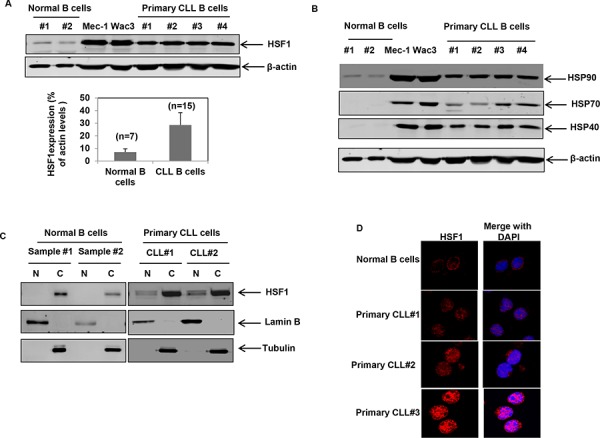
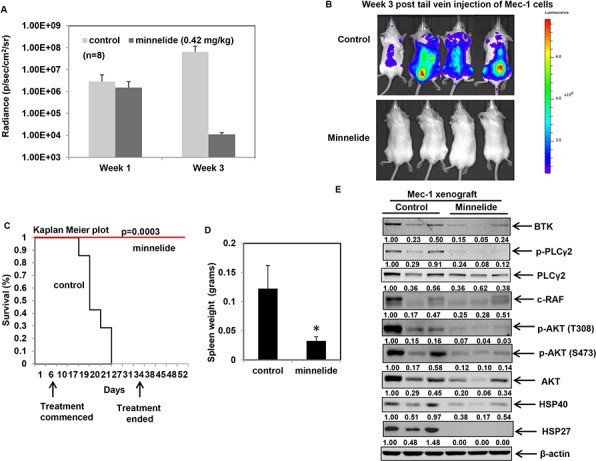
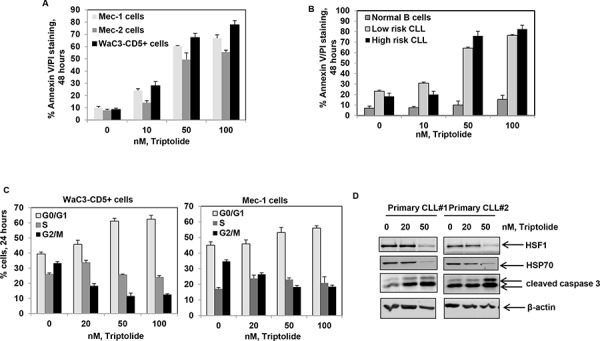
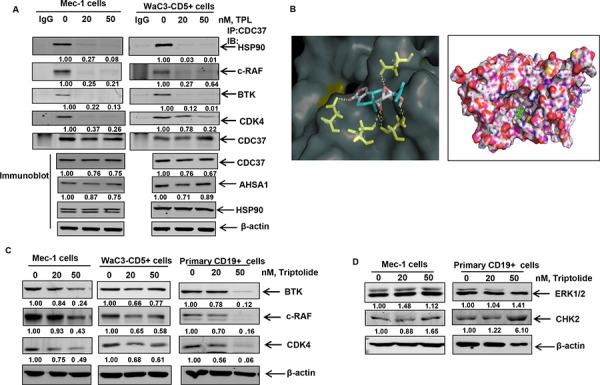
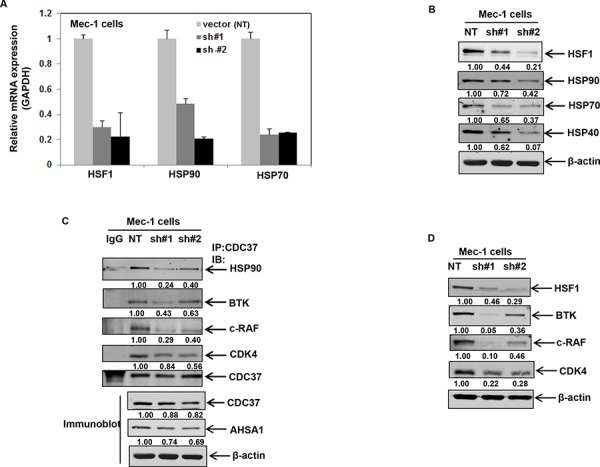
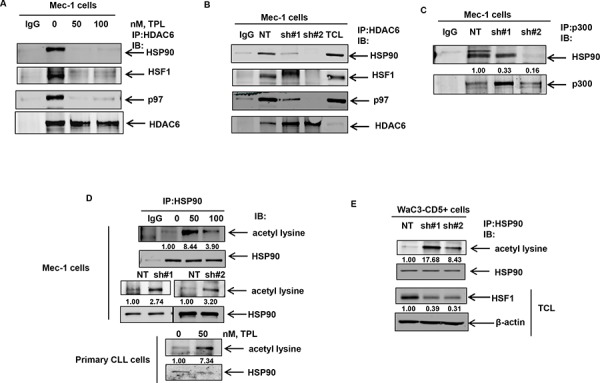
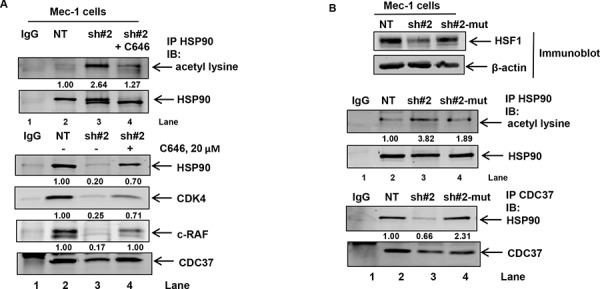
CLL is a disease characterized by chromosomal deletions, acquired copy number changes and aneuploidy. Recent studies have shown that overexpression of Heat Shock Factor (HSF) 1 in aneuploid tumor cells can overcome deficiencies in heat shock protein (HSP) 90-mediated protein folding and restore protein homeostasis. Interestingly, several independent studies have demonstrated that HSF1 expression and activity also affects the chaperoning of HSP90 kinase clients, although the mechanism underlying this observation is unclear. Here, we determined how HSF1 regulates HSP90 function using CLL as a model system. We report that HSF1 is overexpressed in CLL and treatment with triptolide (a small molecule inhibitor of HSF1) induces apoptosis in cultured and primary CLL B-cells. We demonstrate that knockdown of HSF1 or its inhibition with triptolide results in the reduced association of HSP90 with its kinase co-chaperone cell division cycle 37 (CDC37), leading to the partial depletion of HSP90 client kinases, Bruton's Tyrosine Kinase (BTK), c-RAF and cyclin-dependent kinase 4 (CDK4). Treatment with triptolide or HSF1 knockdown disrupts the cytosolic complex between HSF1, p97, HSP90 and the HSP90 deacetylase- Histone deacetylase 6 (HDAC6). Consequently, HSF1 inhibition results in HSP90 acetylation and abrogation of its chaperone function. Finally, tail vein injection of Mec-1 cells into Rag2-/-IL2Rγc-/- mice followed by treatment with minnelide (a pro-drug of triptolide), reduced leukemia, increased survival and attenuated HSP90-dependent survival signaling in vivo. In conclusion, our study provides a strong rationale to target HSF1 and test the activity of minnelide against human CLL.
慢性淋巴细胞白血病(CLL)是一种以染色体缺失、获得性拷贝数改变和非整倍体为特征的疾病。最近的研究表明,非整倍体肿瘤细胞中热休克因子(HSF)1的过表达可以克服热休克蛋白(HSP)90介导的蛋白质折叠缺陷并恢复蛋白质稳态。有趣的是,几项独立研究表明,HSF1的表达和活性也会影响HSP90激酶客户蛋白的伴侣功能,尽管这一现象背后的机制尚不清楚。在此,我们以CLL作为模型系统,确定了HSF1如何调节HSP90的功能。我们报告称,HSF1在CLL中过表达,雷公藤内酯醇(一种HSF1的小分子抑制剂)处理可诱导培养的和原代CLL B细胞凋亡。我们证明,敲低HSF1或用雷公藤内酯醇抑制HSF1会导致HSP90与其激酶共伴侣细胞分裂周期37(CDC37)的结合减少,从而导致HSP90客户激酶布鲁顿酪氨酸激酶(BTK)、c-RAF和细胞周期蛋白依赖性激酶4(CDK4)部分耗竭。用雷公藤内酯醇处理或敲低HSF1会破坏HSF1、p97、HSP90和HSP90去乙酰化酶——组蛋白去乙酰化酶6(HDAC6)之间的胞质复合物。因此,抑制HSF1会导致HSP90乙酰化并消除其伴侣功能。最后,将Mec-1细胞尾静脉注射到Rag2-/-IL2Rγc-/-小鼠体内,随后用雷公藤内酯醇的前体药物米内立德进行处理,可减少白血病、提高生存率并减弱体内HSP90依赖性生存信号。总之,我们的研究为靶向HSF1以及测试米内立德对人类CLL的活性提供了有力的理论依据。