Young William R, Olonilua Mayowa, Masters Rich S W, Dimitriadis Stefanos, Mark Williams A
Department of Clinical Sciences, Brunel University, London, UK.
Department of Life Sciences, Brunel University, London, UK.
Exp Brain Res. 2016 Jan;234(1):161-72. doi: 10.1007/s00221-015-4445-z. Epub 2015 Sep 24.
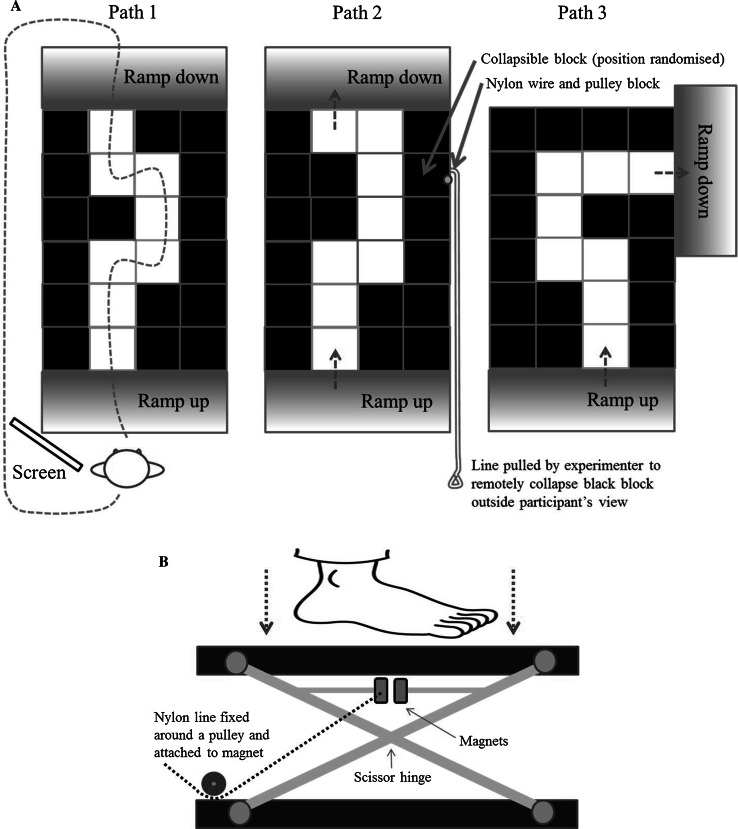
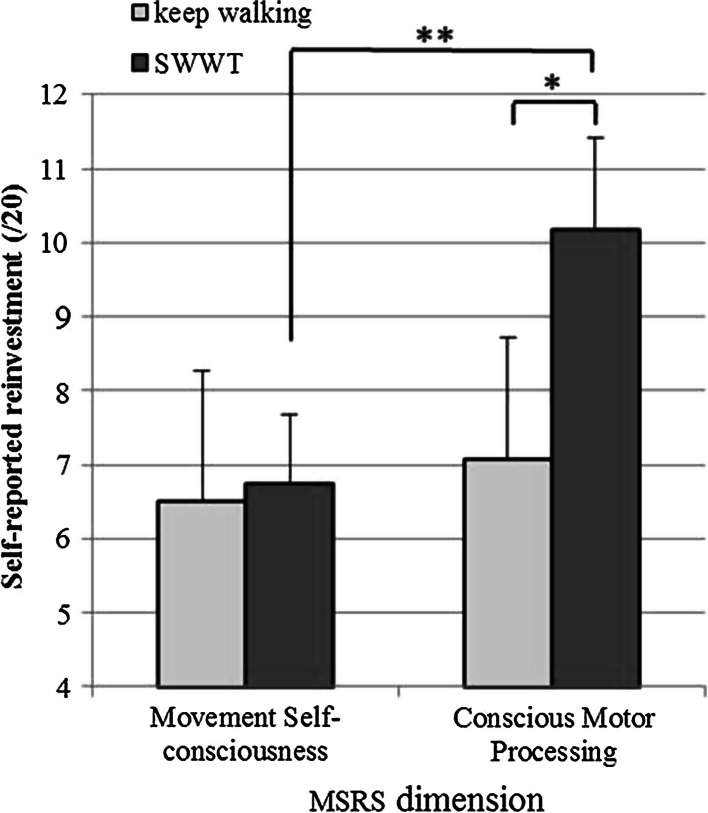
Falls by older adults often result in reduced quality of life and debilitating fear of further falls. Stopping walking when talking (SWWT) is a significant predictor of future falls by older adults and is thought to reflect age-related increases in attentional demands of walking. We examine whether SWWT is associated with use of explicit movement cues during locomotion, and evaluate if conscious control (i.e. movement specific reinvestment) is causally linked to fall-related anxiety during a complex walking task. We observed whether twenty-four older adults stopped walking when talking when asked a question during an adaptive gait task. After certain trials, participants completed a visuospatial recall task regarding walkway features, or answered questions about their movements during the walk. In a subsequent experimental condition, participants completed the walking task under conditions of raised postural threat. Compared to a control group, participants who SWWT reported higher scores for aspects of reinvestment relating to conscious motor processing but not movement self-consciousness. The higher scores for conscious motor processing were preserved when scores representing cognitive function were included as a covariate. There were no group differences in measures of general cognitive function, visuospatial working memory or balance confidence. However, the SWWT group reported higher scores on a test of external awareness when walking, indicating allocation of attention away from task-relevant environmental features. Under conditions of increased threat, participants self-reported significantly greater state anxiety and reinvestment and displayed more accurate responses about their movements during the task. SWWT is not associated solely with age-related cognitive decline or generic increases in age-related attentional demands of walking. SWWT may be caused by competition for phonological resources of working memory associated with consciously processing motor actions and appears to be causally linked with fall-related anxiety and increased vigilance.
老年人跌倒往往会导致生活质量下降以及对再次跌倒的极度恐惧。边走边说时停止行走(SWWT)是老年人未来跌倒的一个重要预测指标,被认为反映了与年龄相关的行走注意力需求增加。我们研究SWWT是否与运动过程中明确的运动线索使用有关,并评估在复杂行走任务中,意识控制(即特定运动再投资)是否与跌倒相关焦虑存在因果关系。我们观察了24名老年人在适应性步态任务中被提问时是否边走边说时停止行走。在某些试验后,参与者完成了一项关于人行道特征的视觉空间回忆任务,或者回答了关于他们行走过程中动作的问题。在随后的实验条件下,参与者在姿势威胁增加的情况下完成行走任务。与对照组相比,SWWT的参与者在与有意识运动处理相关的再投资方面得分较高,但在运动自我意识方面得分不高。当将代表认知功能的分数作为协变量纳入时,有意识运动处理的较高分数得以保留。在一般认知功能、视觉空间工作记忆或平衡信心的测量方面,两组没有差异。然而,SWWT组在行走时的外部意识测试中得分较高,表明注意力从与任务相关的环境特征上转移。在威胁增加的情况下,参与者自我报告的状态焦虑和再投资明显更大,并且在任务期间对自己的动作表现出更准确的反应。SWWT不仅仅与年龄相关的认知衰退或与年龄相关的行走注意力需求的普遍增加有关。SWWT可能是由于与有意识地处理运动动作相关的工作记忆语音资源竞争所致,并且似乎与跌倒相关焦虑和警惕性增加存在因果关系。