Xavier Guilherme M, Patist Amanda L, Healy Chris, Pagrut Ankita, Carreno Gabriela, Sharpe Paul T, Martinez-Barbera Juan Pedro, Thavaraj Selvam, Cobourne Martyn T, Andoniadou Cynthia L
Department of Orthodontics, King's College London, UK.
Department of Craniofacial Development and Stem Cell Biology, King's College London, UK.
Sci Rep. 2015 Sep 28;5:14479. doi: 10.1038/srep14479.
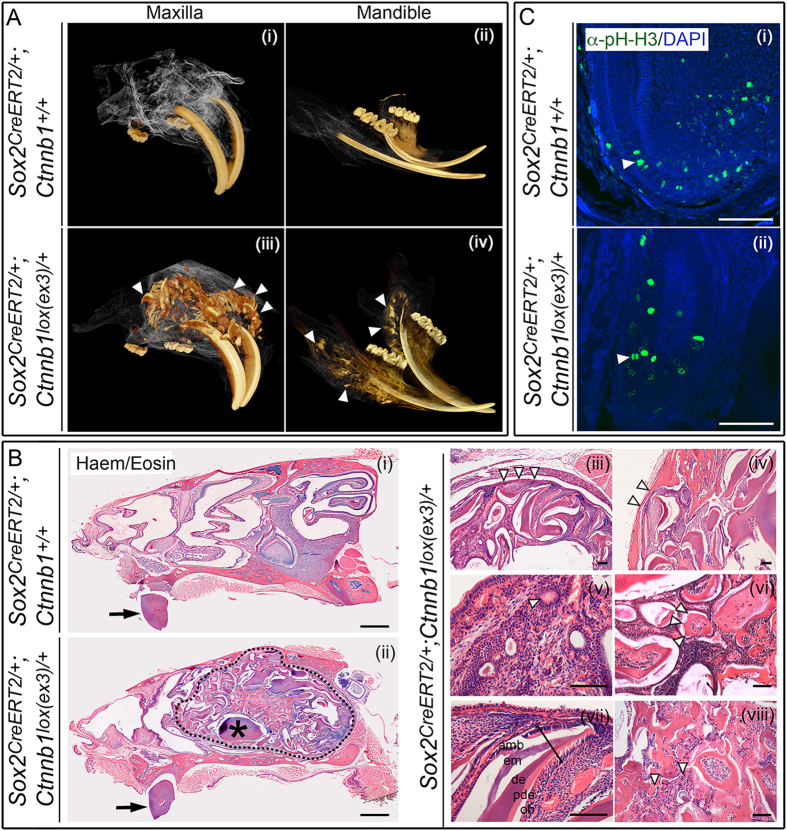
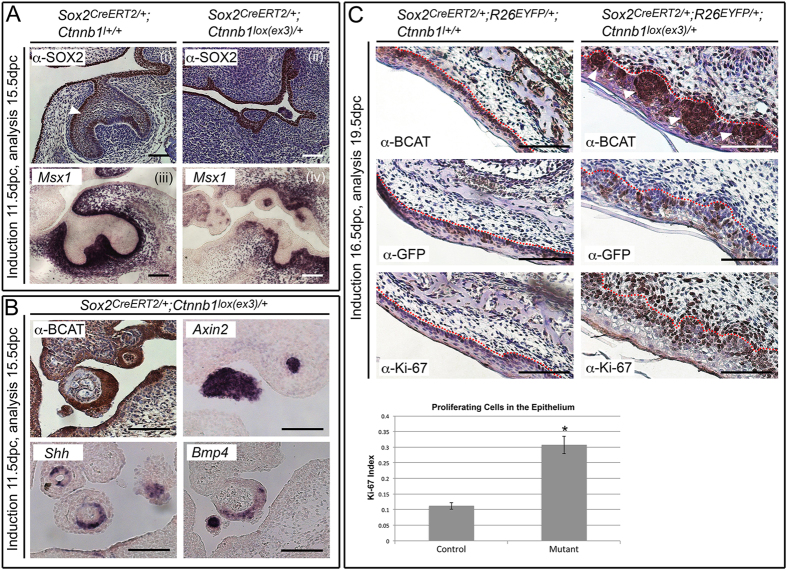
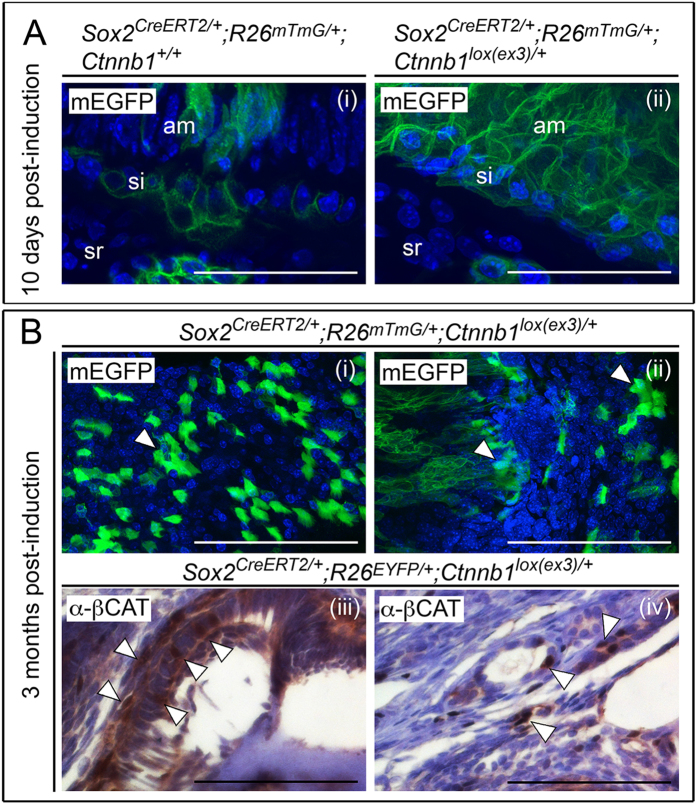
In common with most mammals, humans form only two dentitions during their lifetime. Occasionally, supernumerary teeth develop in addition to the normal complement. Odontoma represent a small group of malformations containing calcified dental tissues of both epithelial and mesenchymal origin, with varying levels of organization, including tooth-like structures. The specific cell type responsible for the induction of odontoma, which retains the capacity to re-initiate de novo tooth development in postnatal tissues, is not known. Here we demonstrate that aberrant activation of WNT signaling by expression of a non-degradable form of β-catenin specifically in SOX2-positive postnatal dental epithelial stem cells is sufficient to generate odontoma containing multiple tooth-like structures complete with all dental tissue layers. Genetic lineage-tracing confirms that odontoma form in a similar manner to normal teeth, derived from both the mutation-sustaining epithelial stem cells and adjacent mesenchymal tissues. Activation of the WNT pathway in embryonic SOX2-positive progenitors results in ectopic expression of secreted signals that promote odontogenesis throughout the oral cavity. Significantly, the inductive potential of epithelial dental stem cells is retained in postnatal tissues, and up-regulation of WNT signaling specifically in these cells is sufficient to promote generation and growth of ectopic malformations faithfully resembling human odontoma.
与大多数哺乳动物一样,人类一生中仅形成两副牙列。偶尔,除了正常数量的牙齿外,还会额外长出多生牙。牙瘤是一小类畸形,包含上皮和间充质来源的钙化牙组织,其组织结构各不相同,包括类牙结构。目前尚不清楚负责诱导牙瘤形成的特定细胞类型,这种细胞类型在出生后组织中仍保留重新启动从头牙齿发育的能力。在这里,我们证明,通过在出生后SOX2阳性牙上皮干细胞中特异性表达一种不可降解形式的β-连环蛋白来异常激活WNT信号通路,足以产生包含多个类牙结构且具备所有牙组织层的牙瘤。遗传谱系追踪证实,牙瘤的形成方式与正常牙齿相似,源自持续发生突变的上皮干细胞和相邻的间充质组织。胚胎期SOX2阳性祖细胞中WNT通路的激活会导致分泌信号的异位表达,从而促进整个口腔的牙发生。重要的是,上皮牙干细胞的诱导潜能在出生后组织中得以保留,并且仅在这些细胞中特异性上调WNT信号通路就足以促进异位畸形的产生和生长,这些异位畸形与人类牙瘤极为相似。