Urich Eduard, Schmucki Roland, Ruderisch Nadine, Kitas Eric, Certa Ulrich, Jacobsen Helmut, Schweitzer Christophe, Bergadano Alessandra, Ebeling Martin, Loetscher Hansruedi, Freskgård Per-Ola
Neuroscience Discovery and Translation Area, Pharma Research and Early Development (pRED), Roche Innovation Center Basel, F. Hoffmann-La Roche Basel, Switzerland.
Pharmaceutical Sciences, Pharma Research and Early Development (pRED), Roche Innovation Center Basel, F. Hoffmann-La Roche Basel, Switzerland.
Sci Rep. 2015 Sep 28;5:14104. doi: 10.1038/srep14104.
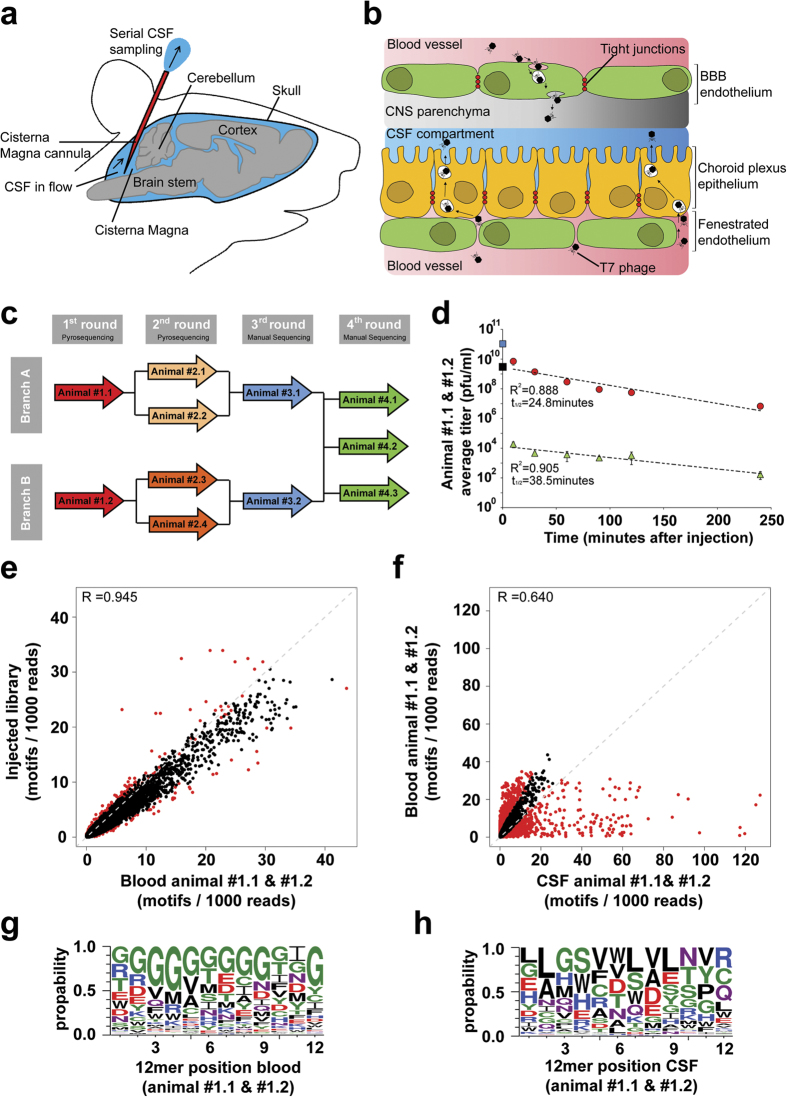
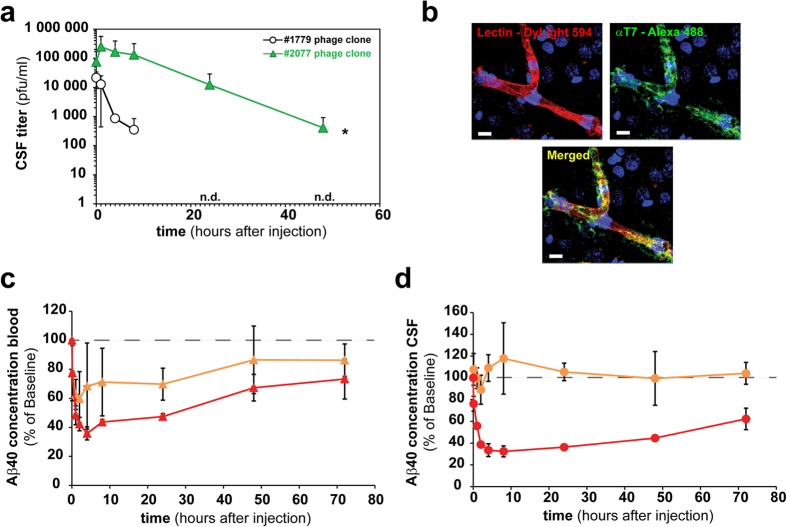
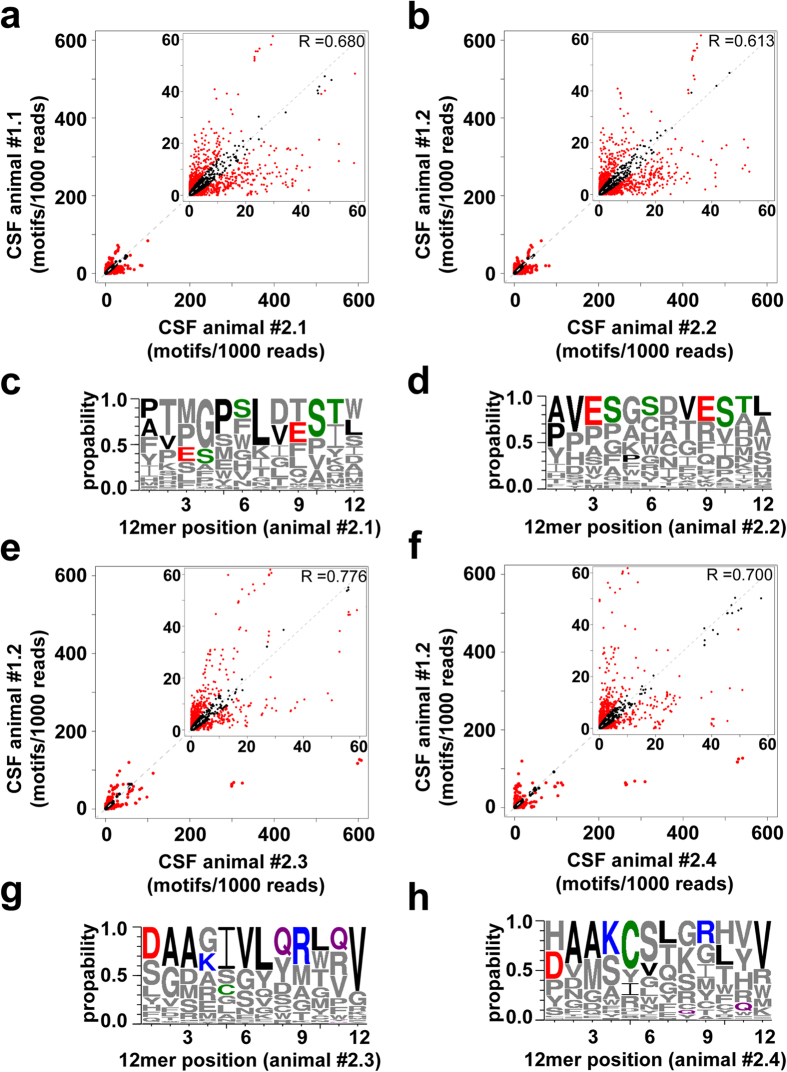
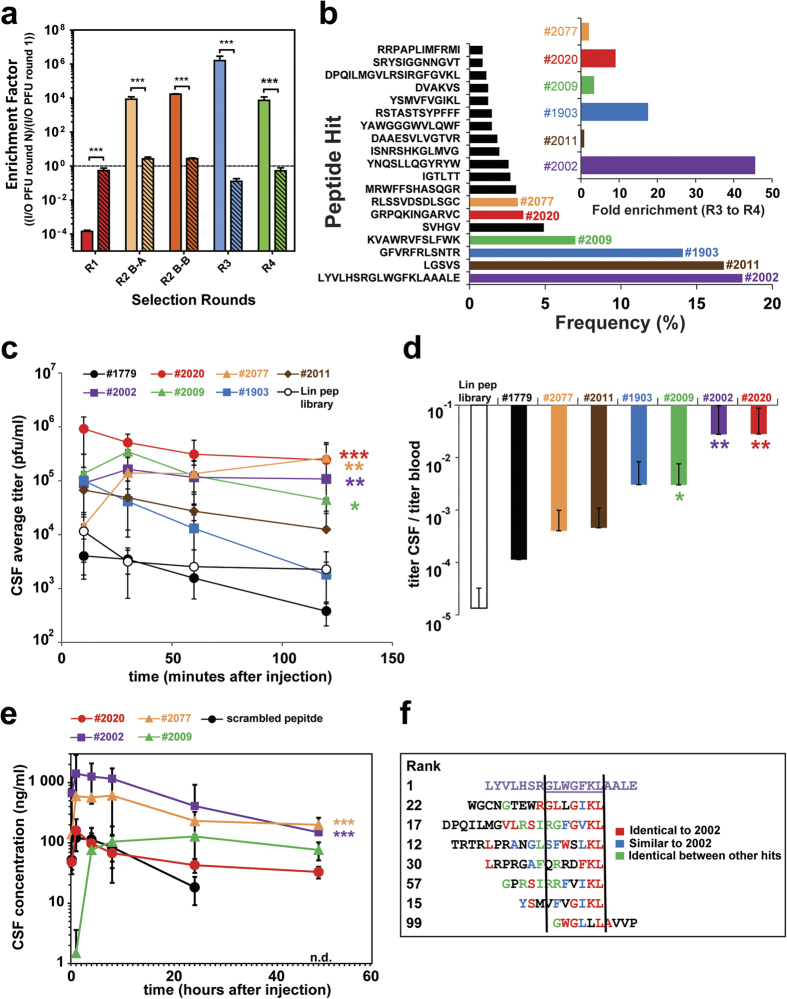
The blood-brain barrier and the blood-cerebrospinal fluid barrier prevent access of biotherapeutics to their targets in the central nervous system and therefore prohibit the effective treatment of neurological disorders. In an attempt to discover novel brain transport vectors in vivo, we injected a T7 phage peptide library and continuously collected blood and cerebrospinal fluid (CSF) using a cisterna magna cannulated conscious rat model. Specific phage clones were highly enriched in the CSF after four rounds of selection. Validation of individual peptide candidates showed CSF enrichments of greater than 1000-fold. The biological activity of peptide-mediated delivery to the brain was confirmed using a BACE1 peptide inhibitor linked to an identified novel transport peptide which led to a 40% reduction of Amyloid-β in CSF. These results indicate that the peptides identified by the in vivo phage selection approach could be useful transporters for systemically administrated large molecules into the brain with therapeutic benefits.
血脑屏障和血脑脊液屏障阻碍生物治疗药物进入其在中枢神经系统的靶点,因此妨碍了神经系统疾病的有效治疗。为了在体内发现新型脑转运载体,我们注射了一个T7噬菌体肽库,并使用延髓池插管清醒大鼠模型持续采集血液和脑脊液(CSF)。经过四轮筛选后,特定的噬菌体克隆在脑脊液中高度富集。对单个肽候选物的验证显示脑脊液富集超过1000倍。使用与一种已鉴定的新型转运肽相连的β-分泌酶1(BACE1)肽抑制剂证实了肽介导的向脑内递送的生物学活性,这导致脑脊液中β-淀粉样蛋白减少40%。这些结果表明,通过体内噬菌体筛选方法鉴定的肽可能是将大分子全身给药至脑内并具有治疗益处的有用转运体。