Gibbons Raymond J, Thorsteinsson Einar B, Loi Natasha M
Department of Psychology, School of Behavioural, Cognitive and Social Sciences, University of New England , NSW , Australia.
PeerJ. 2015 Jun 9;3:e1004. doi: 10.7717/peerj.1004. eCollection 2015.
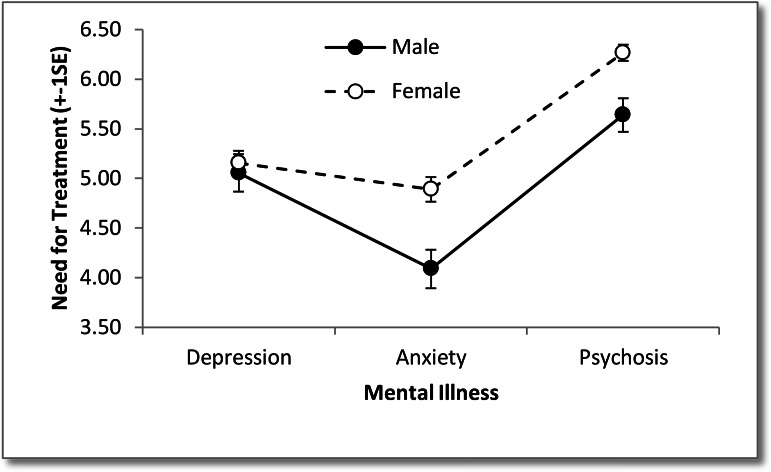
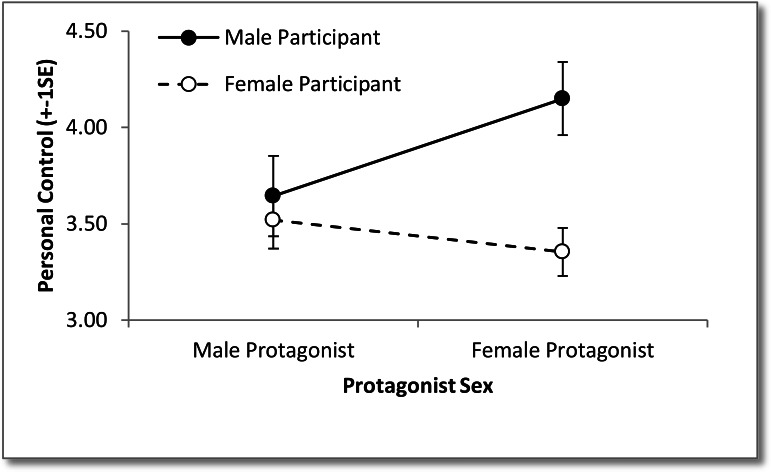
Objectives. The current study investigated mental health literacy in an Australian sample to examine sex differences in the identification of and attitudes towards various aspects of mental illness. Method. An online questionnaire was completed by 373 participants (M = 34.87 years). Participants were randomly assigned either a male or female version of a vignette depicting an individual exhibiting the symptoms of one of three types of mental illness (depression, anxiety, or psychosis) and asked to answer questions relating to aspects of mental health literacy. Results. Males exhibited poorer mental health literacy skills compared to females. Males were less likely to correctly identify the type of mental illness, more likely to rate symptoms as less serious, to perceive the individual as having greater personal control over such symptoms, and less likely to endorse the need for treatment for anxiety or psychosis. Conclusion. Generally, the sample was relatively proficient at correctly identifying mental illness but overall males displayed poorer mental health literacy skills than females.
目标。本研究调查了澳大利亚样本中的心理健康素养,以检验在识别精神疾病的各个方面及对其态度上的性别差异。方法。373名参与者(平均年龄34.87岁)完成了一份在线问卷。参与者被随机分配到呈现一名表现出三种精神疾病(抑郁症、焦虑症或精神病)之一症状个体的男性或女性版本的 vignette 中,并被要求回答与心理健康素养方面相关的问题。结果。与女性相比,男性表现出较差的心理健康素养技能。男性正确识别精神疾病类型的可能性较小,更有可能将症状评定为不那么严重,认为个体对这些症状有更大的个人控制能力,并且认可焦虑症或精神病需要治疗的可能性较小。结论。总体而言,该样本在正确识别精神疾病方面相对熟练,但总体上男性的心理健康素养技能比女性差。