Bellesi Michele, de Vivo Luisa, Tononi Giulio, Cirelli Chiara
Dept. of Psychiatry; University of Wisconsin-Madison; 6001 Research Park Blvd; Madison, WI 53719 USA.
Genom Data. 2015 Dec;6:114-117. doi: 10.1016/j.gdata.2015.08.031.
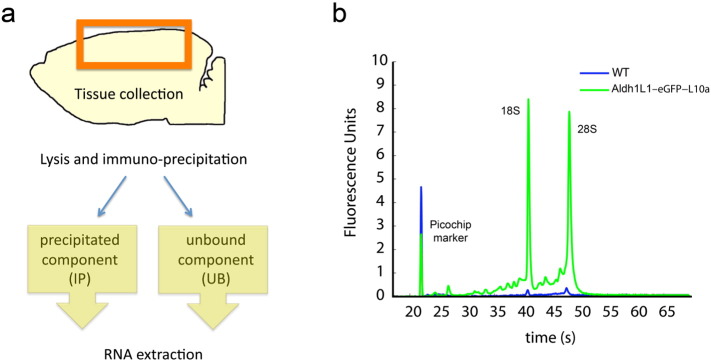
Transcriptomic studies revealed that hundreds of mRNAs show differential expression in the brains of sleeping relative to awake rats, mice, flies, and sparrows. Although these results have offered clues regarding the molecular consequences of sleep and sleep loss, their functional significance thus far has been limited. This is probably because the previous studies pooled transcripts from all brain cells, including neurons and glia. In Bellesi et al. 2015 [1], we used the translating ribosome affinity purification technology (TRAP) and microarray analysis to obtain a genome-wide mRNA profiling of astrocytes as a function of sleep and wake. We used bacterial artificial chromosome (BAC) transgenic mice expressing eGFP tagged ribosomal protein L10a under the promoter of the Aldh1L1 gene, a highly expressed astrocytic gene. Using this approach, we could extract only the astrocytic mRNAs, and only those already committed to be translated into proteins (L10a is part of the translational machinery). Here, we report a detailed description of the protocol used in the study [1]. Array data have been submitted to NCBI GEO under accession number (GSE69079).
转录组学研究表明,与清醒状态的大鼠、小鼠、果蝇和麻雀相比,睡眠状态下数百种mRNA在其大脑中呈现出差异表达。尽管这些结果为睡眠和睡眠剥夺的分子后果提供了线索,但迄今为止它们的功能意义仍较为有限。这可能是因为先前的研究汇集了所有脑细胞(包括神经元和神经胶质细胞)的转录本。在Bellesi等人2015年的研究[1]中,我们使用翻译核糖体亲和纯化技术(TRAP)和微阵列分析,获得了作为睡眠和觉醒函数的星形胶质细胞全基因组mRNA图谱。我们使用了在Aldh1L1基因(一种高表达的星形胶质细胞基因)启动子下表达eGFP标记核糖体蛋白L10a的细菌人工染色体(BAC)转基因小鼠。通过这种方法,我们只能提取星形胶质细胞的mRNA,而且只能提取那些已被确定要翻译成蛋白质的mRNA(L10a是翻译机制的一部分)。在此,我们报告该研究[1]中所使用方案的详细描述。阵列数据已提交至NCBI GEO,登录号为(GSE69079)。