Kang Yuli, Zhu Zaihua, Zheng Yonghua, Wan Weiguo, Manole Catalin G, Zhang Qiangqiang
Department of Dermatology, Huashan Hospital, Fudan University, Shanghai, China.
Division of Rheumatology, Huashan Hospital, Fudan University, Shanghai, China.
J Cell Mol Med. 2015 Nov;19(11):2530-9. doi: 10.1111/jcmm.12671. Epub 2015 Sep 28.
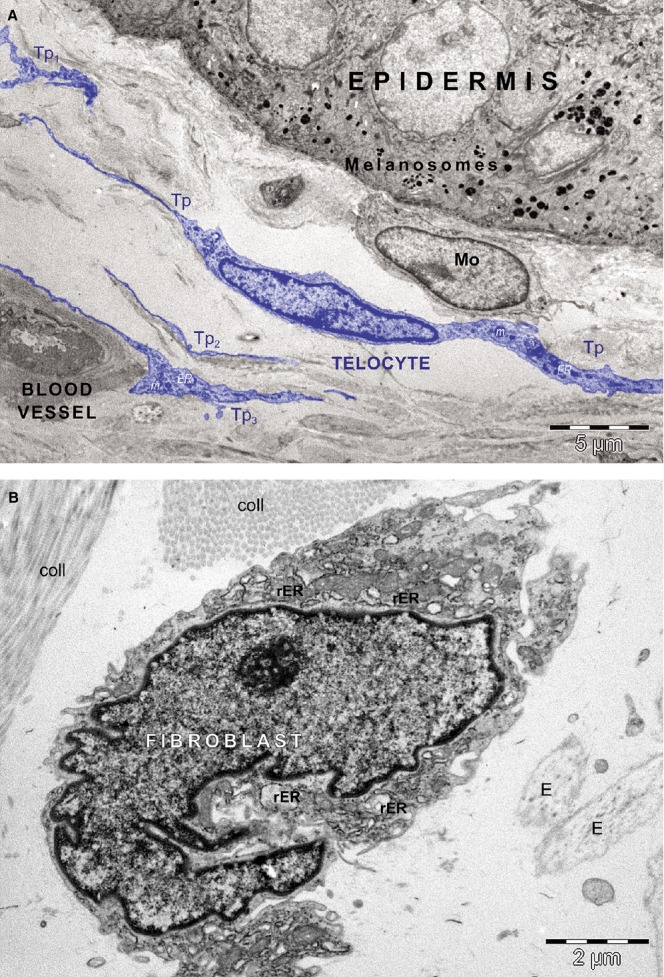
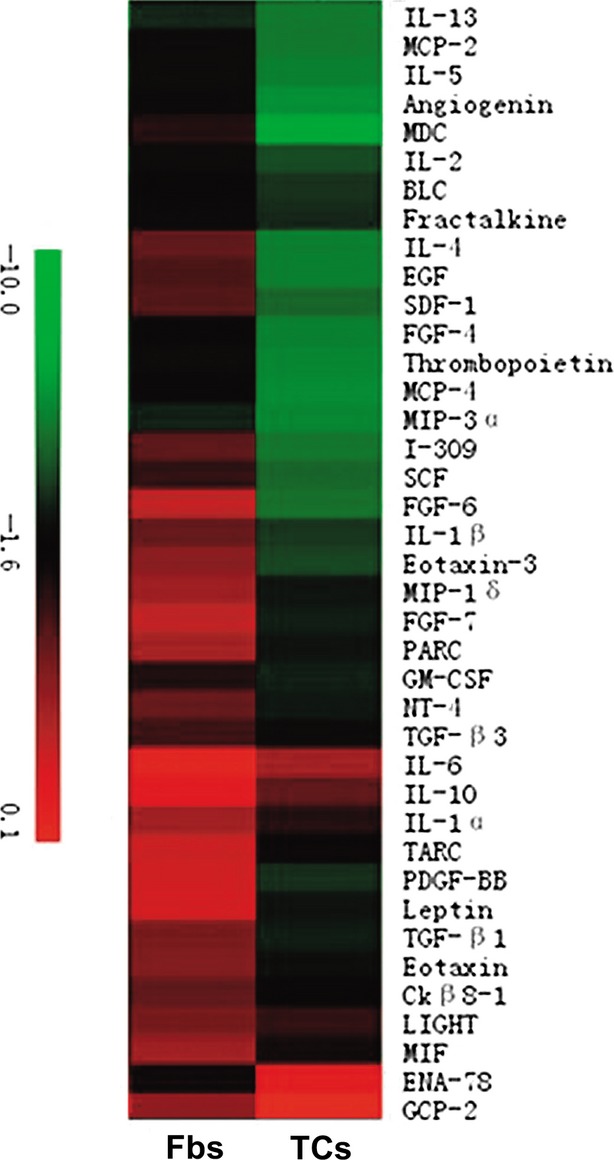
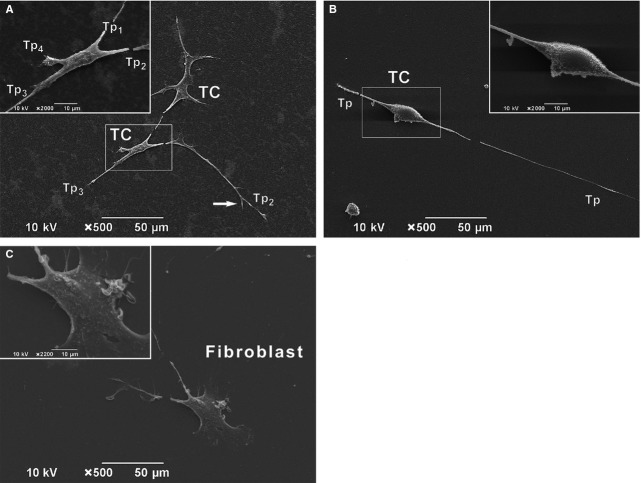
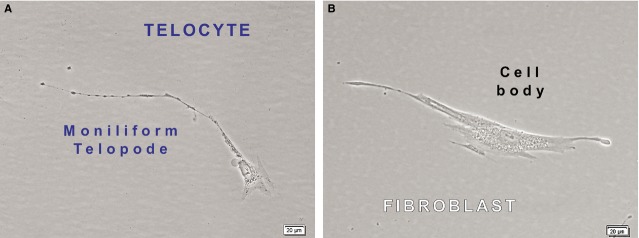
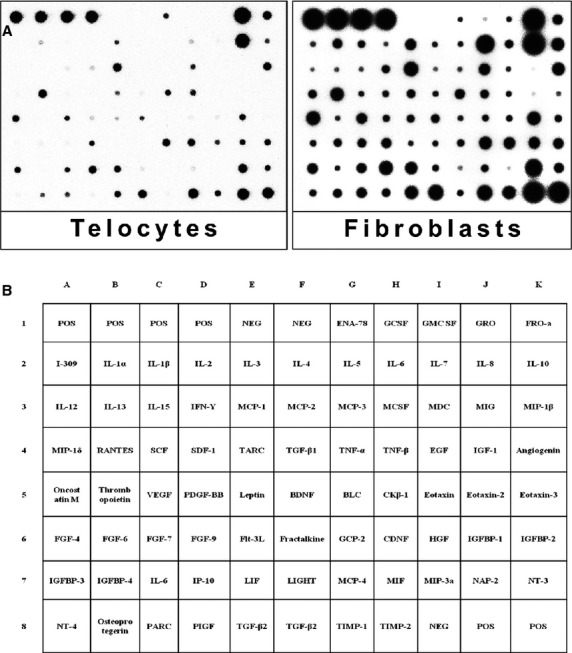
It is already accepted that telocytes (TCs) represent a new type of interstitial cells in human dermis. In normal skin, TCs have particular spatial relations with different dermal structures such as blood vessels, hair follicles, arrector pili muscles or segments of sebaceous and/or eccrine sweat glands. The distribution and the density of TCs is affected in various skin pathological conditions. Previous studies mentioned the particular (ultra)structure of TCs and also their immunophenotype, miR imprint or proteome, genome or secretome features. As fibroblast is the most common intersitital cell (also in human dermis), a dedicated comparison between human skin TCs and fibroblasts (Fbs) was required to be performed. In this study, using different techniques, we document several points of difference between human dermis TCs and Fbs. By transmission electron microscopy (TEM) and scanning electron microscopy (SEM), we demonstrated TCs with their hallmark cellular prolongations - telopodes. Thus, we showed their ultrastructural distinctiveness from Fbs. By RayBio Human Cytokine Antibody Array V analyses performed on the supernatant from separately cultured TCs and Fbs, we detected the cytokine profile of both cell types, individually. Two of 79 detected cytokines - epithelial-derived neutrophil-activating peptide 78 and granulocyte chemotactic protein-2 - were 1.5 times higher in the supernatant of TCs (comparing with Fbs). On the other hand, 37 cytokines were at least 1.5 higher in Fbs supernatant (comparing with TCs), and among them six cytokines - interleukin 5, monocyte chemotactic protein-3 (MCP-3), MCP-4, macrophage inflammatory protein-3, angiogenin, thrombopoietin - being 9.5 times higher (results also confirmed by ELISA testing). In summary, using different techniques, we showed that human dermal TCs and Fbs are different in terms of ultrastructure and cytokine profile.
已经公认,端粒细胞(TCs)是人类真皮中的一种新型间质细胞。在正常皮肤中,TCs与不同的真皮结构,如血管、毛囊、立毛肌或皮脂腺和/或小汗腺的节段,具有特定的空间关系。在各种皮肤病理状况下,TCs的分布和密度会受到影响。先前的研究提到了TCs的特殊(超)结构以及它们的免疫表型、miR印记或蛋白质组、基因组或分泌组特征。由于成纤维细胞是最常见的间质细胞(在人类真皮中也是如此),因此需要对人类皮肤TCs和成纤维细胞(Fbs)进行专门比较。在本研究中,我们使用不同技术记录了人类真皮TCs和Fbs之间的几个差异点。通过透射电子显微镜(TEM)和扫描电子显微镜(SEM),我们展示了具有标志性细胞延长部分——端粒的TCs。因此,我们展示了它们与Fbs在超微结构上的独特性。通过对分别培养的TCs和Fbs的上清液进行RayBio人类细胞因子抗体阵列V分析,我们分别检测了两种细胞类型的细胞因子谱。在检测到的79种细胞因子中,有两种——上皮衍生的中性粒细胞激活肽78和粒细胞趋化蛋白-2——在TCs的上清液中比Fbs高1.5倍。另一方面,有37种细胞因子在Fbs的上清液中比TCs至少高1.5倍,其中六种细胞因子——白细胞介素5、单核细胞趋化蛋白-3(MCP-3)、MCP-4、巨噬细胞炎性蛋白-3、血管生成素、血小板生成素——高9.5倍(酶联免疫吸附测定测试也证实了结果)。总之,我们使用不同技术表明,人类真皮TCs和Fbs在超微结构和细胞因子谱方面存在差异。