Vinberg Frans, Turunen Teemu T, Heikkinen Hanna, Pitkänen Marja, Koskelainen Ari
Department of Neuroscience and Biomedical Engineering, Aalto University School of Science, FI-00076 Aalto, Finland Department of Ophthalmology and Visual Sciences, Washington University School of Medicine, St. Louis, MO 63110
Department of Neuroscience and Biomedical Engineering, Aalto University School of Science, FI-00076 Aalto, Finland.
J Gen Physiol. 2015 Oct;146(4):307-21. doi: 10.1085/jgp.201511412.
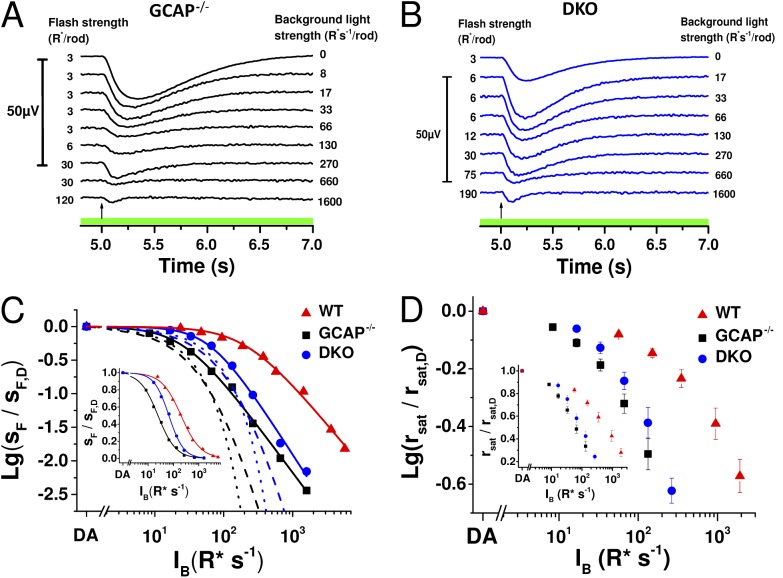
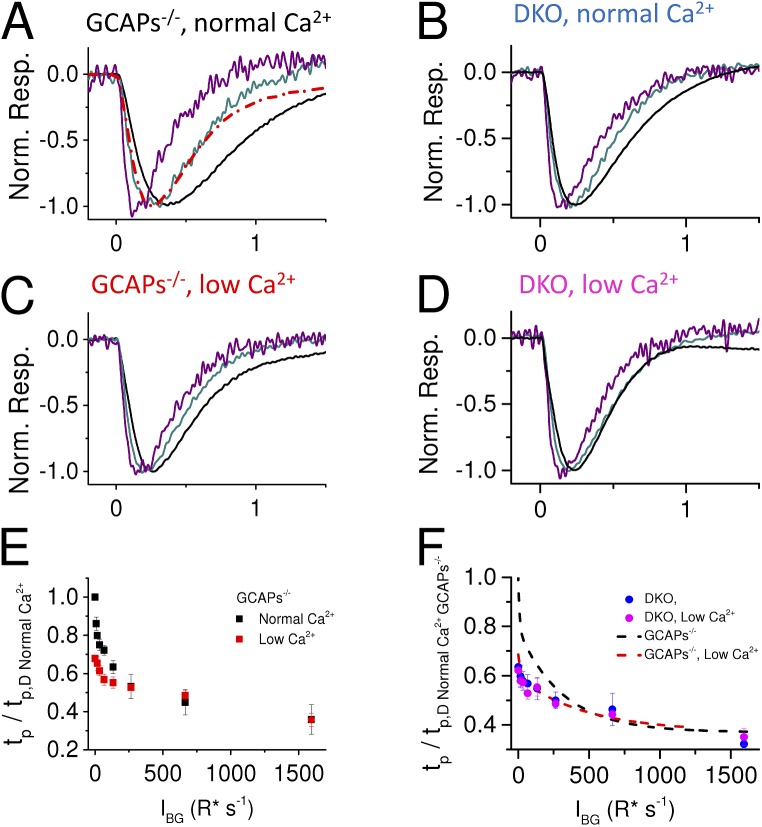
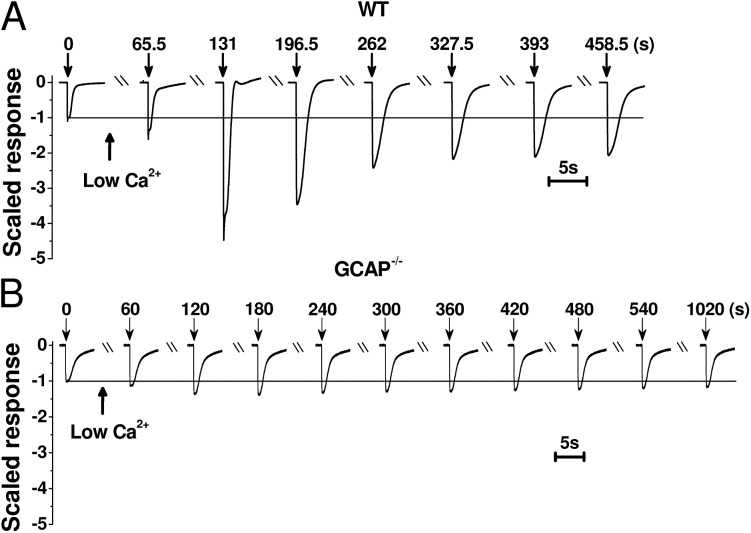
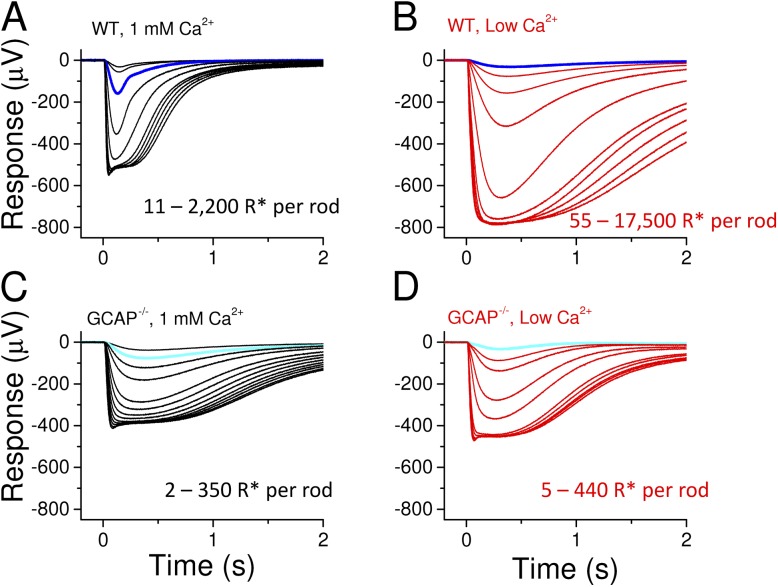
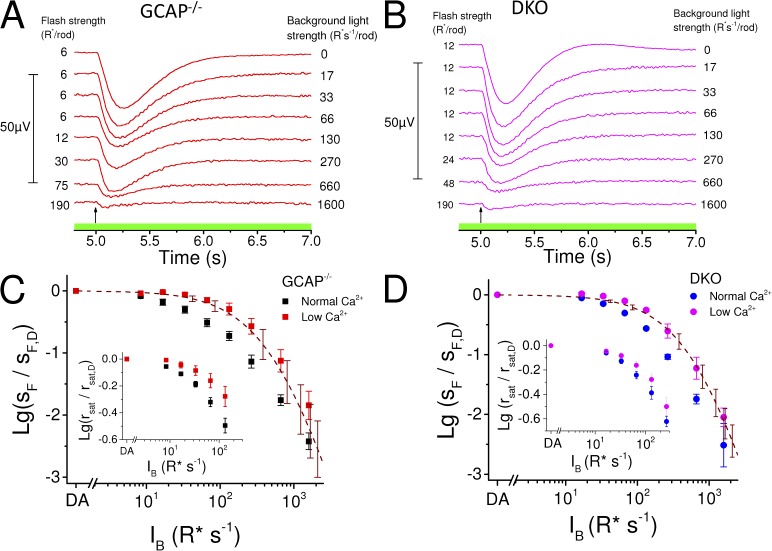
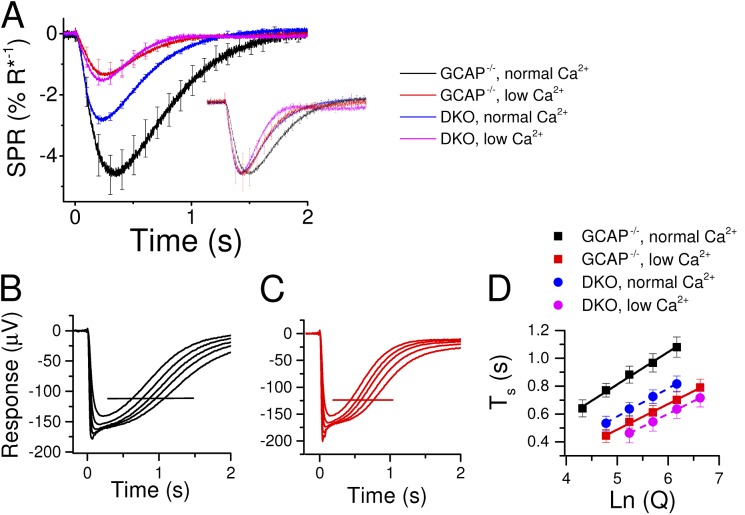
Sensory cells adjust their sensitivity to incoming signals, such as odor or light, in response to changes in background stimulation, thereby extending the range over which they operate. For instance, rod photoreceptors are extremely sensitive in darkness, so that they are able to detect individual photons, but remain responsive to visual stimuli under conditions of bright ambient light, which would be expected to saturate their response given the high gain of the rod transduction cascade in darkness. These photoreceptors regulate their sensitivity to light rapidly and reversibly in response to changes in ambient illumination, thereby avoiding saturation. Calcium ions (Ca2+) play a major role in mediating the rapid, subsecond adaptation to light, and the Ca2+-binding proteins GCAP1 and GCAP2 (or guanylyl cyclase-activating proteins [GCAPs]) have been identified as important mediators of the photoreceptor response to changes in intracellular Ca2+. However, mouse rods lacking both GCAP1 and GCAP2 (GCAP-/-) still show substantial light adaptation. Here, we determined the Ca2+ dependency of this residual light adaptation and, by combining pharmacological, genetic, and electrophysiological tools, showed that an unknown Ca2+-dependent mechanism contributes to light adaptation in GCAP-/- mouse rods. We found that mimicking the light-induced decrease in intracellular [Ca2+] accelerated recovery of the response to visual stimuli and caused a fourfold decrease of sensitivity in GCAP-/- rods. About half of this Ca2+-dependent regulation of sensitivity could be attributed to the recoverin-mediated pathway, whereas half of it was caused by the unknown mechanism. Furthermore, our data demonstrate that the feedback mechanisms regulating the sensitivity of mammalian rods on the second and subsecond time scales are all Ca2+ dependent and that, unlike salamander rods, Ca2+-independent background-induced acceleration of flash response kinetics is rather weak in mouse rods.
感觉细胞会根据背景刺激的变化来调整其对传入信号(如气味或光线)的敏感度,从而扩大其运作范围。例如,视杆光感受器在黑暗中极其敏感,能够检测到单个光子,但在明亮的环境光条件下仍能对视觉刺激做出反应。鉴于视杆转导级联在黑暗中的高增益,预计这种强光会使其反应饱和。这些光感受器会根据环境光照的变化迅速且可逆地调节其对光的敏感度,从而避免饱和。钙离子(Ca2+)在介导对光的快速、亚秒级适应中起主要作用,并且已确定Ca2+结合蛋白GCAP1和GCAP2(或鸟苷酸环化酶激活蛋白[GCAPs])是光感受器对细胞内Ca2+变化反应的重要介质。然而,同时缺乏GCAP1和GCAP2(GCAP-/-)的小鼠视杆仍表现出显著的光适应。在这里,我们确定了这种残余光适应的Ca2+依赖性,并通过结合药理学、遗传学和电生理学工具表明,一种未知的Ca2+依赖性机制有助于GCAP-/-小鼠视杆的光适应。我们发现,模拟光诱导的细胞内[Ca2+]降低会加速对视觉刺激的反应恢复,并导致GCAP-/-视杆的敏感度降低四倍。这种对敏感度的Ca2+依赖性调节中约一半可归因于恢复蛋白介导的途径,而另一半是由未知机制引起的。此外,我们的数据表明,在秒级和亚秒级时间尺度上调节哺乳动物视杆敏感度的反馈机制均依赖于Ca2+,并且与蝾螈视杆不同,在小鼠视杆中,与Ca2+无关的背景诱导的闪光反应动力学加速相当微弱。