Li Haiyan, Li Xiaoshuang, Zhang Daoyuan, Liu Huiliang, Guan Kaiyun
Key Laboratory of Biogeography and Bioresource in Arid Land, Xinjiang Institute of Ecology and Geography, Chinese Academy of Sciences, Xinjiang Urumqi 830011, China ; Graduate University of Chinese Academy of Sciences, Beijing 100039, China.
Key Laboratory of Biogeography and Bioresource in Arid Land, Xinjiang Institute of Ecology and Geography, Chinese Academy of Sciences, Xinjiang Urumqi 830011, China.
EXCLI J. 2013 Feb 4;12:89-101. eCollection 2013.
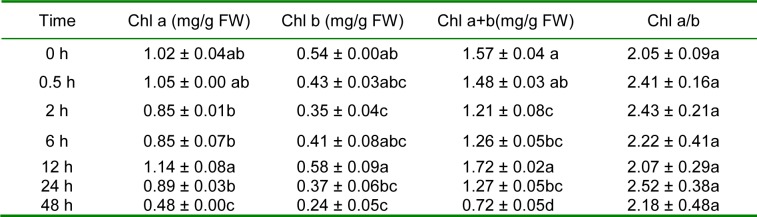
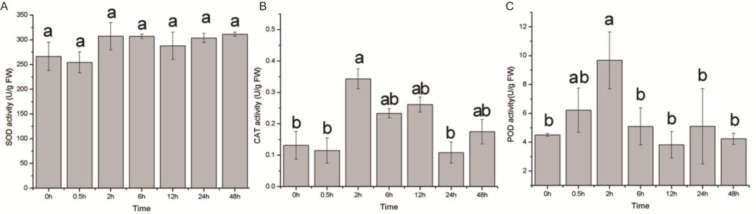
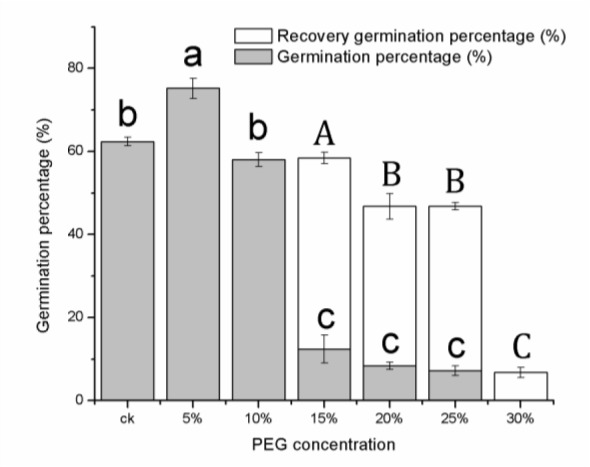
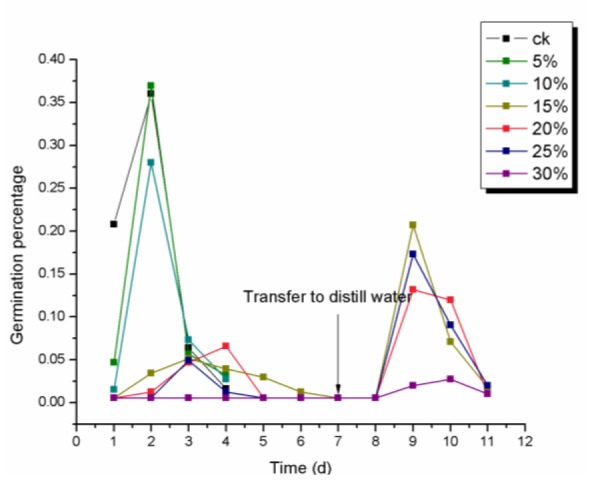
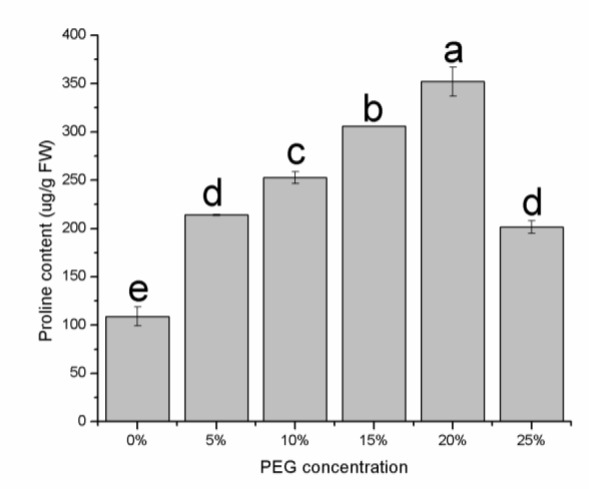
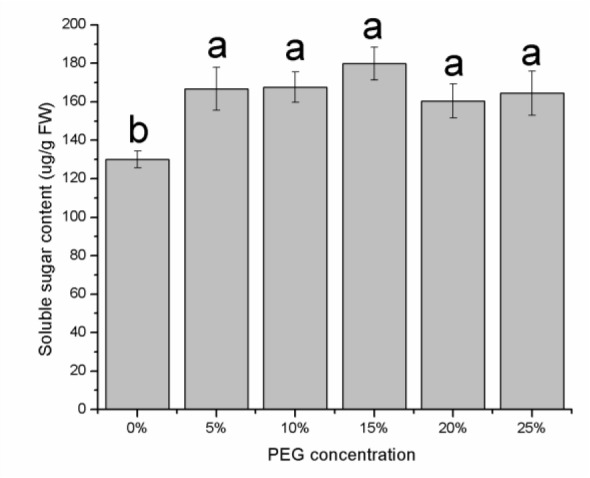
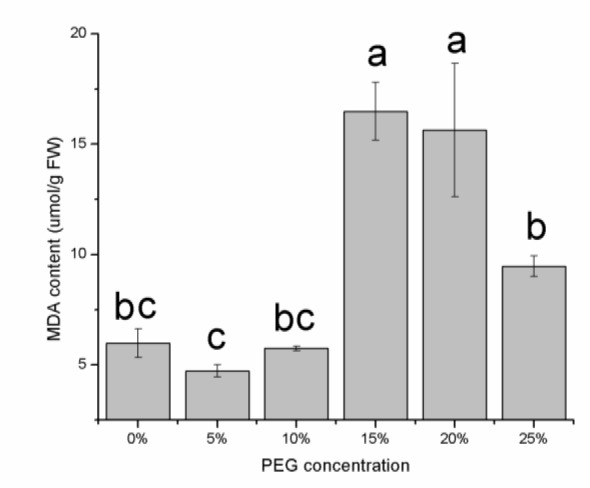
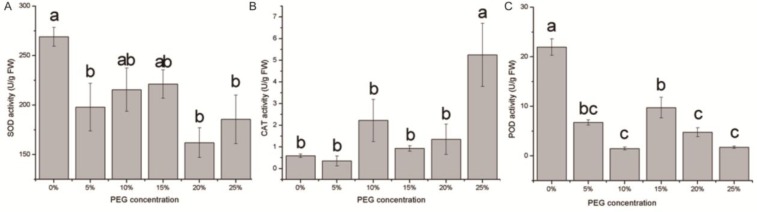
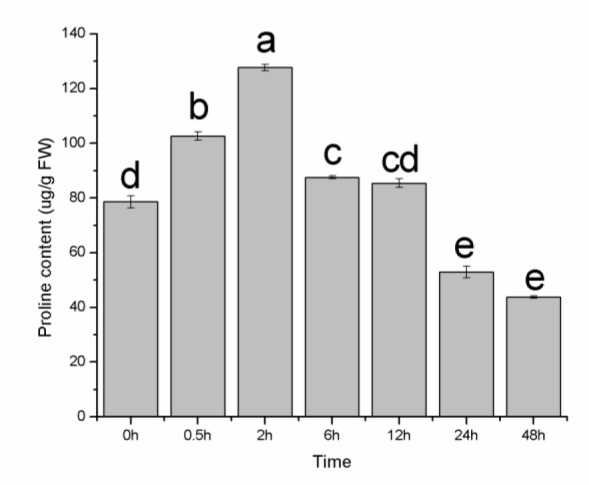
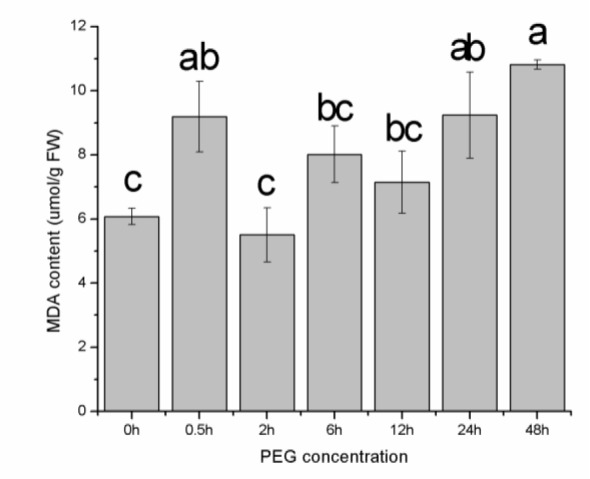
Eremosparton songoricum (Litv.) Vass. is an endemic and extremely drought-resistant desert plant with populations that are gradually declining due to the failure of sexual recruitment. The effects of drought stress on the seed germination and physiological characteristics of seeds and seedlings were investigated. The results showed that the germination percentage decreased with an increase of polyethylene glycol 6000 (PEG) concentration: -0.3 MPa (5 % PEG) had a promoting effect on seed germination, -0.9 MPa (15 % PEG) dramatically reduced germination, and -1.8 MPa (30 % PEG) was the threshold for E. songoricum germination. However, the contents of proline and soluble sugars and the activity of CAT increased with increasing PEG concentrations. At the young seedling stage, the proline content and CAT, SOD and POD activities all increased at 2 h and then decreased; except for a decrease at 2 h, the MDA content also increased compared to the control (0 h). These results indicated that 2 h may be a key response time point for E. songoricum to resist drought stress. The above results demonstrate that drought stress can suppress and delay the germination of E. songoricum and that the seeds accumulate osmolytes and augment the activity of antioxidative enzymes to cope with drought injury. E. songoricum seedlings are sensitive to water stress and can quickly respond to drought but cannot tolerate drought for an extended period. Although such physiological and biochemical changes are important strategies for E. songoricum to adapt to a drought-prone environment, they may be, at least partially, responsible for the failure of sexual reproduction under natural conditions.
准噶尔无叶豆(Eremosparton songoricum (Litv.) Vass.)是一种特有的极度耐旱的荒漠植物,其种群数量因有性繁殖失败而逐渐减少。研究了干旱胁迫对种子和幼苗种子萌发及生理特性的影响。结果表明,随着聚乙二醇6000(PEG)浓度的增加,发芽率降低:-0.3 MPa(5% PEG)对种子萌发有促进作用,-0.9 MPa(15% PEG)显著降低发芽率,-1.8 MPa(30% PEG)是准噶尔无叶豆种子萌发的阈值。然而,脯氨酸、可溶性糖含量以及CAT活性随PEG浓度增加而升高。在幼苗期,脯氨酸含量以及CAT、SOD和POD活性在2 h时均升高,之后降低;MDA含量除在2 h时降低外,与对照(0 h)相比也有所升高。这些结果表明,2 h可能是准噶尔无叶豆抵抗干旱胁迫的关键响应时间点。上述结果表明,干旱胁迫可抑制和延迟准噶尔无叶豆种子萌发,种子通过积累渗透调节物质和增强抗氧化酶活性来应对干旱伤害。准噶尔无叶豆幼苗对水分胁迫敏感,能快速响应干旱,但不能长时间耐受干旱。尽管这些生理生化变化是准噶尔无叶豆适应干旱环境的重要策略,但它们可能至少部分地导致了自然条件下有性繁殖的失败。