Camarena-Tello Julio César, Rocha-Guzmán Nuria Elizabeth, Gallegos-Infante José Alberto, González-Laredo Rubén Francisco, Pedraza-Bucio Fabiola Eugenia, López-Albarrán Pablo, Herrera-Bucio Rafael, Rutiaga-Quiñones José Guadalupe
Facultad de Ingeniería en Tecnología de la Madera, Edificio D, Ciudad Universitaria, Universidad Michoacana de San Nicolás de Hidalgo, Av. Fco. J. Múgica S/N. Col. Felicitas de Río, Morelia, Michoacán, C.P. 58040, México.
Departamento de Ingenierías Química y Bioquímica, Instituto Tecnológico de Durango, Blvd. Felipe Pescador 1830 Ote., Col. Nueva Vizcaya, Durango, Durango, C.P. 34080, México.
EXCLI J. 2015 Feb 4;14:204-12. doi: 10.17179/excli2014-467. eCollection 2015.
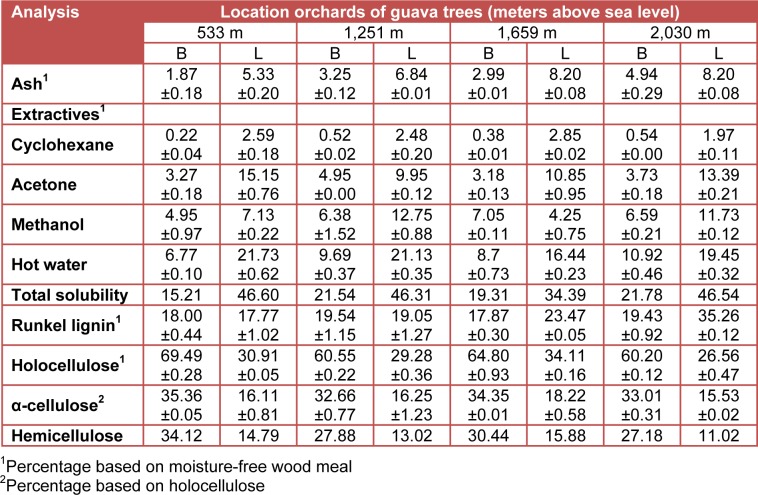
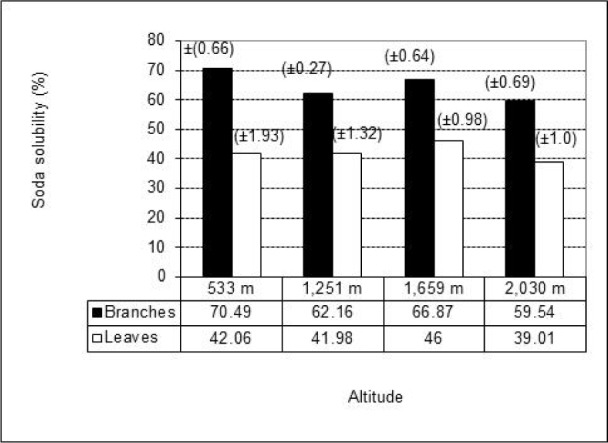
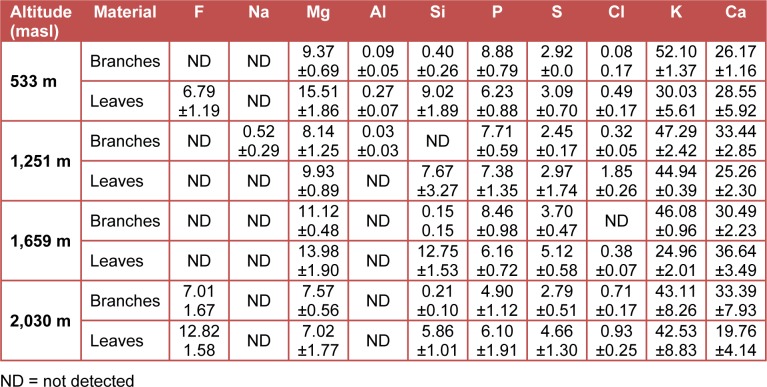
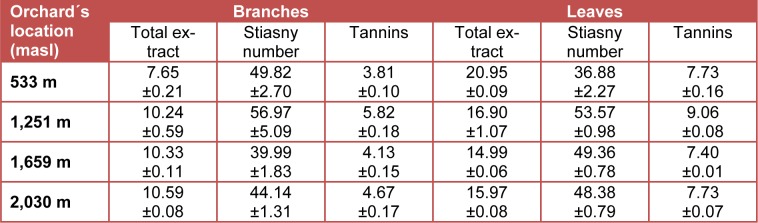
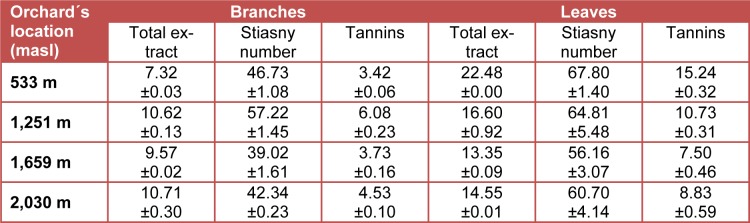
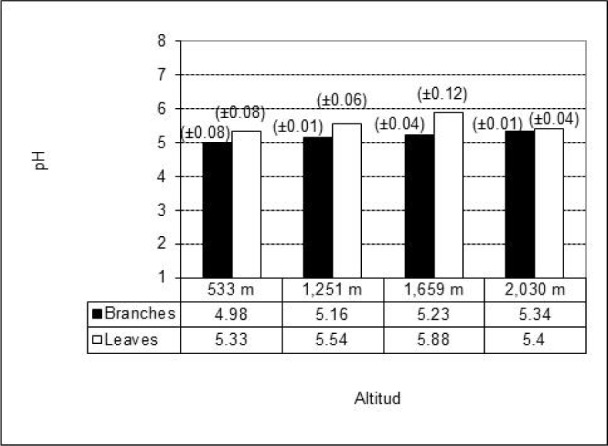
Psidium guajava L. (Myrtaceae) is a native plant of Central America and is now widely cultivated in many tropical regions of the world for the fruit production. In Mexico, in the guava orchards common practices to control fruit production are: water stress, defoliation and pruning. In this study, we report the chemical composition of the biomass (branches and leaves) generated in the pruning practices. The results ranged as follows: pH (4.98-5.88), soda solubility (39.01-70.49 %), ash (1.87-8.20 %); potassium and calcium were the major inorganic elements in ash. No heavy metals were detected in the studied samples; total solubility (15.21-46.60 %), Runkel lignin (17.77-35.26 %), holocellulose (26.56 -69.49 %), α-cellulose (15.53-35.36 %), hemicelluloses (11.02-34.12 %), tannins in aqueous extracts (3.81-9.06 %), and tannins in ethanolic extracts (3.42-15.24 %).
番石榴(Psidium guajava L.,桃金娘科)原产于中美洲,现因果实生产在世界许多热带地区广泛种植。在墨西哥,番石榴果园控制果实产量的常见做法有:水分胁迫、落叶和修剪。在本研究中,我们报告了修剪过程中产生的生物质(树枝和树叶)的化学成分。结果如下:pH值(4.98 - 5.88)、苏打溶解度(39.01 - 70.49%)、灰分(1.87 - 8.20%);钾和钙是灰分中的主要无机元素。在所研究的样品中未检测到重金属;总溶解度(15.21 - 46.60%)、Runkel木质素(17.77 - 35.26%)、全纤维素(26.56 - 69.49%)、α-纤维素(15.53 - 35.36%)、半纤维素(11.02 - 34.12%)、水提取物中的单宁(3.81 - 9.06%)以及乙醇提取物中的单宁(3.42 - 15.24%)。