Städele Carola, Heigele Stefanie, Stein Wolfgang
Institute of Neurobiology, Ulm University, Ulm, Germany; School of Biological Sciences, Illinois State University, Normal, Illinois, United States of America.
Institute of Neurobiology, Ulm University, Ulm, Germany.
PLoS Biol. 2015 Sep 29;13(9):e1002265. doi: 10.1371/journal.pbio.1002265. eCollection 2015.
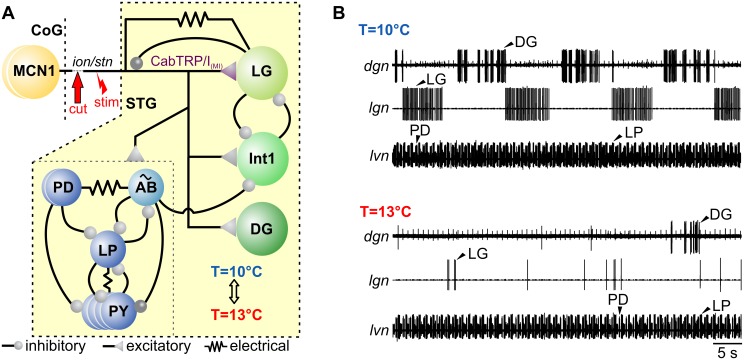
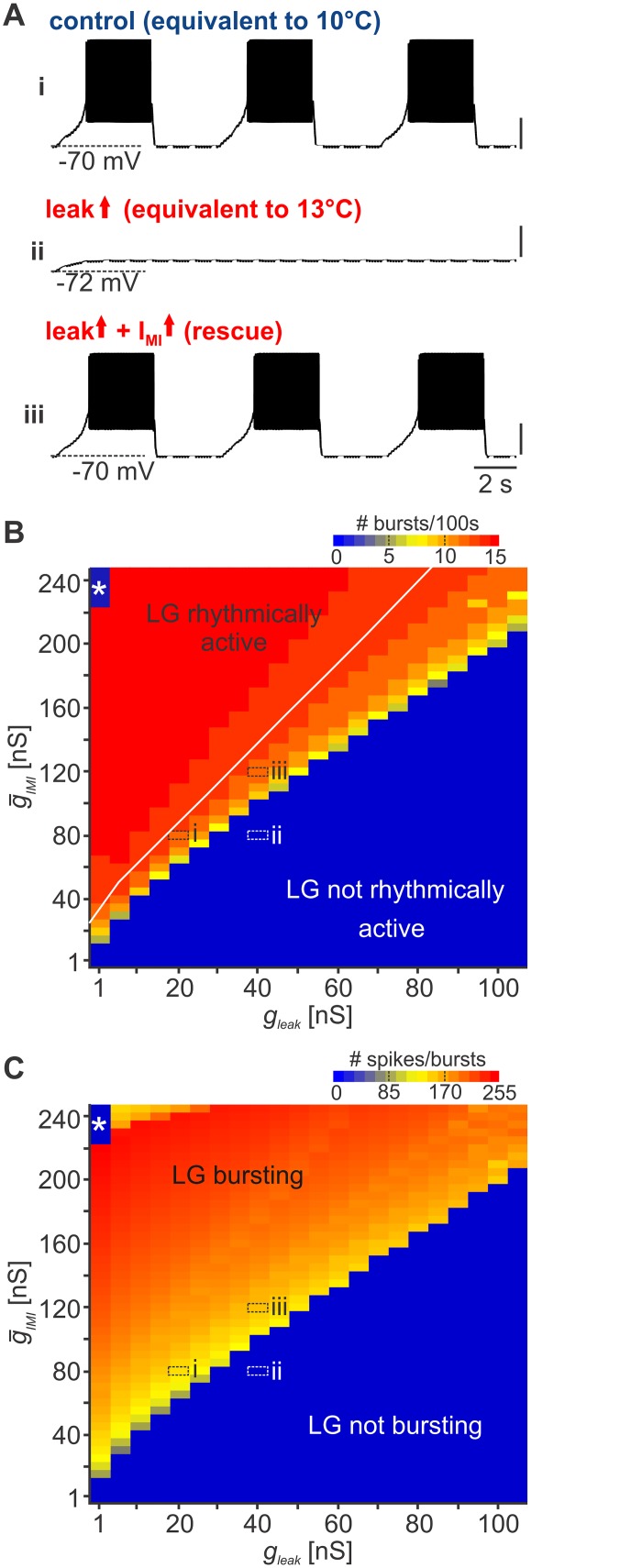
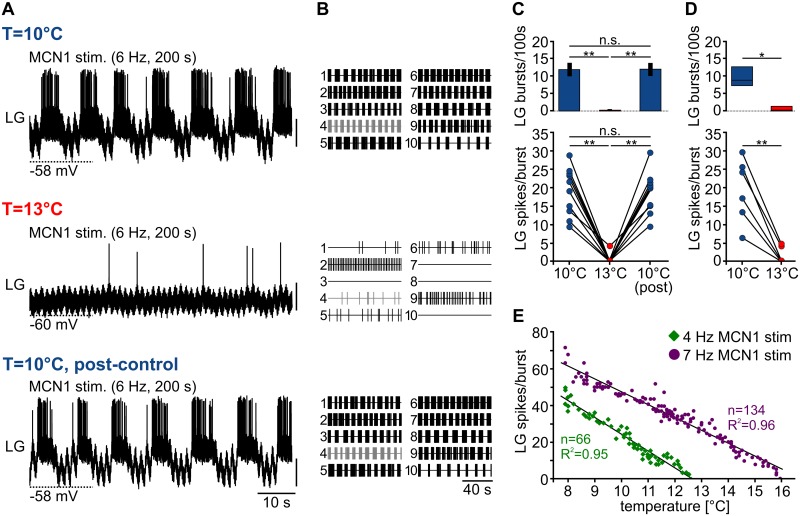
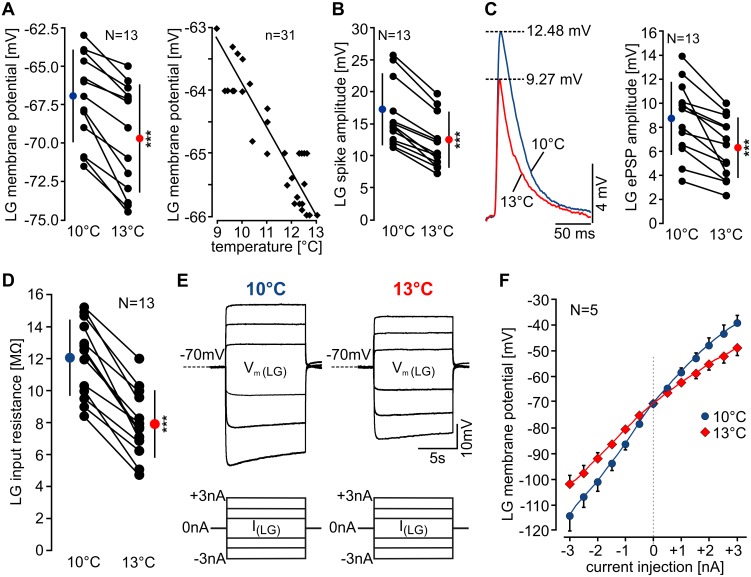
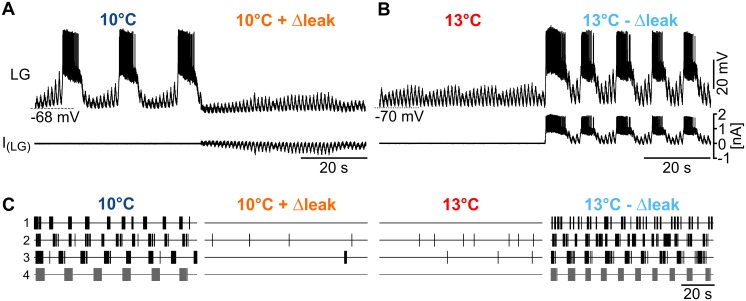
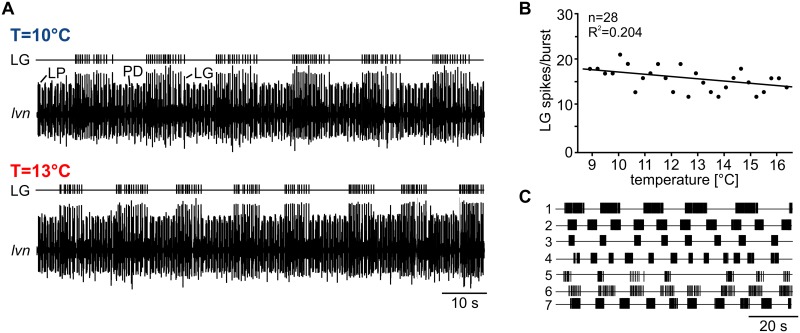
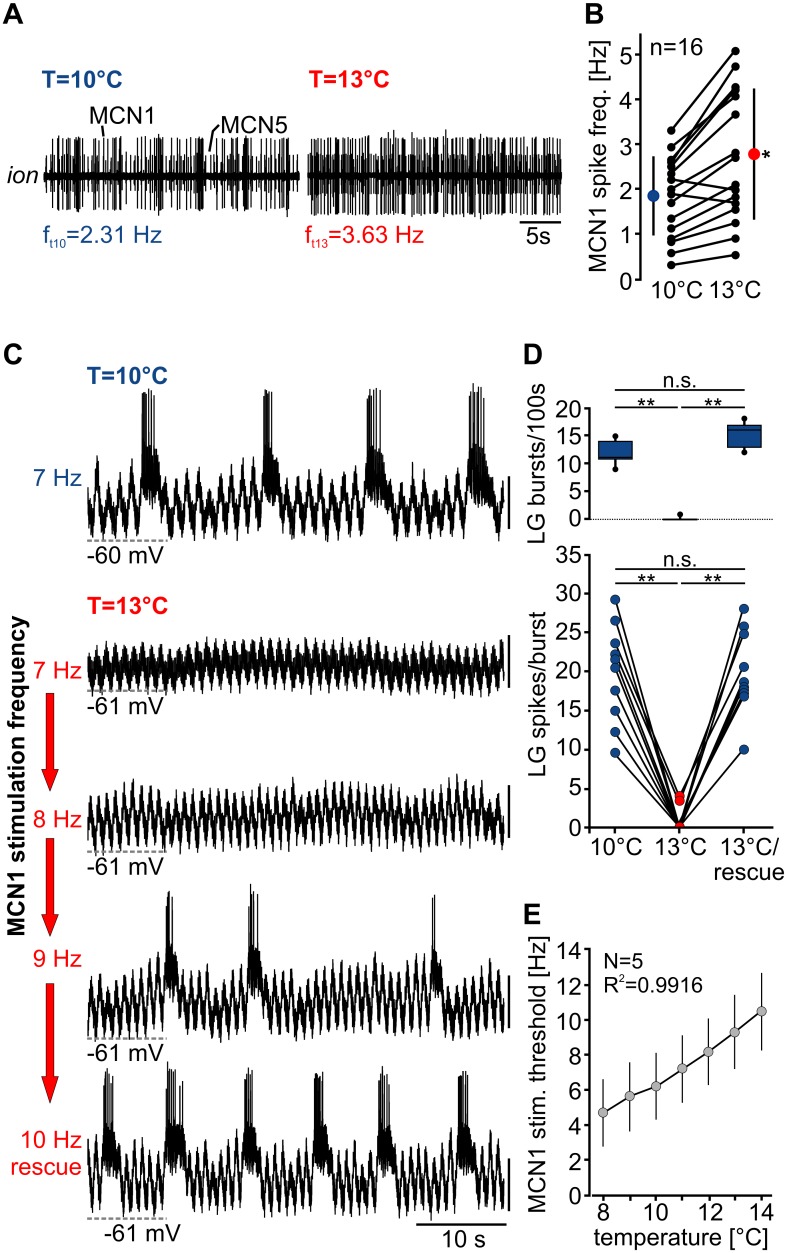
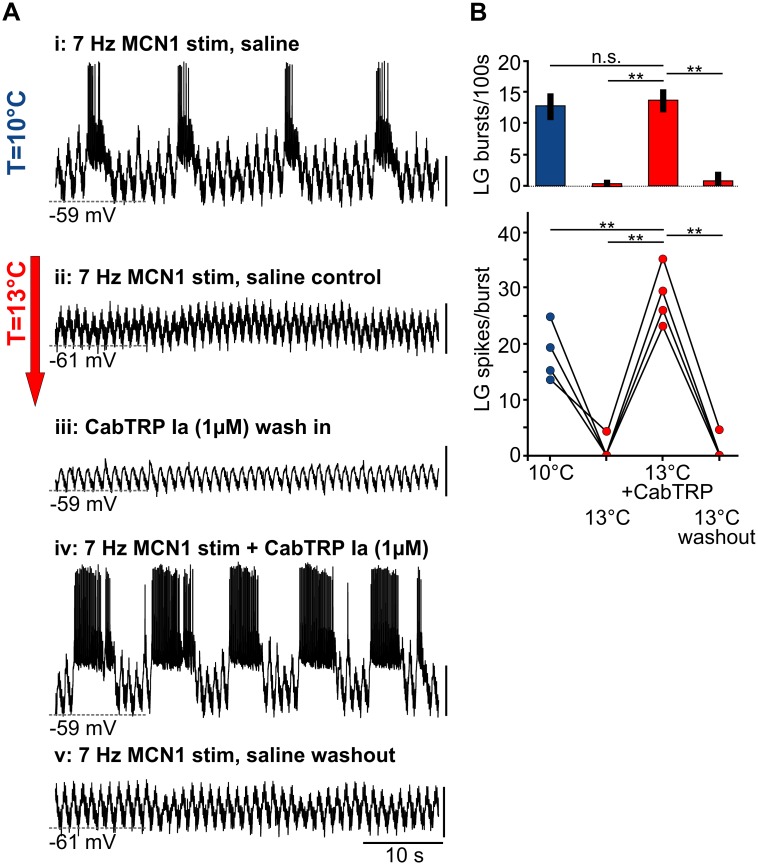
Stable rhythmic neural activity depends on the well-coordinated interplay of synaptic and cell-intrinsic conductances. Since all biophysical processes are temperature dependent, this interplay is challenged during temperature fluctuations. How the nervous system remains functional during temperature perturbations remains mostly unknown. We present a hitherto unknown mechanism of how temperature-induced changes in neural networks are compensated by changing their neuromodulatory state: activation of neuromodulatory pathways establishes a dynamic coregulation of synaptic and intrinsic conductances with opposing effects on neuronal activity when temperature changes, hence rescuing neuronal activity. Using the well-studied gastric mill pattern generator of the crab, we show that modest temperature increase can abolish rhythmic activity in isolated neural circuits due to increased leak currents in rhythm-generating neurons. Dynamic clamp-mediated addition of leak currents was sufficient to stop neuronal oscillations at low temperatures, and subtraction of additional leak currents at elevated temperatures was sufficient to rescue the rhythm. Despite the apparent sensitivity of the isolated nervous system to temperature fluctuations, the rhythm could be stabilized by activating extrinsic neuromodulatory inputs from descending projection neurons, a strategy that we indeed found to be implemented in intact animals. In the isolated nervous system, temperature compensation was achieved by stronger extrinsic neuromodulatory input from projection neurons or by augmenting projection neuron influence via bath application of the peptide cotransmitter Cancer borealis tachykinin-related peptide Ia (CabTRP Ia). CabTRP Ia activates the modulator-induced current IMI (a nonlinear voltage-gated inward current) that effectively acted as a negative leak current and counterbalanced the temperature-induced leak to rescue neuronal oscillations. Computational modelling revealed the ability of IMI to reduce detrimental leak-current influences on neuronal networks over a broad conductance range and indicated that leak and IMI are closely coregulated in the biological system to enable stable motor patterns. In conclusion, these results show that temperature compensation does not need to be implemented within the network itself but can be conditionally provided by extrinsic neuromodulatory input that counterbalances temperature-induced modifications of circuit-intrinsic properties.
稳定的节律性神经活动依赖于突触电导和细胞内在电导之间良好协调的相互作用。由于所有生物物理过程都依赖于温度,这种相互作用在温度波动期间会受到挑战。神经系统在温度扰动期间如何保持功能仍然大多未知。我们提出了一种迄今为止未知的机制,即神经网络中温度诱导的变化如何通过改变其神经调节状态来得到补偿:神经调节通路的激活建立了突触电导和内在电导的动态共同调节,在温度变化时对神经元活动产生相反的影响,从而挽救神经元活动。利用研究充分的螃蟹胃磨模式发生器,我们表明适度的温度升高会由于节律产生神经元中泄漏电流增加而消除孤立神经回路中的节律性活动。动态钳介导的泄漏电流添加足以在低温下停止神经元振荡,而在高温下减去额外的泄漏电流足以挽救节律。尽管孤立的神经系统对温度波动明显敏感,但通过激活来自下行投射神经元的外在神经调节输入可以稳定节律,我们确实发现这种策略在完整动物中得到了实施。在孤立的神经系统中,通过投射神经元更强的外在神经调节输入或通过在浴中应用肽共递质北方蟹速激肽相关肽Ia(CabTRP Ia)增强投射神经元的影响来实现温度补偿。CabTRP Ia激活调制器诱导电流IMI(一种非线性电压门控内向电流),该电流有效地充当负泄漏电流并抵消温度诱导的泄漏以挽救神经元振荡。计算模型揭示了IMI在广泛的电导范围内减少有害泄漏电流对神经网络影响的能力,并表明泄漏和IMI在生物系统中紧密共同调节以实现稳定的运动模式。总之,这些结果表明温度补偿不需要在网络本身内实施,而是可以由外在神经调节输入有条件地提供,该输入抵消温度诱导的电路内在特性的改变。