Nemeth Zsuzsanna, Li Mailin, Csizmadia Eva, Döme Balazs, Johansson Martin, Persson Jenny Liao, Seth Pankaj, Otterbein Leo, Wegiel Barbara
Department of Surgery, Beth Israel Deaconess Medical Center, Harvard Medical School, Boston, MA, USA.
Department of Tumor Biology, National Koranyi Institute of TB and Pulmonology, Budapest, Hungary.
Oncotarget. 2015 Oct 20;6(32):33675-88. doi: 10.18632/oncotarget.5284.
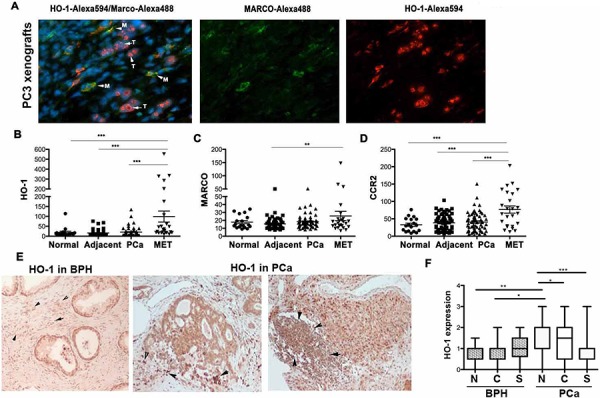
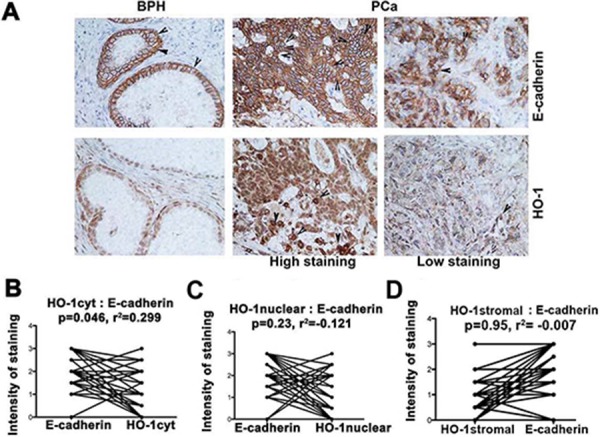
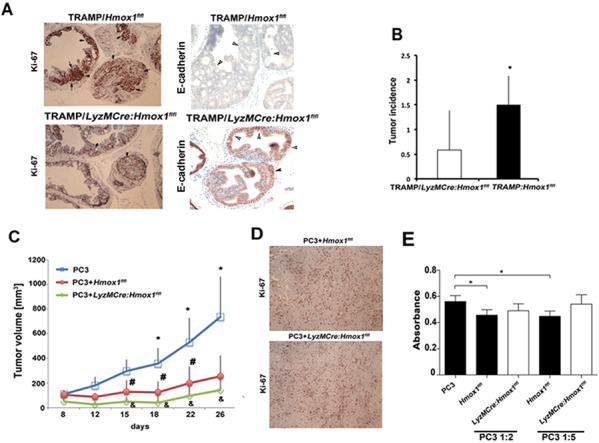
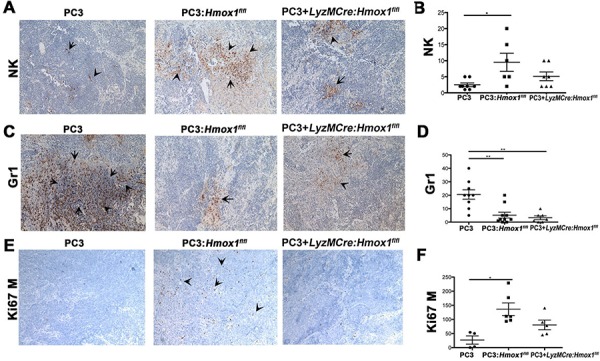
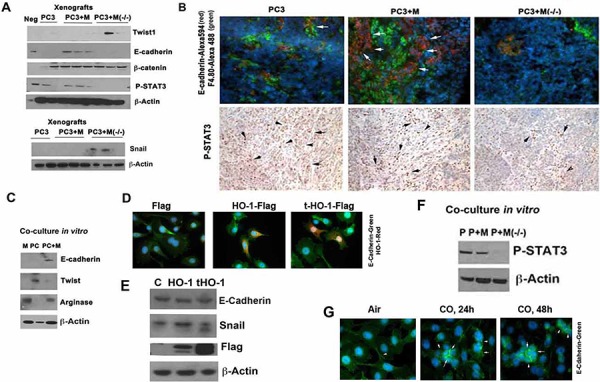
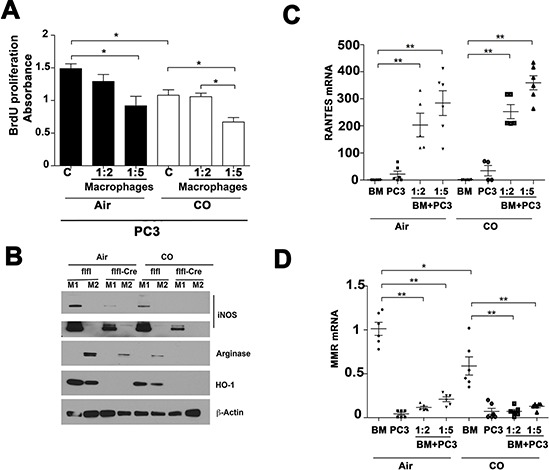
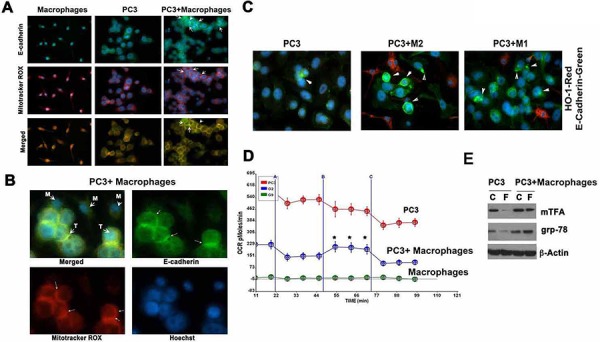
Innate immune cells strongly influence cancer growth and progression via multiple mechanisms including regulation of epithelial to mesenchymal transition (EMT). In this study, we investigated whether expression of the metabolic gene, heme oxygenase-1 (HO-1) in tumor microenvironment imparts significant effects on prostate cancer progression.We showed that HO-1 is expressed in MARCO-positive macrophages in prostate cancer (PCa) xenografts and human prostate cancers. We demonstrated that macrophage specific (LyzM-Cre) conditional deletion of HO-1 suppressed growth of PC3 xenografts in vivo and delayed progression of prostate intraepithelial neoplasia (PIN) in TRAMP mice. However, initiation and progression of cancer xenografts in the presence of macrophages lacking HO-1 resulted in loss of E-cadherin, a known marker of poor prognosis as well as EMT. Application of CO, a product of HO-1 catalysis, increased levels of E-cadherin in the adherens junctions between cancer cells. We further showed that HO-1-driven expression of E-cadherin in cancer cells cultured in the presence of macrophages is dependent on mitochondrial activity of cancer cells.In summary, these data suggest that HO-1-derived CO from tumor-associated macrophages influences, in part, E-cadherin expression and thus tumor initiation and progression.
固有免疫细胞通过多种机制,包括调节上皮-间质转化(EMT),对癌症的生长和进展产生强烈影响。在本研究中,我们调查了肿瘤微环境中代谢基因血红素加氧酶-1(HO-1)的表达是否对前列腺癌进展有显著影响。我们发现HO-1在前列腺癌(PCa)异种移植瘤和人类前列腺癌的MARCO阳性巨噬细胞中表达。我们证明巨噬细胞特异性(LyzM-Cre)条件性缺失HO-1可抑制PC3异种移植瘤在体内的生长,并延缓TRAMP小鼠前列腺上皮内瘤变(PIN)的进展。然而,在缺乏HO-1的巨噬细胞存在下,癌症异种移植瘤的起始和进展导致E-钙黏蛋白丢失,E-钙黏蛋白是预后不良以及EMT的已知标志物。HO-1催化产物CO的应用增加了癌细胞间黏附连接中E-钙黏蛋白的水平。我们进一步表明,在巨噬细胞存在下培养时,HO-1驱动的癌细胞中E-钙黏蛋白的表达依赖于癌细胞的线粒体活性。总之,这些数据表明肿瘤相关巨噬细胞产生的HO-1衍生的CO部分影响E-钙黏蛋白的表达,从而影响肿瘤的起始和进展。