Lagarrigue Frederic, Vikas Anekal Praju, Lee Ho-Sup, Bachir Alexia I, Ablack Jailal N, Horwitz Alan F, Ginsberg Mark H
Department of Medicine, University of California San Diego, La Jolla, California 92093, USA.
Department of Cell Biology, University of Virginia, Charlottesville, Virginia 22908, USA.
Nat Commun. 2015 Sep 30;6:8492. doi: 10.1038/ncomms9492.
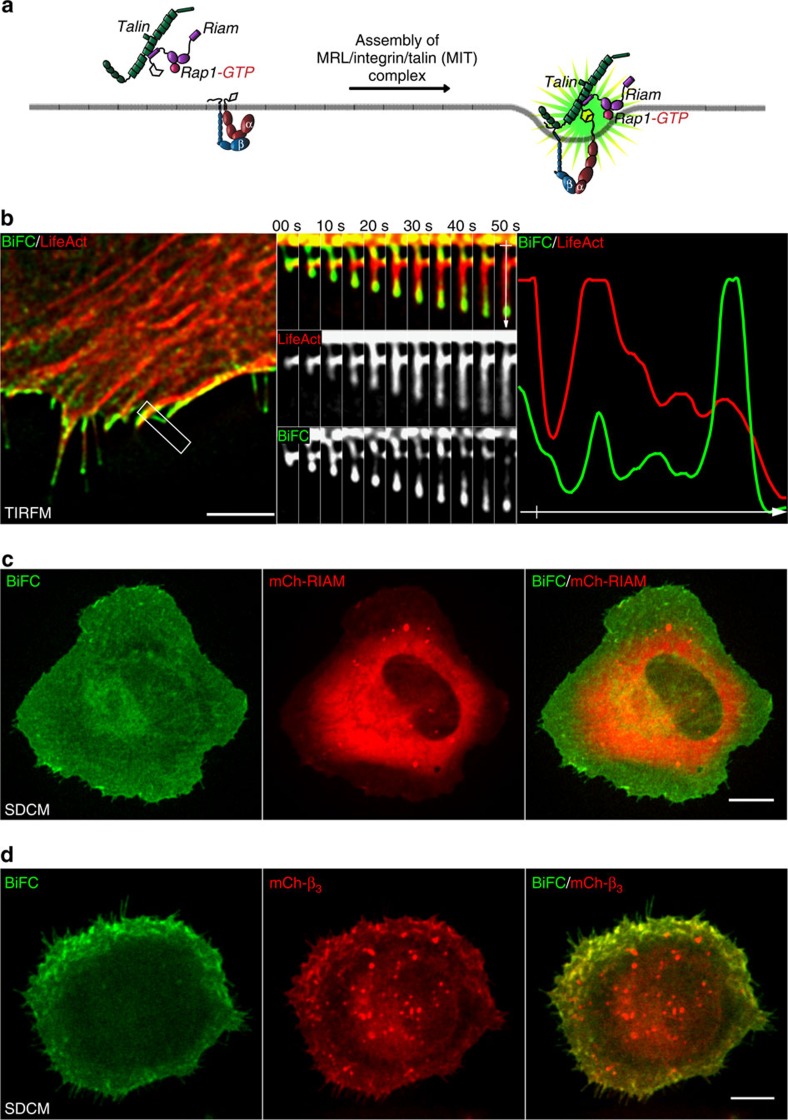
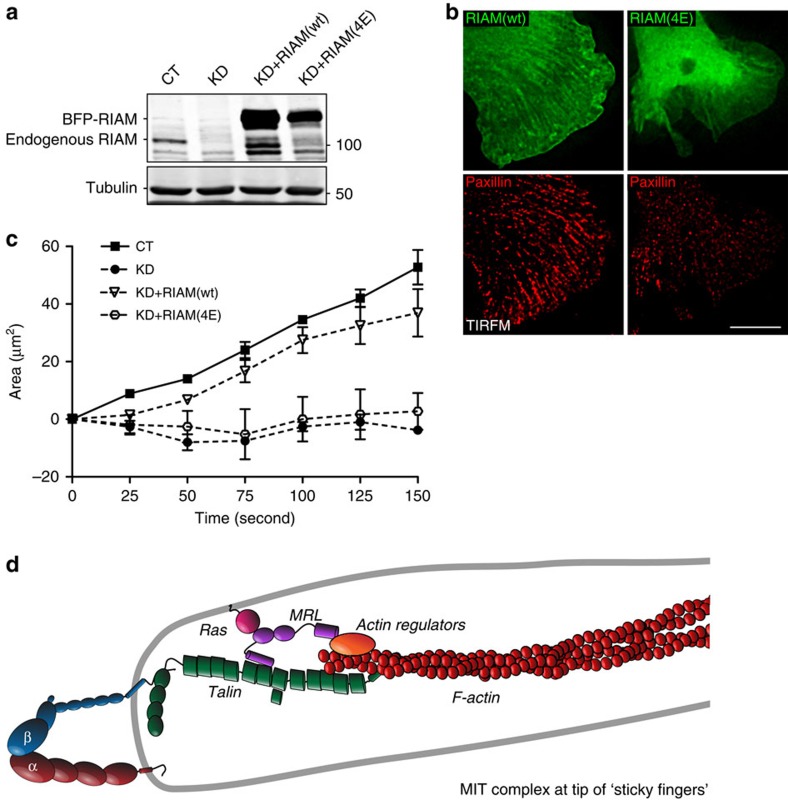
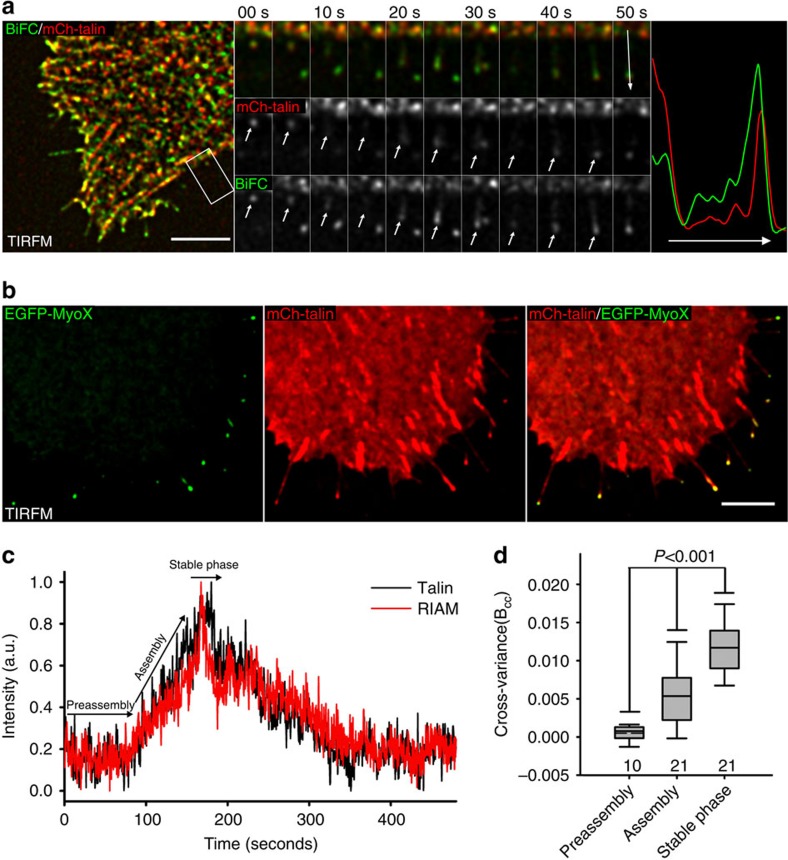
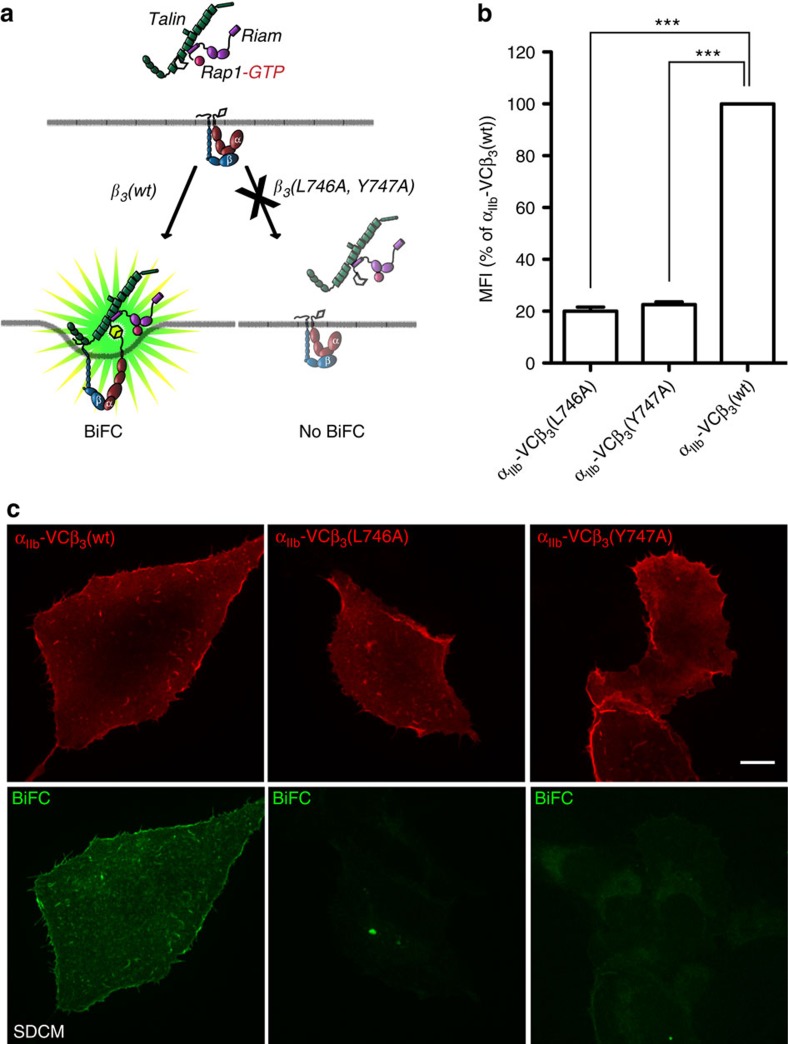
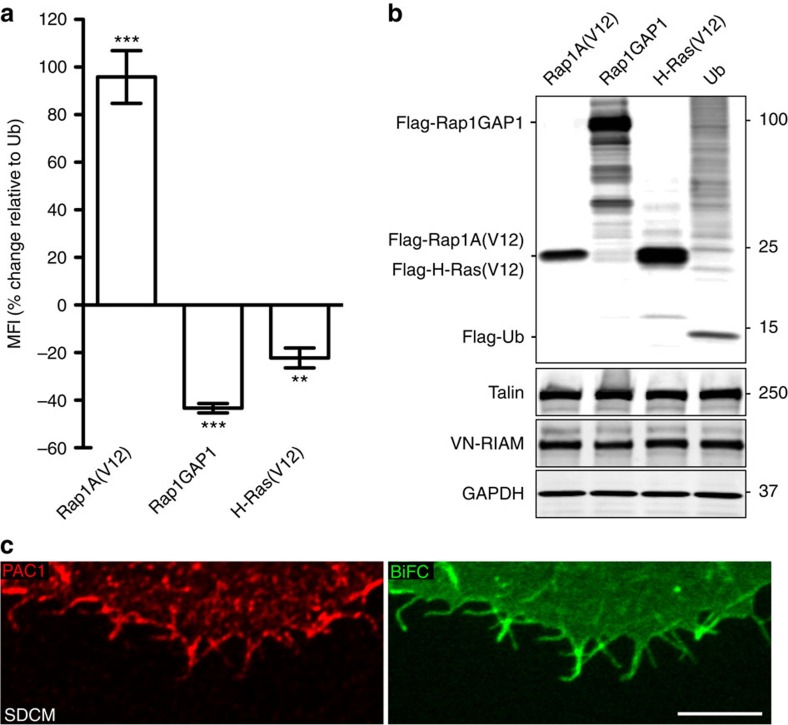
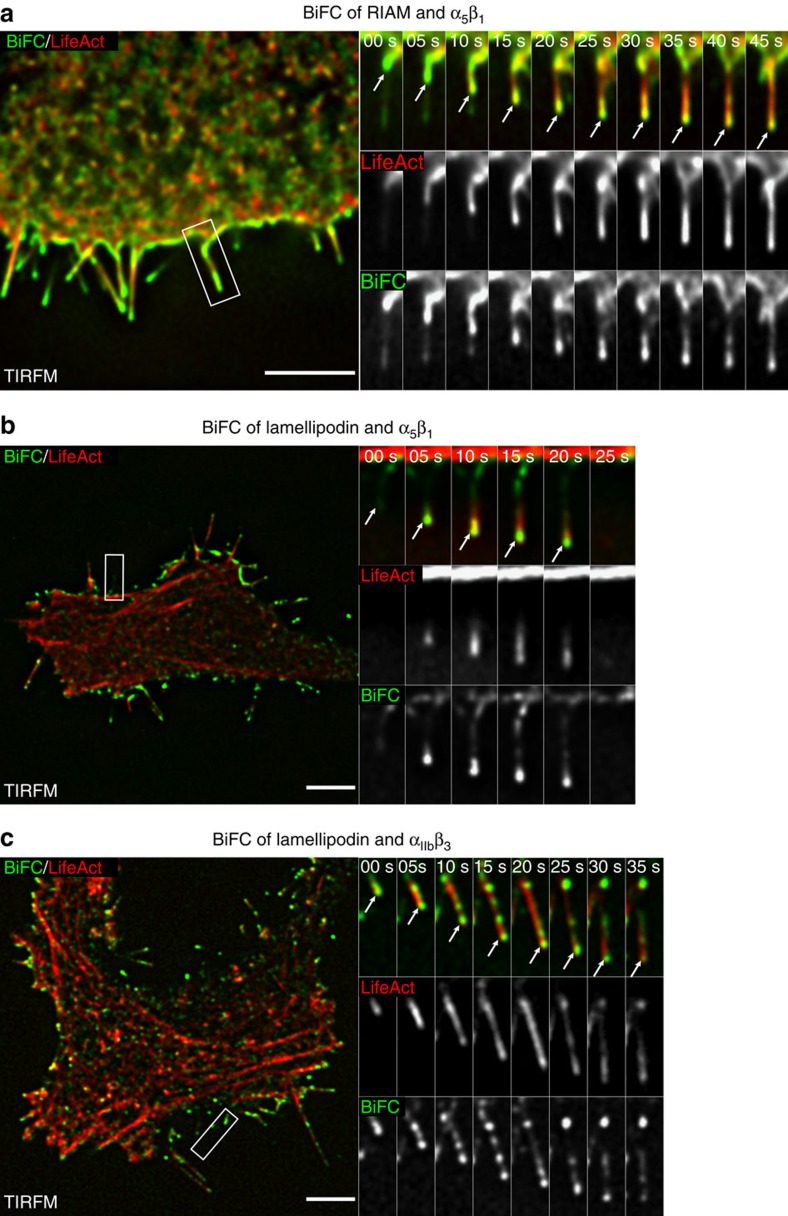
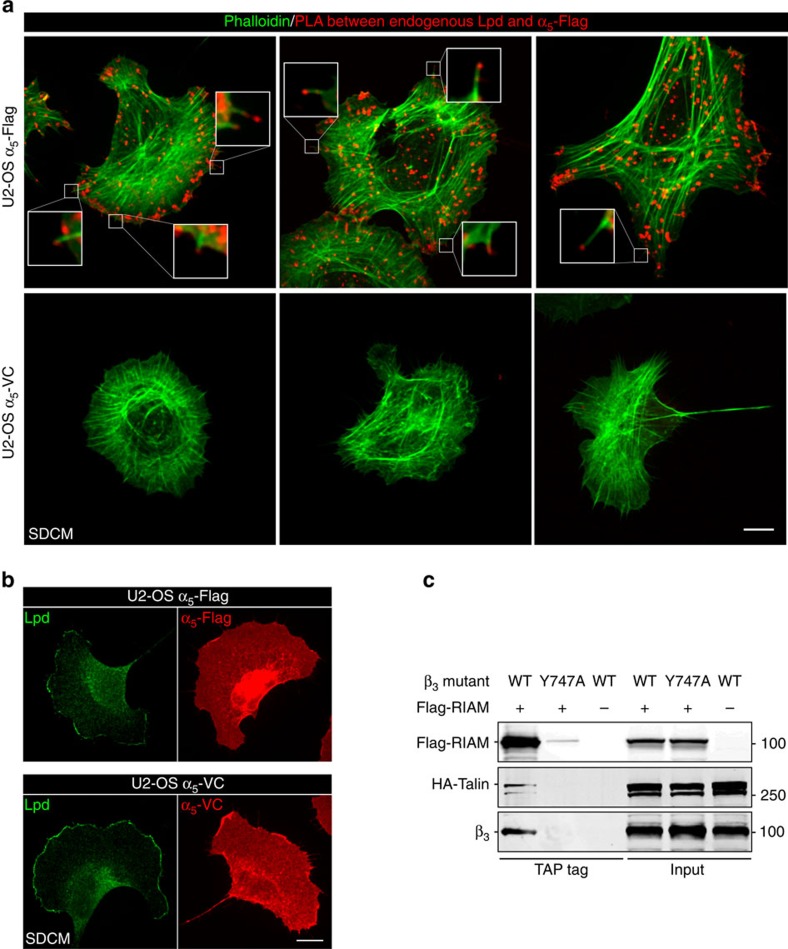
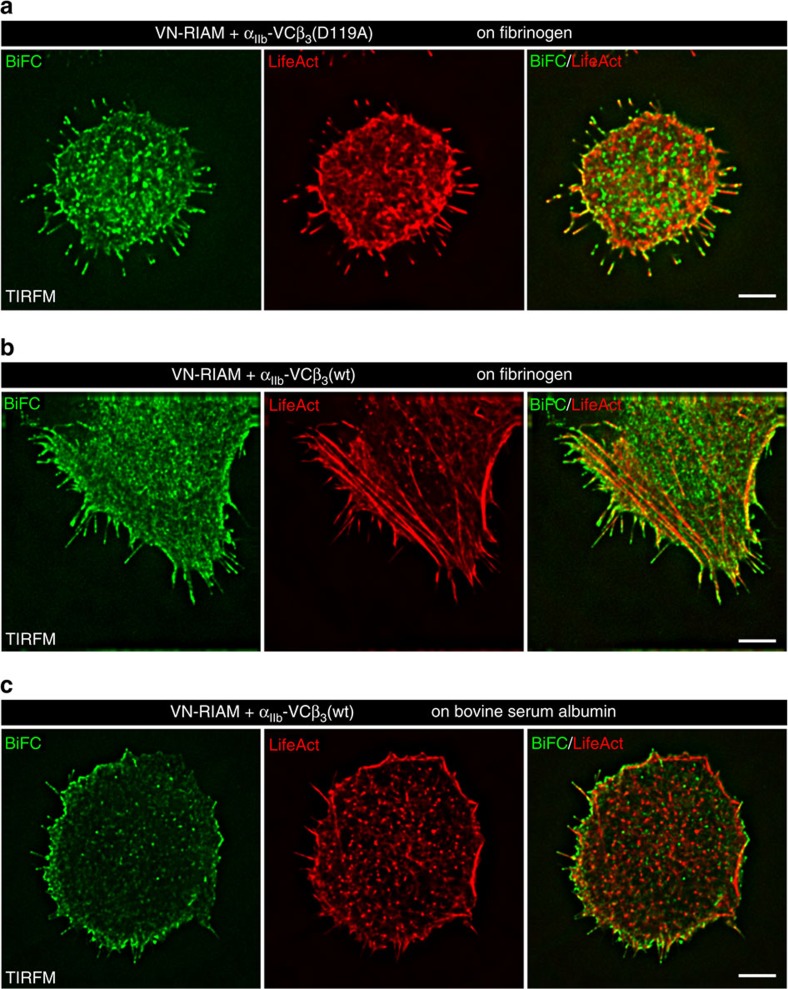
The leading edge of migrating cells contains rapidly translocating activated integrins associated with growing actin filaments that form 'sticky fingers' to sense extracellular matrix and guide cell migration. Here we utilized indirect bimolecular fluorescence complementation to visualize a molecular complex containing a Mig-10/RIAM/lamellipodin (MRL) protein (Rap1-GTP-interacting adaptor molecule (RIAM) or lamellipodin), talin and activated integrins in living cells. This complex localizes at the tips of growing actin filaments in lamellipodial and filopodial protrusions, thus corresponding to the tips of the 'sticky fingers.' Formation of the complex requires talin to form a bridge between the MRL protein and the integrins. Moreover, disruption of the MRL protein-integrin-talin (MIT) complex markedly impairs cell protrusion. These data reveal the molecular basis of the formation of 'sticky fingers' at the leading edge of migrating cells and show that an MIT complex drives these protrusions.
迁移细胞的前沿包含与不断生长的肌动蛋白丝相关的快速易位的活化整合素,这些肌动蛋白丝形成“黏附指”以感知细胞外基质并引导细胞迁移。在此,我们利用间接双分子荧光互补技术在活细胞中可视化一种包含Mig-10/RIAM/片足蛋白(MRL)蛋白(Rap1-GTP相互作用衔接分子(RIAM)或片足蛋白)、踝蛋白和活化整合素的分子复合物。该复合物定位于片状伪足和丝状伪足突起中不断生长的肌动蛋白丝的末端,因此对应于“黏附指”的末端。复合物的形成需要踝蛋白在MRL蛋白和整合素之间形成桥梁。此外,MRL蛋白-整合素-踝蛋白(MIT)复合物的破坏会显著损害细胞突起。这些数据揭示了迁移细胞前沿“黏附指”形成的分子基础,并表明MIT复合物驱动这些突起。