Tai Vicky, Leung William, Grey Andrew, Reid Ian R, Bolland Mark J
Department of Medicine, University of Auckland, Private Bag 92019, Auckland 1142, New Zealand.
Department of Public Health, University of Otago, PO Box 7343, Wellington 6242, New Zealand.
BMJ. 2015 Sep 29;351:h4183. doi: 10.1136/bmj.h4183.
To determine whether increasing calcium intake from dietary sources affects bone mineral density (BMD) and, if so, whether the effects are similar to those of calcium supplements.
Random effects meta-analysis of randomised controlled trials.
Ovid Medline, Embase, Pubmed, and references from relevant systematic reviews. Initial searches were undertaken in July 2013 and updated in September 2014.
Randomised controlled trials of dietary sources of calcium or calcium supplements (with or without vitamin D) in participants aged over 50 with BMD at the lumbar spine, total hip, femoral neck, total body, or forearm as an outcome.
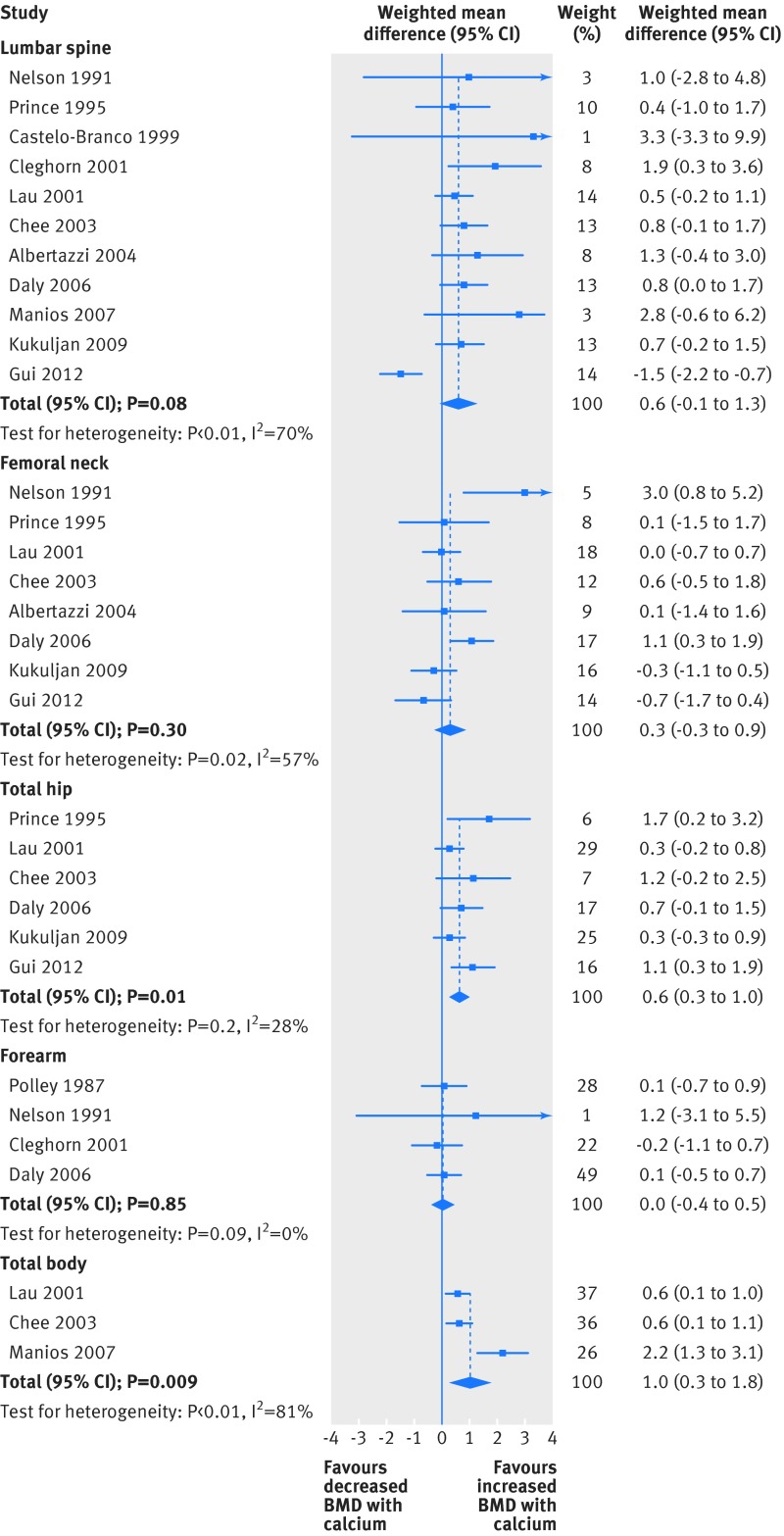
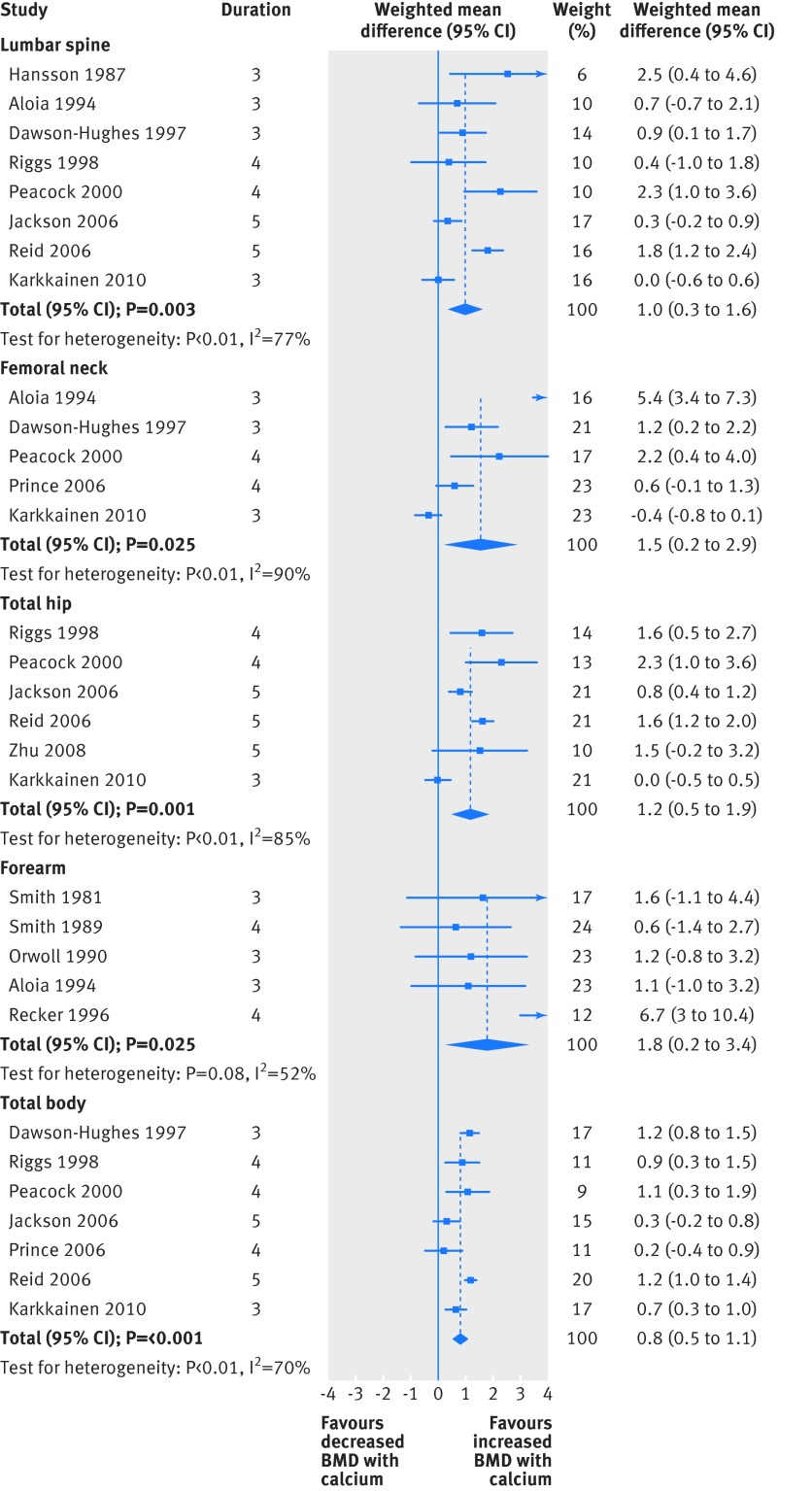
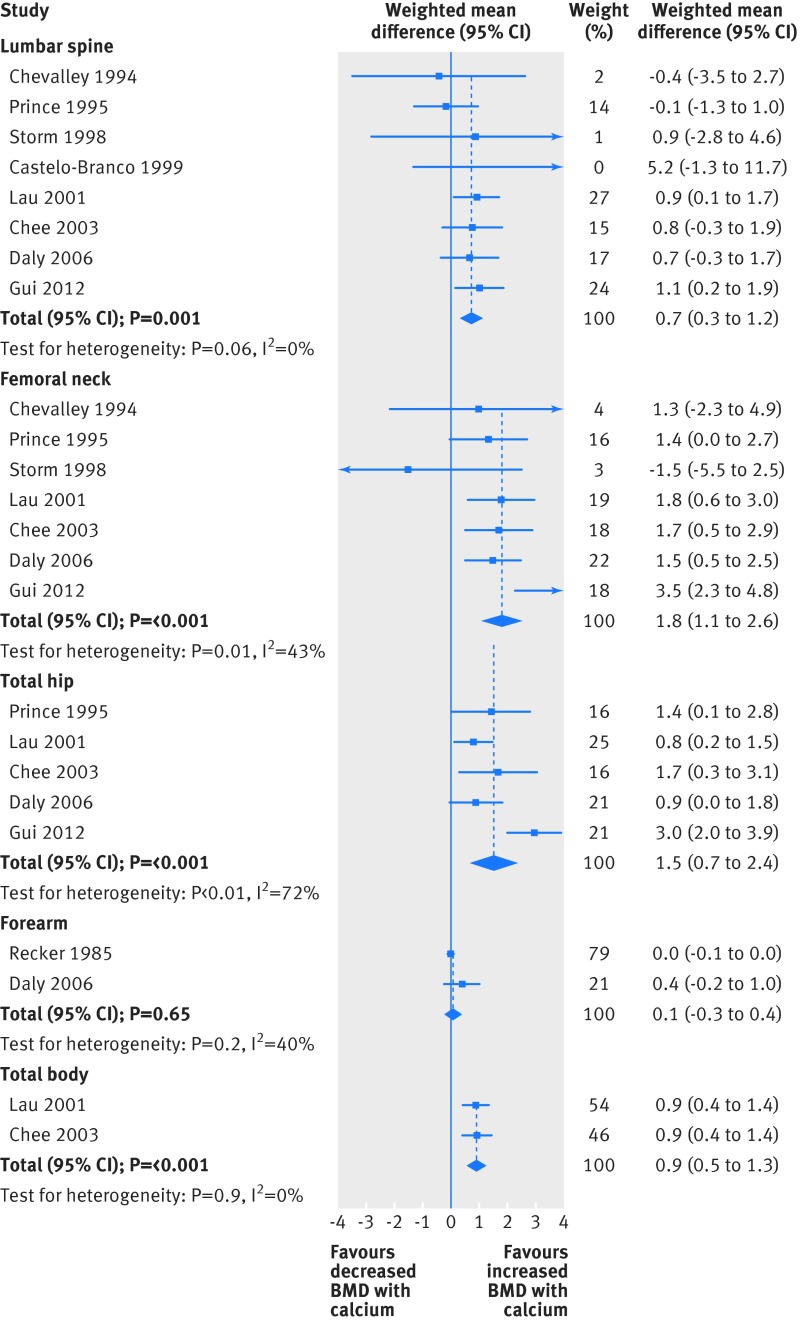
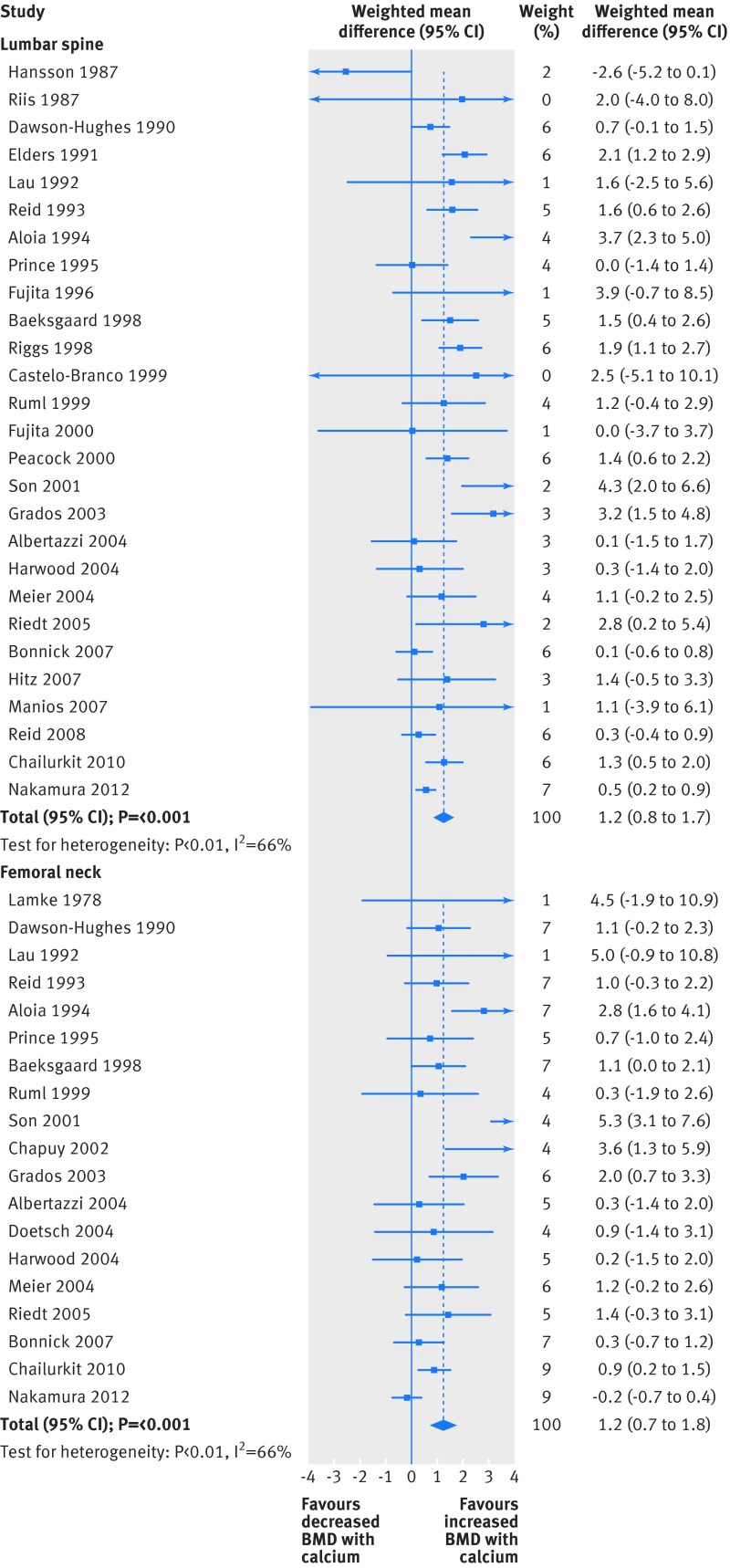
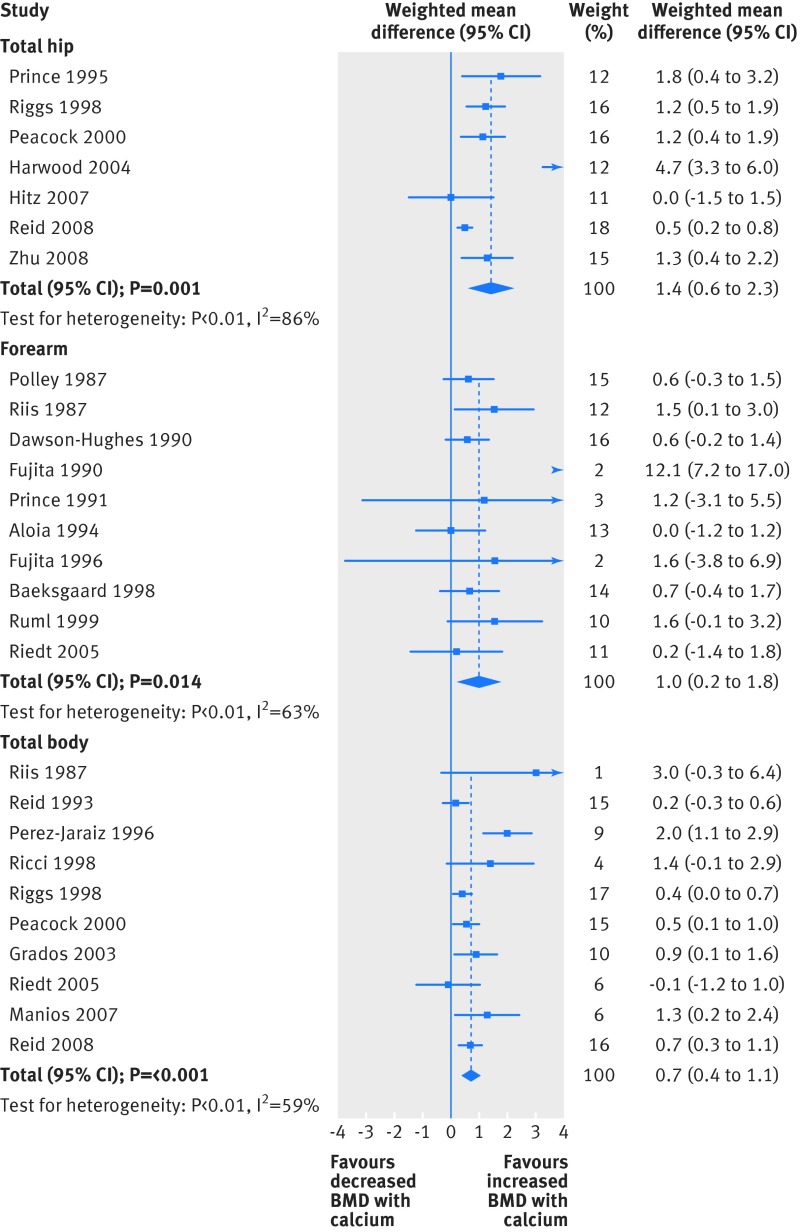
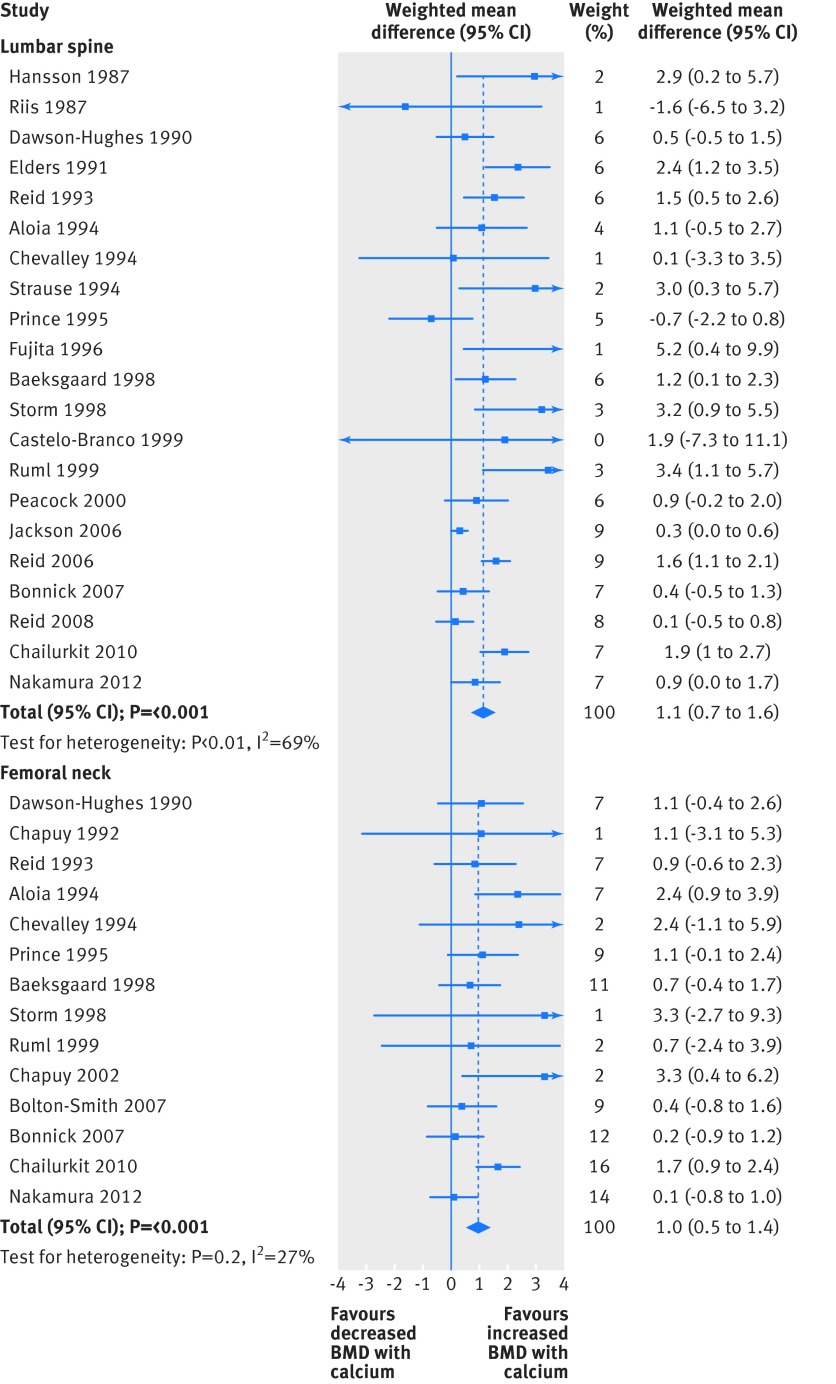
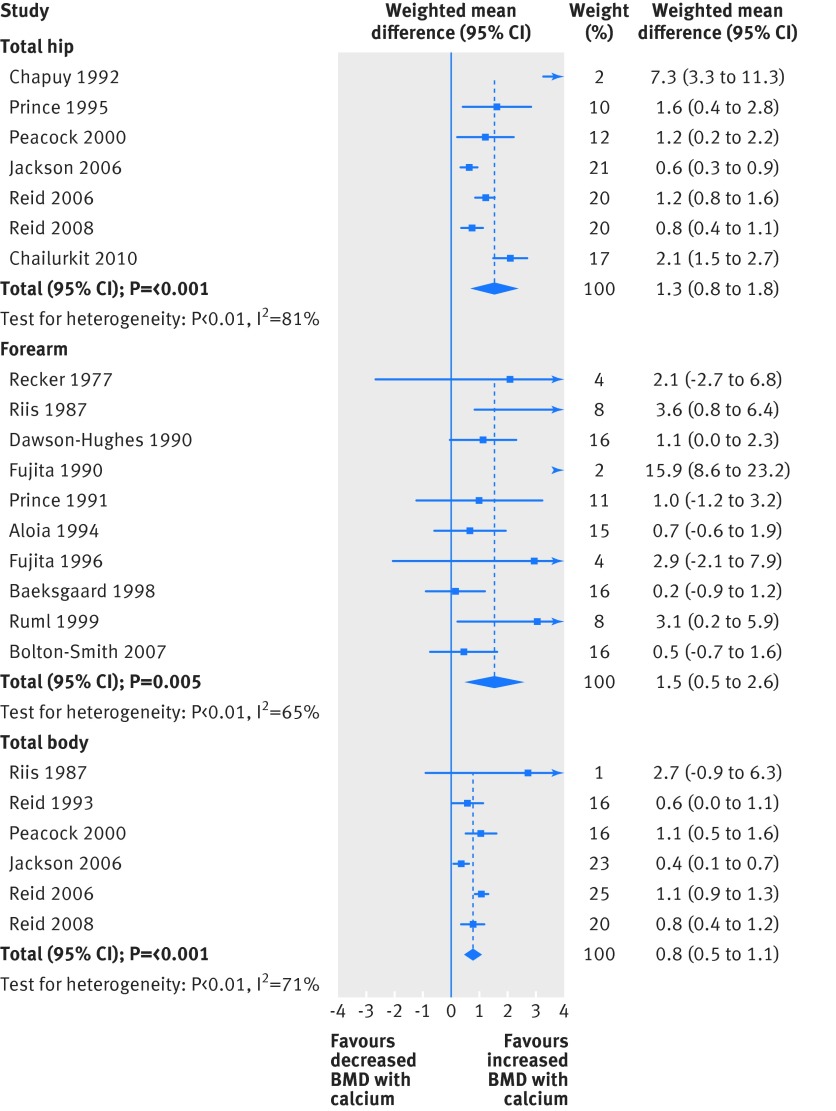
We identified 59 eligible randomised controlled trials: 15 studied dietary sources of calcium (n=1533) and 51 studied calcium supplements (n=12,257). Increasing calcium intake from dietary sources increased BMD by 0.6-1.0% at the total hip and total body at one year and by 0.7-1.8% at these sites and the lumbar spine and femoral neck at two years. There was no effect on BMD in the forearm. Calcium supplements increased BMD by 0.7-1.8% at all five skeletal sites at one, two, and over two and a half years, but the size of the increase in BMD at later time points was similar to the increase at one year. Increases in BMD were similar in trials of dietary sources of calcium and calcium supplements (except at the forearm), in trials of calcium monotherapy versus co-administered calcium and vitamin D, in trials with calcium doses of ≥ 1000 versus <1000 mg/day and ≤ 500 versus >500 mg/day, and in trials where the baseline dietary calcium intake was <800 versus ≥ 800 mg/day.
Increasing calcium intake from dietary sources or by taking calcium supplements produces small non-progressive increases in BMD, which are unlikely to lead to a clinically significant reduction in risk of fracture.
确定增加膳食钙摄入量是否会影响骨密度(BMD),如果有影响,其效果是否与钙补充剂类似。
随机对照试验的随机效应荟萃分析。
Ovid Medline、Embase、Pubmed以及相关系统评价的参考文献。初始检索于2013年7月进行,并于2014年9月更新。
以50岁以上参与者的腰椎、全髋、股骨颈、全身或前臂骨密度为结局指标,对膳食钙源或钙补充剂(含或不含维生素D)进行的随机对照试验。
我们确定了59项符合条件的随机对照试验:15项研究膳食钙源(n = 1533),51项研究钙补充剂(n = 12257)。增加膳食钙摄入量可使全髋和全身骨密度在1年时增加0.6 - 1.0%,在2年时这些部位以及腰椎和股骨颈增加0.7 - 1.8%。对前臂骨密度无影响。钙补充剂在1年、2年以及超过2.5年时,使所有五个骨骼部位的骨密度增加0.7 - 1.8%,但后期骨密度增加幅度与1年时相似。膳食钙源试验和钙补充剂试验(前臂除外)、钙单药治疗试验与钙和维生素D联合给药试验、钙剂量≥1000与<1000 mg/天以及≤500与>500 mg/天的试验,以及基线膳食钙摄入量<800与≥800 mg/天的试验中,骨密度增加情况相似。
通过膳食来源增加钙摄入量或服用钙补充剂会使骨密度产生小幅度的非渐进性增加,这不太可能导致骨折风险出现临床上显著的降低。