Faggion Clovis Mariano, Wu Yun-Chun, Scheidgen Moritz, Tu Yu-Kang
Department of Periodontology, Faculty of Dentistry, University of Münster, Münster, Germany.
Institute of Epidemiology and Preventive Medicine, College of Public Health, National Taiwan University, Taipei, Taiwan.
PLoS One. 2015 Sep 30;10(9):e0139030. doi: 10.1371/journal.pone.0139030. eCollection 2015.
Risk of bias (ROB) may threaten the internal validity of a clinical trial by distorting the magnitude of treatment effect estimates, although some conflicting information on this assumption exists.
The objective of this study was evaluate the effect of ROB on the magnitude of treatment effect estimates in randomized controlled trials (RCTs) in periodontology and implant dentistry.
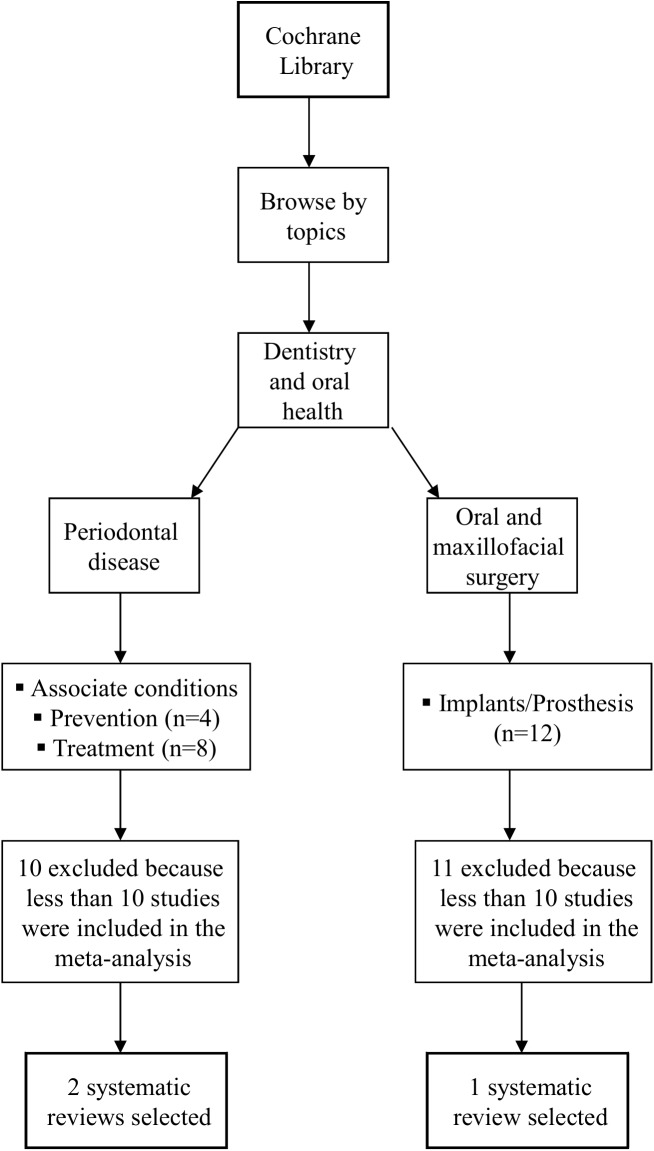
A search for Cochrane systematic reviews (SRs), including meta-analyses of RCTs published in periodontology and implant dentistry fields, was performed in the Cochrane Library in September 2014. Random-effect meta-analyses were performed by grouping RCTs with different levels of ROBs in three domains (sequence generation, allocation concealment, and blinding of outcome assessment). To increase power and precision, only SRs with meta-analyses including at least 10 RCTs were included. Meta-regression was performed to investigate the association between ROB characteristics and the magnitudes of intervention effects in the meta-analyses.
Of the 24 initially screened SRs, 21 SRs were excluded because they did not include at least 10 RCTs in the meta-analyses. Three SRs (two from periodontology field) generated information for conducting 27 meta-analyses. Meta-regression did not reveal significant differences in the relationship of the ROB level with the size of treatment effect estimates, although a trend for inflated estimates was observed in domains with unclear ROBs.
In this sample of RCTs, high and (mainly) unclear risks of selection and detection biases did not seem to influence the size of treatment effect estimates, although several confounders might have influenced the strength of the association.
偏倚风险(ROB)可能会扭曲治疗效果估计值的大小,从而威胁到临床试验的内部有效性,尽管关于这一假设存在一些相互矛盾的信息。
本研究的目的是评估ROB对牙周病学和种植牙科学随机对照试验(RCT)中治疗效果估计值大小的影响。
2014年9月在Cochrane图书馆检索了Cochrane系统评价(SR),包括牙周病学和种植牙科学领域发表的RCT的荟萃分析。通过将具有不同ROB水平的RCT在三个领域(序列产生、分配隐藏和结果评估的盲法)进行分组,进行随机效应荟萃分析。为了提高效能和精度,仅纳入了至少包含10项RCT的荟萃分析的SR。进行荟萃回归以研究荟萃分析中ROB特征与干预效果大小之间的关联。
在最初筛选的24项SR中,21项SR被排除,因为它们在荟萃分析中未包括至少10项RCT。三项SR(两项来自牙周病学领域)产生了用于进行27项荟萃分析的信息。荟萃回归未显示ROB水平与治疗效果估计值大小之间的关系存在显著差异,尽管在ROB不明确的领域中观察到估计值有膨胀的趋势。
在这个RCT样本中,尽管有几个混杂因素可能影响了关联强度,但选择和检测偏倚的高风险以及(主要是)不明确风险似乎并未影响治疗效果估计值的大小。