Moore Sean M, Lessler Justin
Department of Epidemiology, Johns Hopkins Bloomberg School of Public Health, Baltimore, MD 21205, USA
Department of Epidemiology, Johns Hopkins Bloomberg School of Public Health, Baltimore, MD 21205, USA.
J R Soc Interface. 2015 Oct 6;12(111):20150703. doi: 10.1098/rsif.2015.0703.
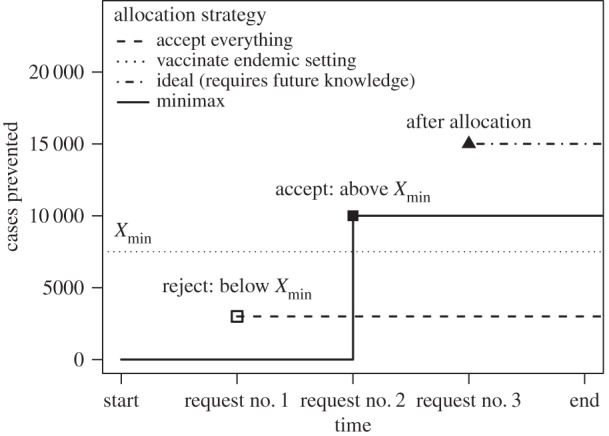
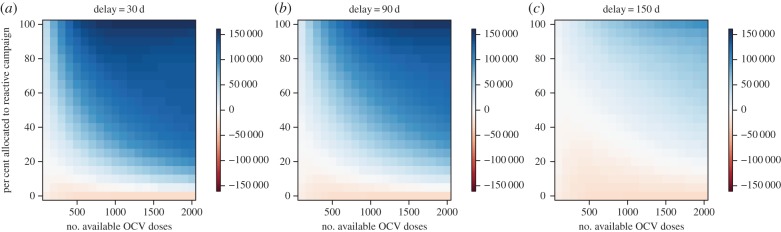
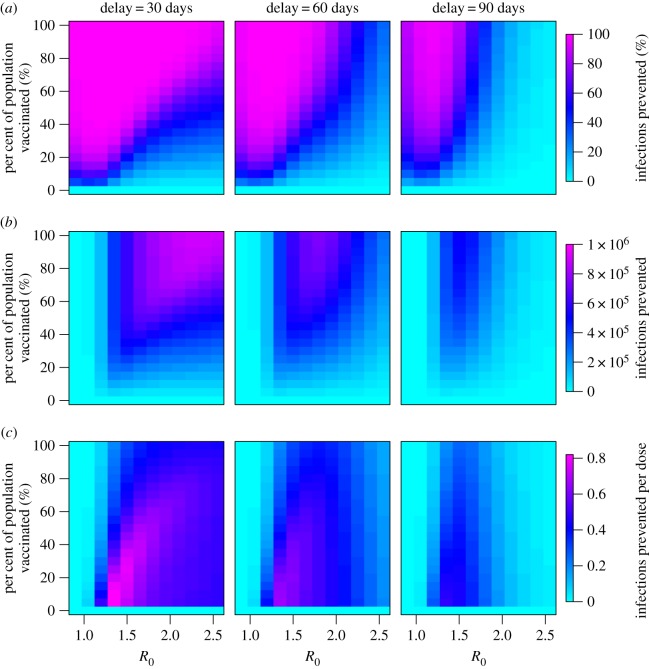
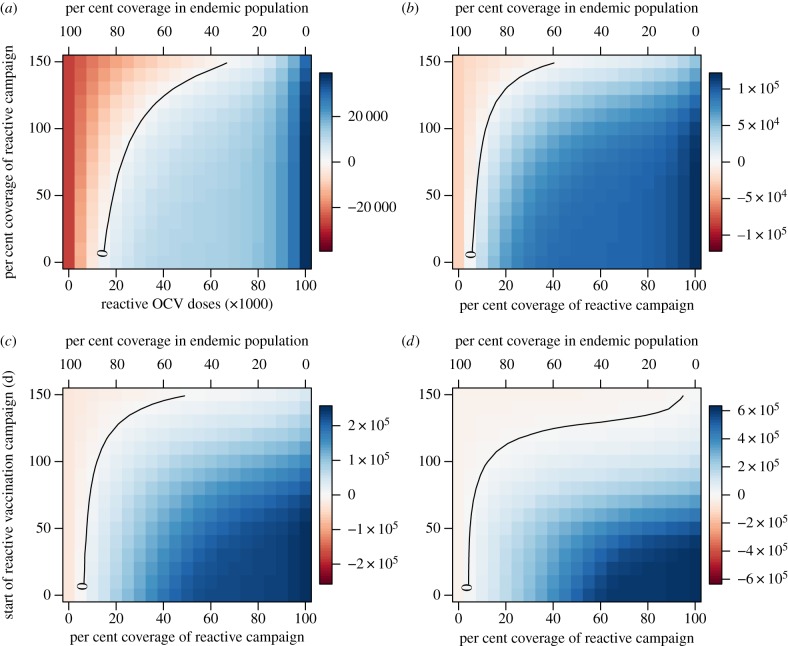
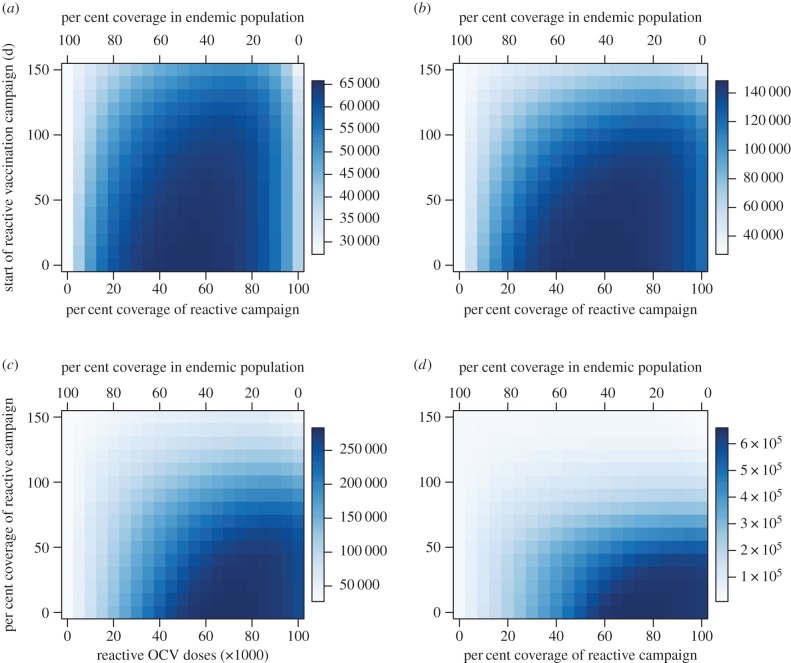
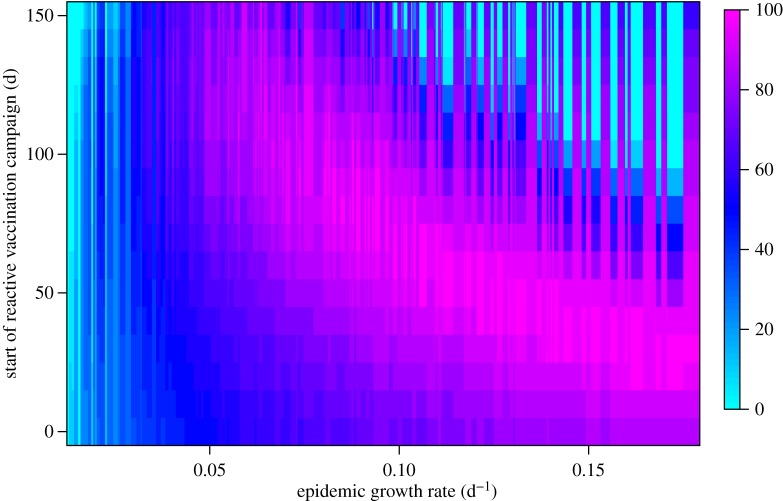
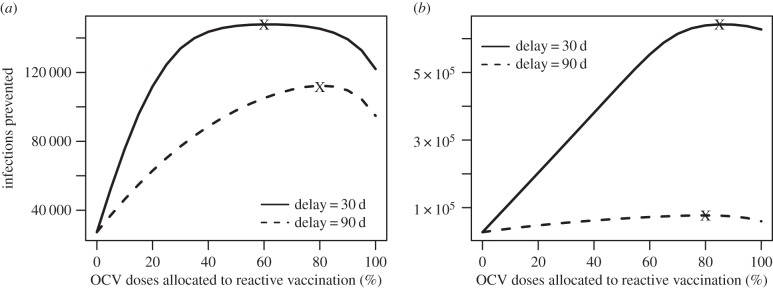
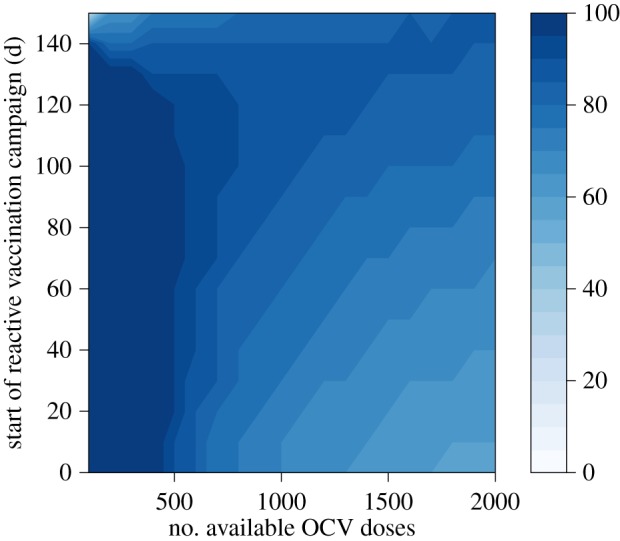
The World Health Organization (WHO) recently established a global stockpile of oral cholera vaccine (OCV) to be preferentially used in epidemic response (reactive campaigns) with any vaccine remaining after 1 year allocated to endemic settings. Hence, the number of cholera cases or deaths prevented in an endemic setting represents the minimum utility of these doses, and the optimal risk-averse response to any reactive vaccination request (i.e. the minimax strategy) is one that allocates the remaining doses between the requested epidemic response and endemic use in order to ensure that at least this minimum utility is achieved. Using mathematical models, we find that the best minimax strategy is to allocate the majority of doses to reactive campaigns, unless the request came late in the targeted epidemic. As vaccine supplies dwindle, the case for reactive use of the remaining doses grows stronger. Our analysis provides a lower bound for the amount of OCV to keep in reserve when responding to any request. These results provide a strategic context for the fulfilment of requests to the stockpile, and define allocation strategies that minimize the number of OCV doses that are allocated to suboptimal situations.
世界卫生组织(WHO)最近建立了口服霍乱疫苗(OCV)全球储备库,优先用于疫情应对(反应性接种运动),一年后剩余的任何疫苗将分配到霍乱流行地区。因此,在霍乱流行地区预防的霍乱病例数或死亡数代表了这些剂量的最小效用,对任何反应性疫苗接种请求的最佳风险规避反应(即极小极大策略)是将剩余剂量在请求的疫情应对和流行地区使用之间进行分配,以确保至少实现这一最小效用。通过数学模型,我们发现最佳的极小极大策略是将大部分剂量分配给反应性接种运动,除非请求在目标疫情后期提出。随着疫苗供应减少,对剩余剂量进行反应性使用的理由变得更加充分。我们的分析为应对任何请求时应储备的口服霍乱疫苗数量提供了下限。这些结果为满足对储备库的请求提供了战略背景,并定义了分配策略,以尽量减少分配到次优情况的口服霍乱疫苗剂量数量。