Li Shugang, Xu Mengchuan, Niu Qiang, Xu Shangzhi, Ding Yusong, Yan Yizhong, Guo Shuxia, Li Feng
Department of Public Health and Key Laboratory of Xinjiang Endemic and Ethnic Diseases (Ministry of Education), Shihezi University School of Medicine, Xinjiang, China.
Department of Pathology and Key Laboratory of Xinjiang Endemic and Ethnic Diseases (Ministry of Education), Shihezi University School of Medicine, Shihezi, Xinjiang, 832002, China.
PLoS One. 2015 Oct 1;10(10):e0139455. doi: 10.1371/journal.pone.0139455. eCollection 2015.
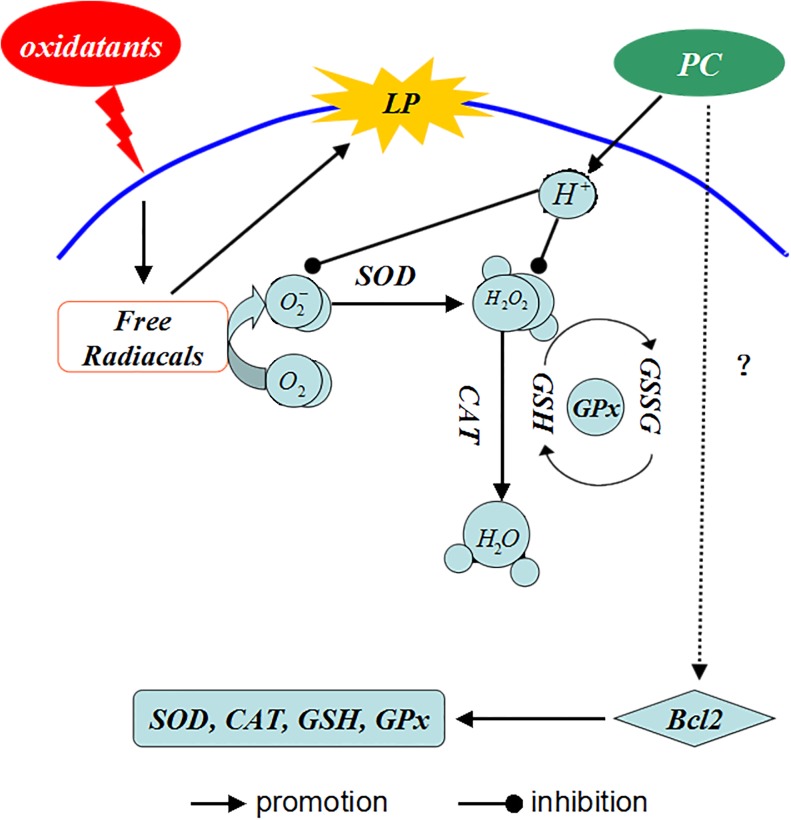
In this study, the efficacy of proanthocyanidins (PCs) against oxidative damage was systematically reviewed to facilitate their use in various applications.
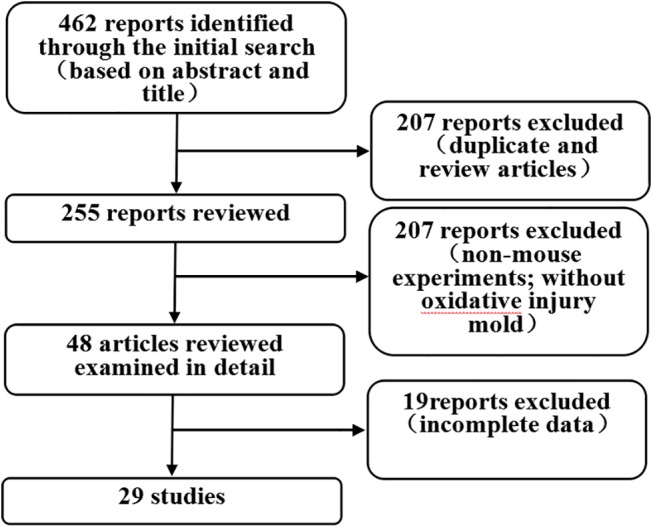
A meta-analysis was performed by two researchers. Each investigator independently searched electronic databases, including Cochrane, PubMed, Springer, Web of Science, China National Knowledge Infrastructure (CKNI), China Science and Technology Journal Database (CSTJ), and WanFang Data, and analyzed published data from 29 studies on the effects of PCs against oxidative damage. Oxidative stress indexes included superoxide dismutase (SOD), malondialdehyde (MDA), catalase (CAT), glutathione (GSH), glutathione peroxidase (GPx), and total antioxidative capacity (T-AOC).
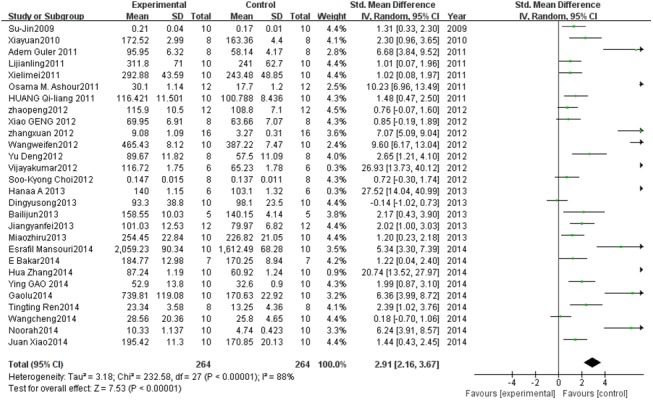
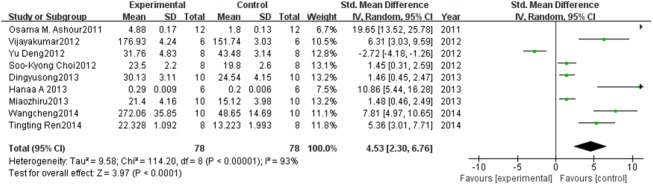
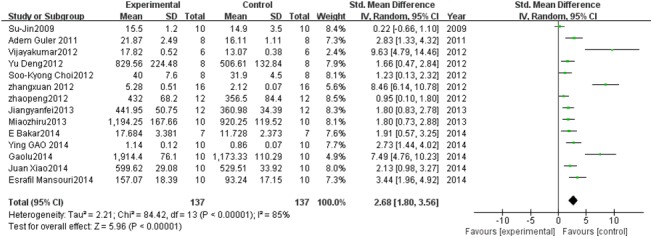
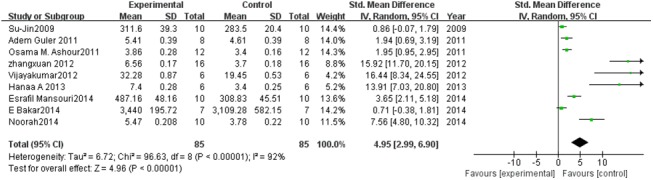
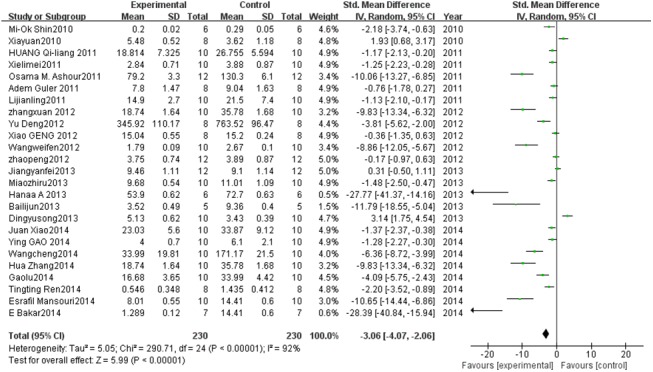
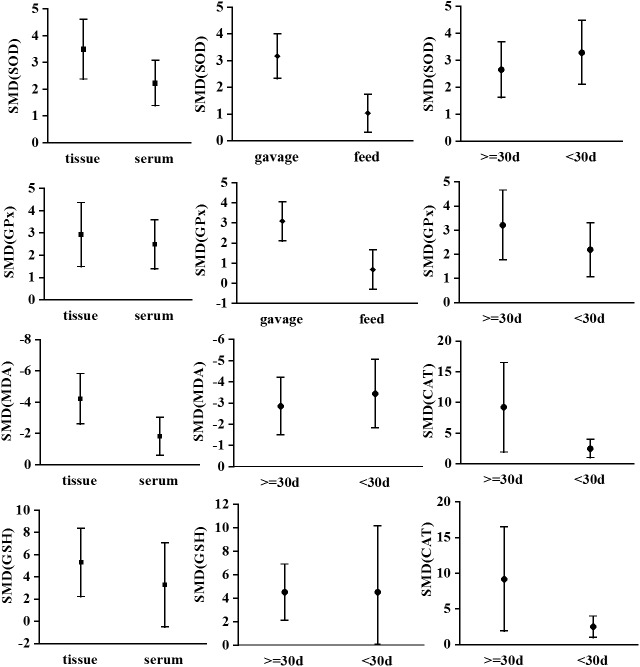
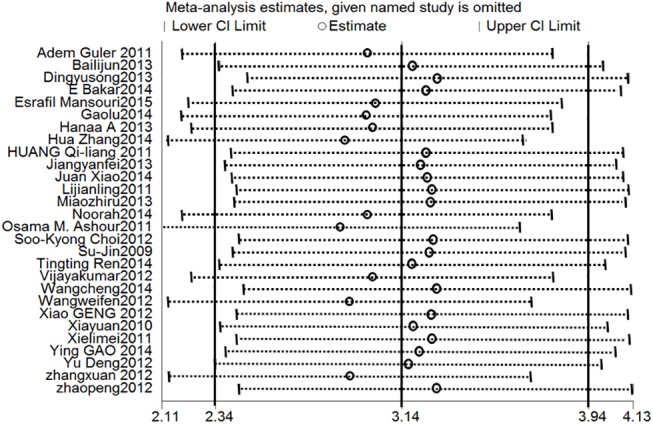
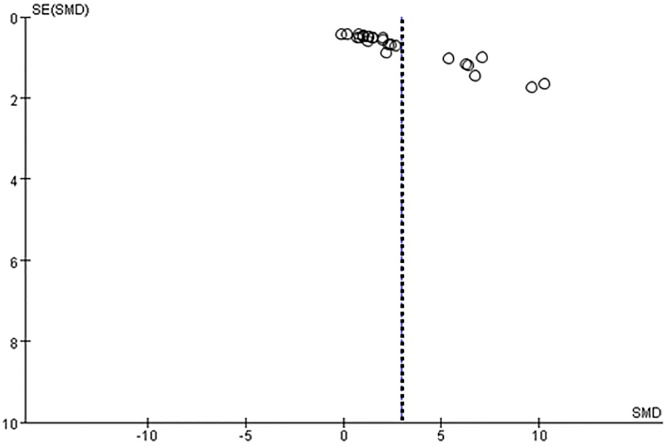
Compared with the oxidative damage model group, PCs effectively improved the T-AOC, SOD, GSH, GPx, and CAT levels, and reduced the MDA levels; these differences were statistically significant (P < 0.05). In studies that used the gavage method, SOD (95% CI, 2.33-4.00) and GPx (95% CI, 2.10-4.05) were 3.16-fold and 3.08-fold higher in the PC group than in the control group, respectively. In studies that used the feeding method, SOD (95% CI, 0.32-1.74) and GPx (95% CI, -0.31 to 1.65) were 1.03-fold and 0.67-fold higher in the PC group than in the control group, respectively. Statistically significant differences in the effects of PCs (P < 0.00001) were observed between these two methods. MDA estimated from tissue samples (95% CI, -5.82 to -2.60) was 4.32-fold lower in the PC group than in the control group. In contrast, MDA estimated using serum samples (95% CI, -4.07 to -2.06) was 3.06-fold lower in the PC group than in the control group. The effect of PCs on MDA was significantly greater in tissue samples than in serum samples (P = 0.02).
PCs effectively antagonize oxidative damage and enhance antioxidant capacity. The antagonistic effect may be related to intervention time, intervention method, and the source from which the indexes are estimated.
在本研究中,对原花青素(PCs)抗氧化损伤的功效进行系统综述,以促进其在各种应用中的使用。
由两名研究人员进行荟萃分析。每位研究人员独立检索电子数据库,包括Cochrane、PubMed、Springer、Web of Science、中国知网(CKNI)、中国科技期刊数据库(CSTJ)和万方数据,并分析29项关于PCs抗氧化损伤作用的已发表数据。氧化应激指标包括超氧化物歧化酶(SOD)、丙二醛(MDA)、过氧化氢酶(CAT)、谷胱甘肽(GSH)、谷胱甘肽过氧化物酶(GPx)和总抗氧化能力(T-AOC)。
与氧化损伤模型组相比,PCs有效提高了T-AOC、SOD、GSH、GPx和CAT水平,并降低了MDA水平;这些差异具有统计学意义(P<0.05)。在采用灌胃法的研究中,PC组的SOD(95%CI,2.33 - 4.00)和GPx(95%CI,2.10 - 4.05)分别比对照组高3.16倍和3.08倍。在采用喂养法的研究中,PC组的SOD(95%CI,0.32 - 1.74)和GPx(95%CI,-0.31至1.65)分别比对照组高1.03倍和0.67倍。这两种方法在PCs作用方面存在统计学显著差异(P<0.00001)。从组织样本估计的MDA(95%CI,-5.82至-2.60)在PC组中比对照组低4.32倍。相比之下,使用血清样本估计的MDA(95%CI,-4.07至-2.06)在PC组中比对照组低3.06倍。PCs对MDA的作用在组织样本中比在血清样本中显著更大(P = 0.02)。
PCs有效拮抗氧化损伤并增强抗氧化能力。这种拮抗作用可能与干预时间、干预方法以及指标估计来源有关。