Dorval Alan D, Muralidharan Abirami, Jensen Alicia L, Baker Kenneth B, Vitek Jerrold L
Department of Bioengineering, University of Utah, Salt Lake City, UT, USA.
Department of Neurology, University of Minnesota, Minneapolis, MN, USA.
Parkinsonism Relat Disord. 2015 Nov;21(11):1355-61. doi: 10.1016/j.parkreldis.2015.09.045. Epub 2015 Sep 26.
The motor symptoms of Parkinson's disease (PD) present with pathological neuronal activity in the basal ganglia. Although neuronal firing rate changes in the globus pallidus internus (GPi) and externus (GPe) are reported to underlie the development of PD motor signs, firing rates change inconsistently, vary confoundingly with some therapies, and are poor indicators of symptom severity.
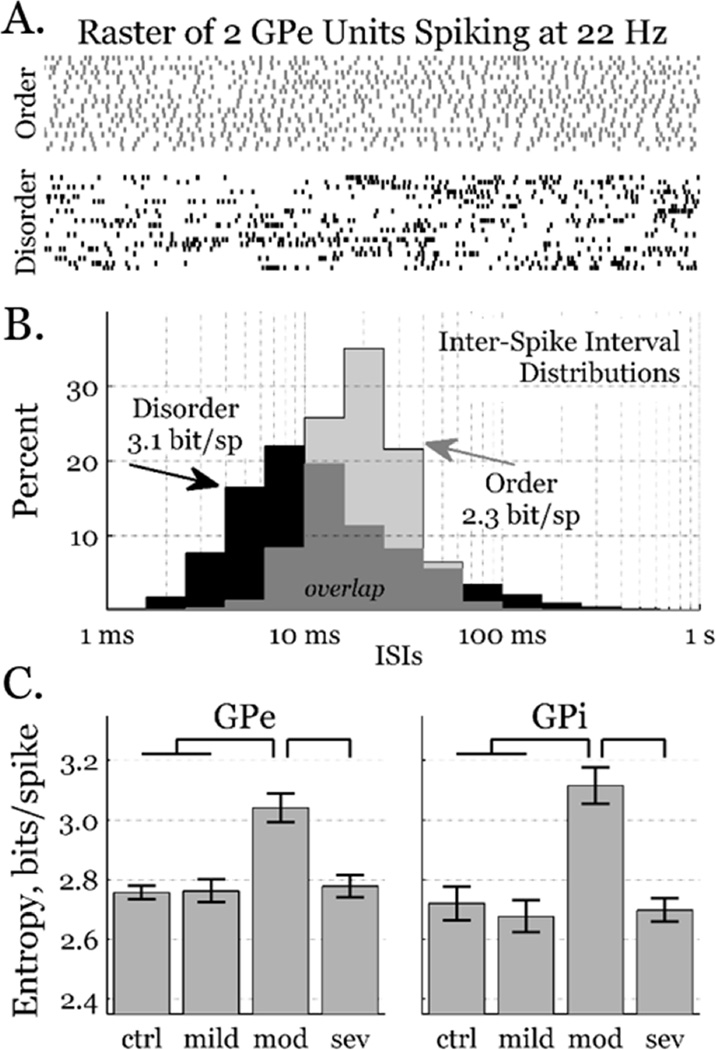
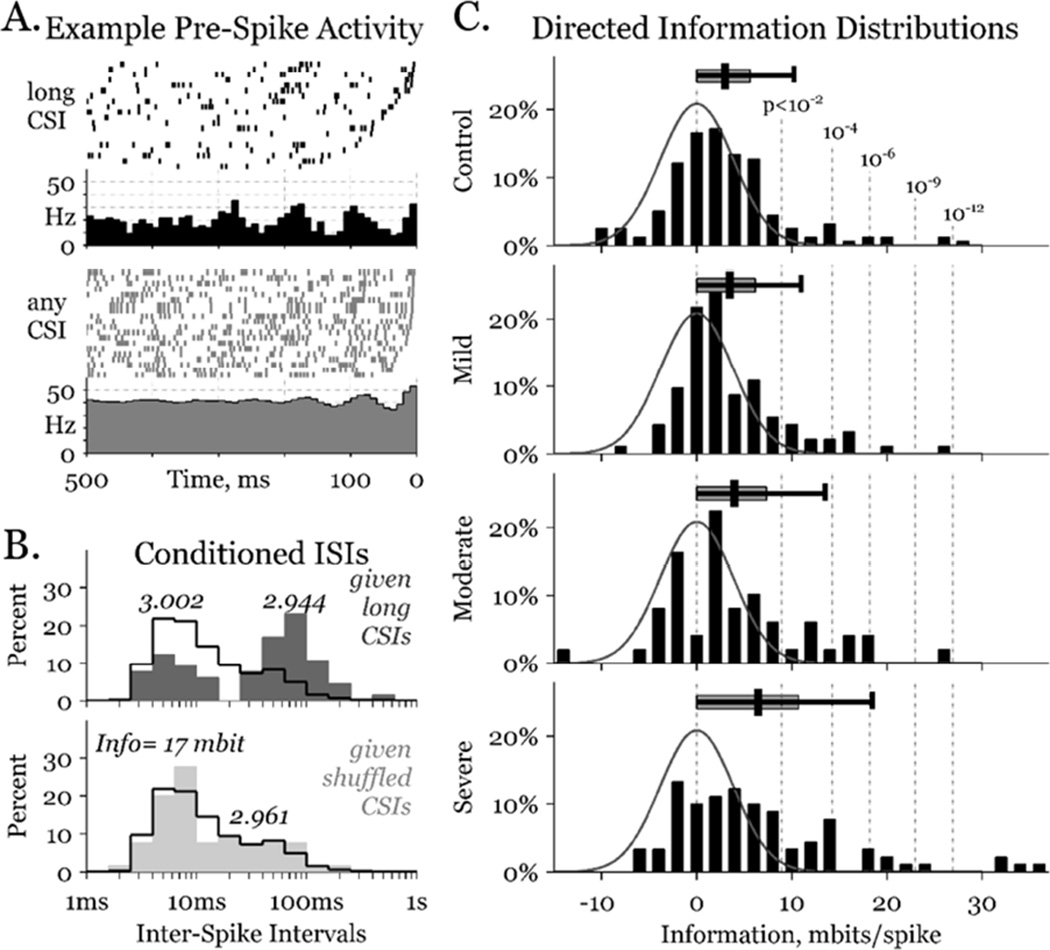
We explored the relationship between parkinsonian symptom severity and the effectiveness with which pallidal neurons transmit information. We quantify neuronal entropy and information - alternatives to firing rate and correlations respectively - in and between GPe and GPi neurons using a progressive, 1-methyl-4-phenyl-1,2,3,6-tetrahydropyridine, non-human primate model of PD.
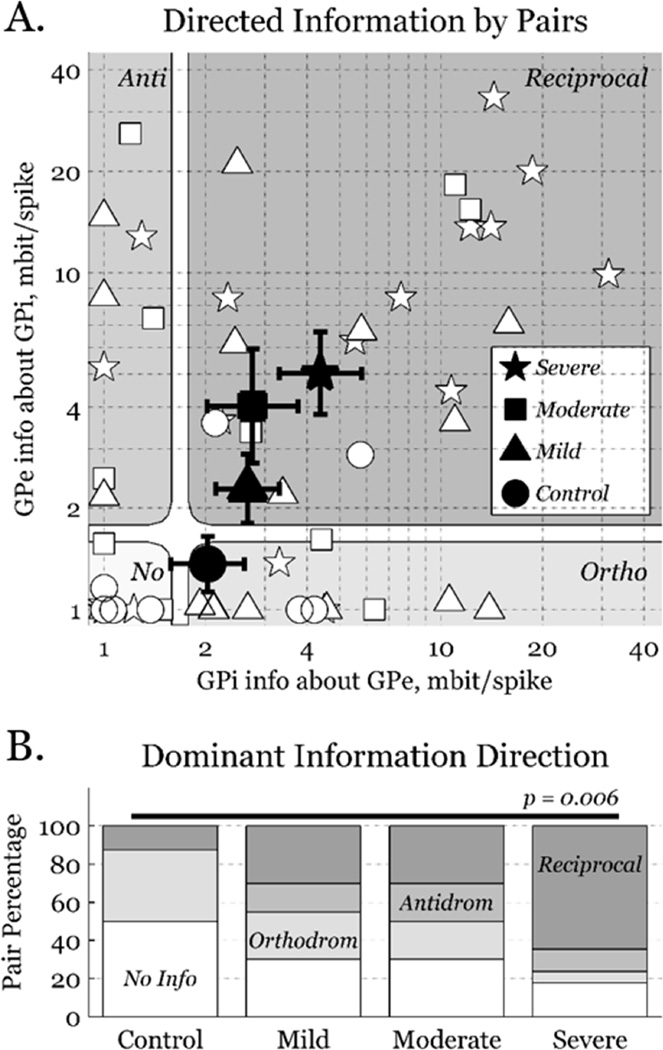
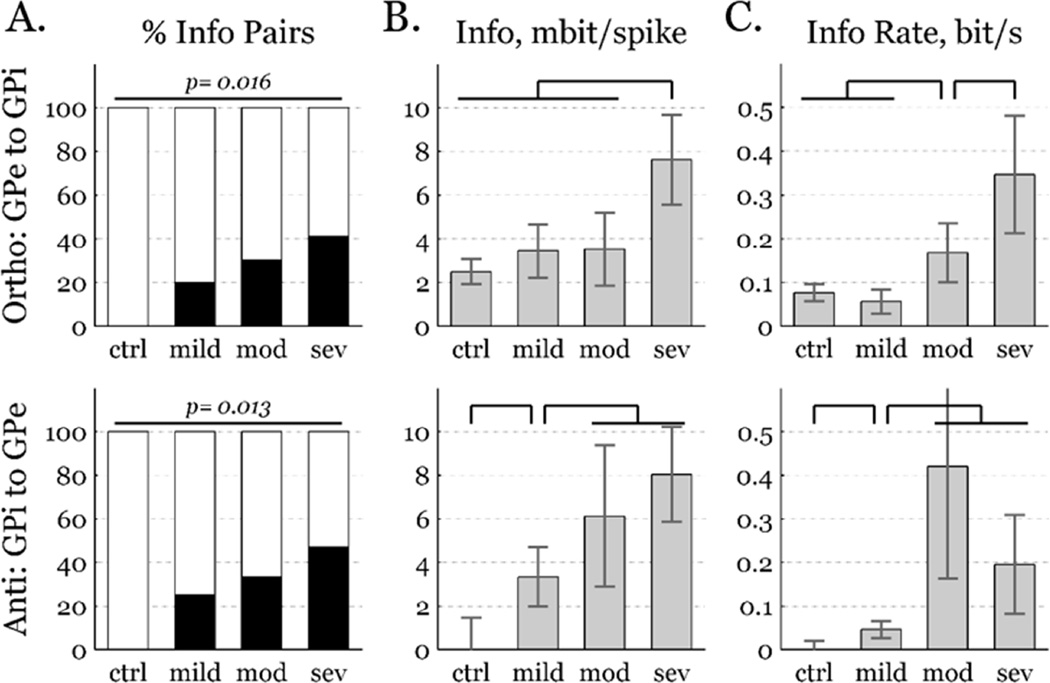
Neuronal entropy and symptom severity were not linearly correlated: in both pallidal segments, entropy increased from naive to moderate parkinsonism, but decreased with further progression to the severely parkinsonian condition. In contrast, information transmitted from GPe to GPi increased consistently with symptom severity. Furthermore, antidromic information from GPi to GPe increased substantially with symptom severity. Together, these findings suggest that as parkinsonian severity increases, more and more information enters GPe and GPi from common sources, diminishing the relative importance of the orthodromic GPe to GPi connection.
With parkinsonian progression, the direct and indirect pathways lose their independence and start to convey redundant information. We hypothesize that a loss of parallel processing impairs the ability of the network to select and implement motor commands, thus promoting the hypokinetic symptoms of PD.
帕金森病(PD)的运动症状表现为基底神经节的病理性神经元活动。尽管苍白球内侧部(GPi)和外侧部(GPe)的神经元放电率变化被认为是PD运动体征发展的基础,但放电率变化并不一致,在某些治疗中变化复杂,且不是症状严重程度的良好指标。
我们探讨了帕金森病症状严重程度与苍白球神经元传递信息效率之间的关系。我们使用一种渐进性的1-甲基-4-苯基-1,2,3,6-四氢吡啶非人类灵长类PD模型,分别量化GPe和GPi神经元内部及之间的神经元熵和信息(分别是放电率和相关性的替代指标)。
神经元熵与症状严重程度并非线性相关:在两个苍白球节段中,熵从未患病到中度帕金森病状态增加,但随着病情进一步发展到重度帕金森病状态而降低。相比之下,从GPe传递到GPi的信息随着症状严重程度持续增加。此外,从GPi到GPe的逆向信息随着症状严重程度大幅增加。总之,这些发现表明,随着帕金森病严重程度增加,越来越多的信息从共同来源进入GPe和GPi,降低了GPe到GPi顺向连接的相对重要性。
随着帕金森病进展,直接和间接通路失去独立性并开始传递冗余信息。我们假设并行处理的丧失损害了网络选择和执行运动指令的能力,从而加剧了PD的运动减少症状。