Mustafa Muna Hassan, Mukhtar Abdel Moniem
Faculty of Medicine, International University of Africa, Khartoum, 12223, Sudan.
Department of Family and Community Medicine, Faculty of Medicine, King Abdulaziz University, Jeddah, Saudi Arabia.
BMC Health Serv Res. 2015 Oct 4;15:452. doi: 10.1186/s12913-015-1128-1.
Every day, globally approximately a thousand women and girls needlessly die as a result of complications during pregnancy, childbirth or the 6 weeks following delivery. The majority of maternal deaths are avoidable and could be prevented with proven interventions to prevent or manage complications during pregnancy and child birth. The aim of this study was to examine factors associated with underutilization of maternal health services in Sudan.
Data was obtained from the Sudan Household Health Survey 2010(SHHS). The SHHS collected data from 5730 women, aged 15-49 years and who were pregnant in the last 2 years preceding the survey. The selection of the respondents was through a multi-stage cluster sampling technique. Interviews were conducted with respondents to collect data about their demographic characteristics, reproductive history, pregnancy and child delivery. Univariate analysis and logistic regression were used to analyze the data.
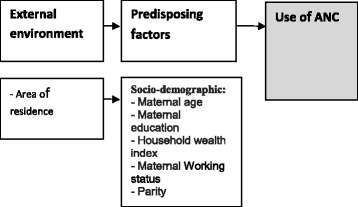
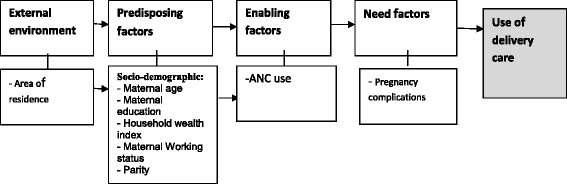
The factors associated with receiving antenatal care were, higher educational level (odds ratio (OR) = 3.428, 95% CI 2.473-4.751 - p value 0.001), higher household wealth (OR 1.656, 95% CI: 1.484-1.855 - p value 0.001) and low parity (OR =1.214, 95% CI: 1.035-1.423 - p value 0.017). The factors associated with institutional delivery were higher educational level (OR = 1.929, 95% CI: 1.380-2.697 - p value 0.001), high household wealth (OR = 2.293, 95% CI: 1.988-2.644 p value 0.001), urban residence (OR = 1.364, 95% CI: 1.081-1.721 p value 0.009), low parity (OR = 2.222, 95% CI: 1/786-2.765 p value 0.001), receiving ANC (OR = 3.342, 95% CI: 2.306-4.844 p value 0.001) and complications during pregnancy (OR = 1.606, 95% CI: 1.319-1.957 p value 0.001).
The factors associated with both antenatal care use and institutional delivery are similar and interventions to target these include expanding female education and improving coverage and affordability of health services.
在全球范围内,每天约有1000名妇女和女孩因怀孕、分娩或产后6周内的并发症而不必要地死亡。大多数孕产妇死亡是可以避免的,通过已证实的预防或管理怀孕和分娩期间并发症的干预措施即可预防。本研究的目的是调查苏丹孕产妇保健服务利用不足的相关因素。
数据来自2010年苏丹家庭健康调查(SHHS)。SHHS收集了5730名年龄在15至49岁之间、在调查前两年内怀孕的妇女的数据。受访者的选择采用多阶段整群抽样技术。对受访者进行访谈,收集有关其人口统计学特征、生育史、怀孕和分娩的资料。采用单因素分析和逻辑回归分析数据。
与接受产前护理相关的因素包括:较高的教育水平(比值比(OR)=3.428,95%置信区间2.473 - 4.751 - p值0.001)、较高的家庭财富(OR 1.656,95%置信区间:1.484 - 1.855 - p值0.001)和低胎次(OR =1.214,95%置信区间:1.035 - 1.423 - p值0.017)。与机构分娩相关的因素包括:较高的教育水平(OR =1.929,95%置信区间:1.380 - 2.697 - p值0.001)、高家庭财富(OR =2.293,95%置信区间:1.988 - 2.644 p值0.001)、城市居住(OR =1.364,95%置信区间:1.081 - 1.721 p值0.009)、低胎次(OR =2.222,95%置信区间:1/786 - 2.765 p值0.001)、接受产前护理(OR =3.342,95%置信区间:2.306 - 4.844 p值0.001)和孕期并发症(OR =1.606,95%置信区间:1.319 - 1.957 p值0.001)。
与产前护理利用和机构分娩相关的因素相似,针对这些因素的干预措施包括扩大女性教育以及提高医疗服务的覆盖范围和可及性。