Ingles Emory D, Deakin Janine E
Institute for Applied Ecology, University of Canberra, Canberra, ACT 2601 Australia.
Mol Cytogenet. 2015 Oct 1;8:74. doi: 10.1186/s13039-015-0176-x. eCollection 2015.
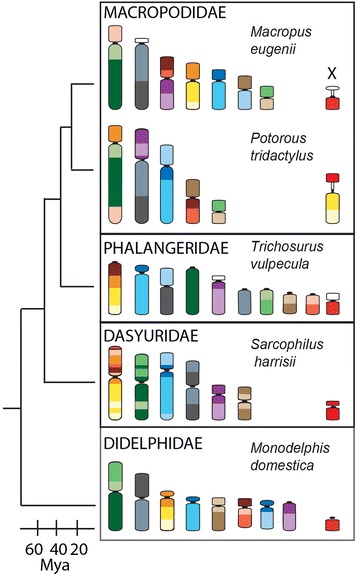
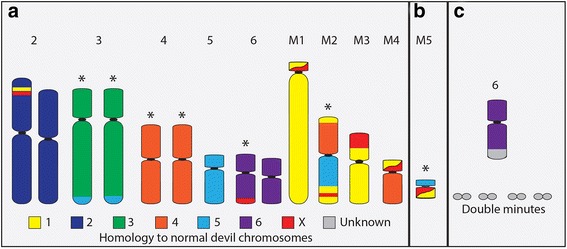
Despite DNA methylation being one of the most widely studied epigenetic modifications in eukaryotes, only a few studies have examined the global methylation status of marsupial chromosomes. The emergence of devil facial tumour disease (DFTD), a clonally transmissible cancer spreading through the Tasmanian devil population, makes it a particularly pertinent time to determine the methylation status of marsupial and devil facial tumour chromosomes. DNA methylation perturbations are known to play a role in genome instability in human tumours. One of the interesting features of the devil facial tumour is its remarkable karyotypic stability over time as only four strains with minor karyotypic differences having been reported. The cytogenetic monitoring of devil facial tumour (DFT) samples collected over an eight year period and detailed molecular cytogenetic analysis performed on the different DFT strains enables chromosome rearrangements to be correlated with methylation status as the tumour evolves.
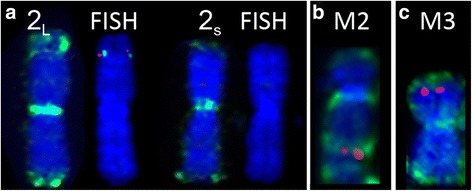
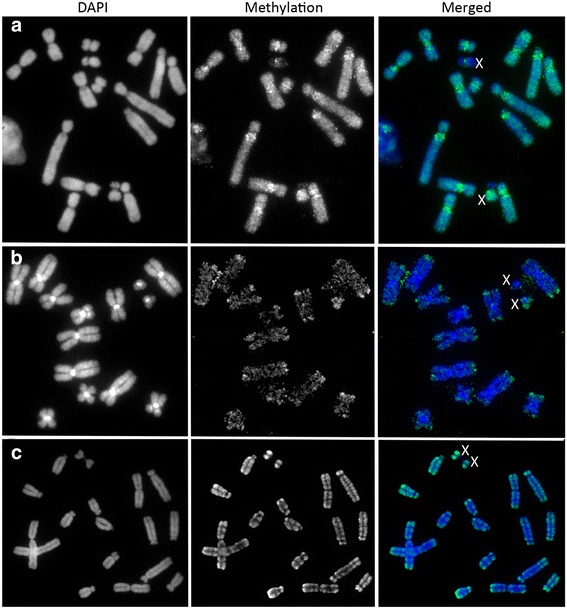
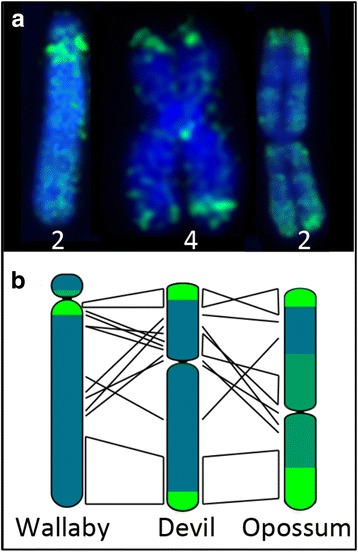
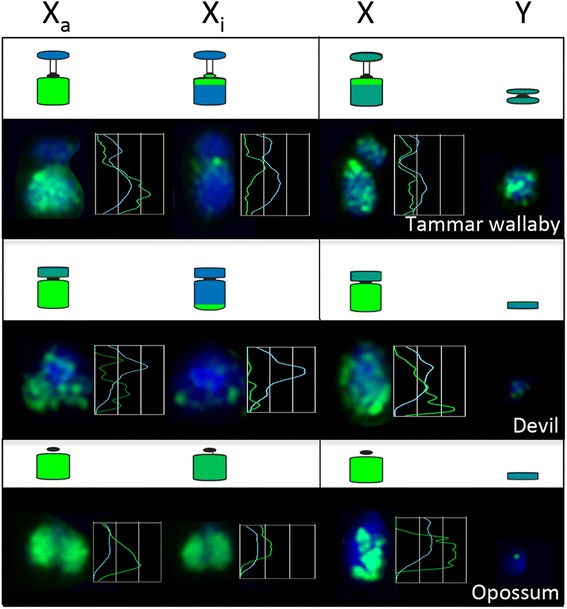
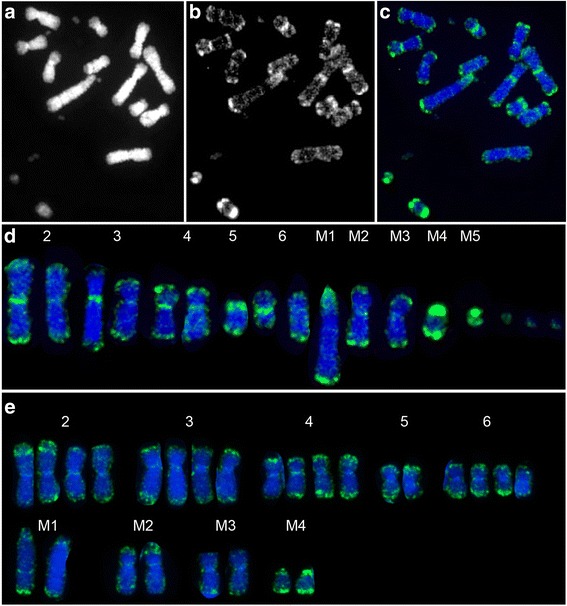
We used immunofluorescent staining with an antibody to 5-methylcytosine on metaphase chromosomes prepared from fibroblast cells of three distantly related marsupials, including the Tasmanian devil, as well as DFTD chromosomes prepared from samples collected from different years and representing different karyotypic strains. Staining of chromosomes from male and female marsupial cell lines indicate species-specific differences in global methylation patterns but with the most intense staining regions corresponding to telomeric and/or centromeric regions of autosomes. In males, the X chromosome was hypermethylated as was one X in females. Similarly, telomeric regions on DFTD chromosomes and regions corresponding to material from one of the two X chromosomes were hypermethylated. No difference in global methylation in samples of the same strain taken in different years was observed.
The methylation patterns on DFTD chromosomes suggests that the hypermethylated active X was shattered in the formation of the tumour chromosomes, with atypical areas of methylation on DFTD chromosomes corresponding to locations of X chromosome material from the shattered X. The incredibly stable broad methylation patterns observed between strains and over time may reflect the overall genomic stability of the devil facial tumour.
尽管DNA甲基化是真核生物中研究最广泛的表观遗传修饰之一,但仅有少数研究检测了有袋类动物染色体的整体甲基化状态。袋獾面部肿瘤疾病(DFTD)是一种通过袋獾种群传播的克隆性可传播癌症,这使得确定有袋类动物和袋獾面部肿瘤染色体的甲基化状态成为一个特别恰当的时机。已知DNA甲基化扰动在人类肿瘤的基因组不稳定性中起作用。袋獾面部肿瘤的一个有趣特征是其随着时间推移具有显著的核型稳定性,因为仅报道了四个核型差异较小的菌株。对在八年期间收集的袋獾面部肿瘤(DFT)样本进行细胞遗传学监测,并对不同的DFT菌株进行详细的分子细胞遗传学分析,能够在肿瘤演变过程中将染色体重排与甲基化状态相关联。
我们使用针对5-甲基胞嘧啶的抗体对来自三种远缘有袋类动物(包括袋獾)的成纤维细胞制备的中期染色体以及从不同年份收集的代表不同核型菌株的样本制备的DFTD染色体进行免疫荧光染色。来自雄性和雌性有袋类动物细胞系的染色体染色表明整体甲基化模式存在物种特异性差异,但最强染色区域对应于常染色体的端粒和/或着丝粒区域。在雄性中,X染色体高度甲基化,在雌性中一条X染色体也是如此。同样,DFTD染色体上的端粒区域以及对应于两条X染色体之一的物质的区域高度甲基化。在不同年份采集的同一菌株样本中未观察到整体甲基化的差异。
DFTD染色体上的甲基化模式表明,高度甲基化的活性X在肿瘤染色体形成过程中被破坏,DFTD染色体上非典型的甲基化区域对应于破碎X染色体的X染色体物质位置。在菌株之间以及随着时间推移观察到的极其稳定的广泛甲基化模式可能反映了袋獾面部肿瘤的整体基因组稳定性。