Burrack Kristina S, Tan Jeslin J L, McCarthy Mary K, Her Zhisheng, Berger Jennifer N, Ng Lisa F P, Morrison Thomas E
Department of Immunology and Microbiology, University of Colorado School of Medicine, Aurora, Colorado, United States of America.
Singapore Immunology Network, Agency for Science, Technology, and Research, Singapore.
PLoS Pathog. 2015 Oct 5;11(10):e1005191. doi: 10.1371/journal.ppat.1005191. eCollection 2015 Oct.
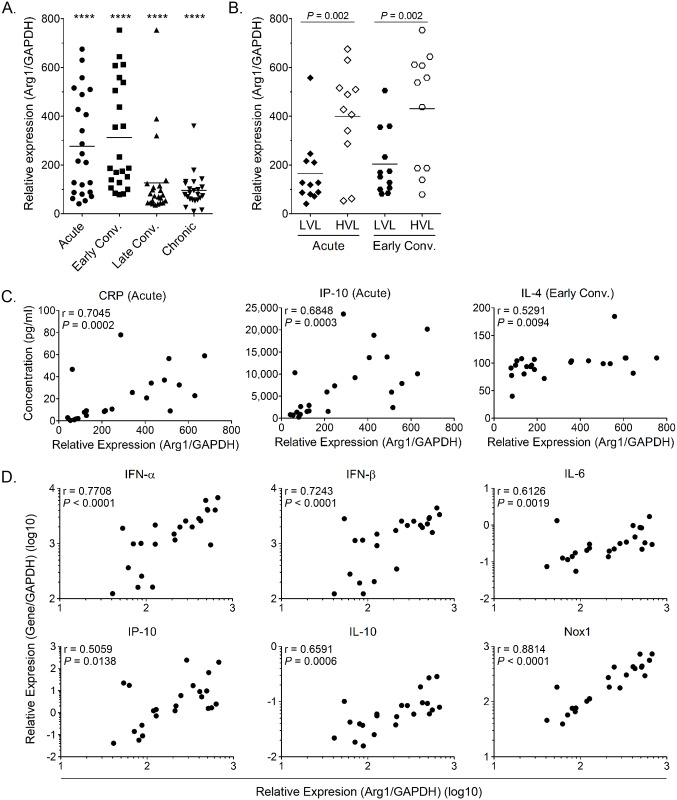
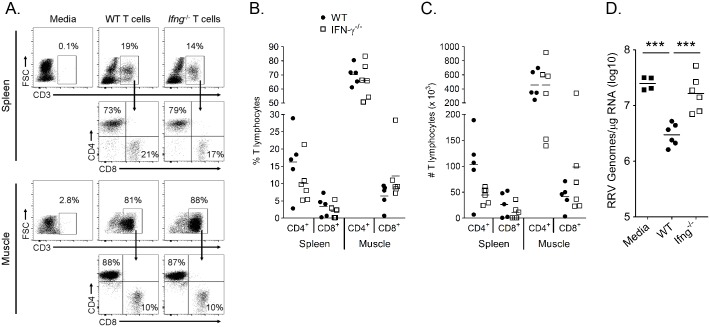
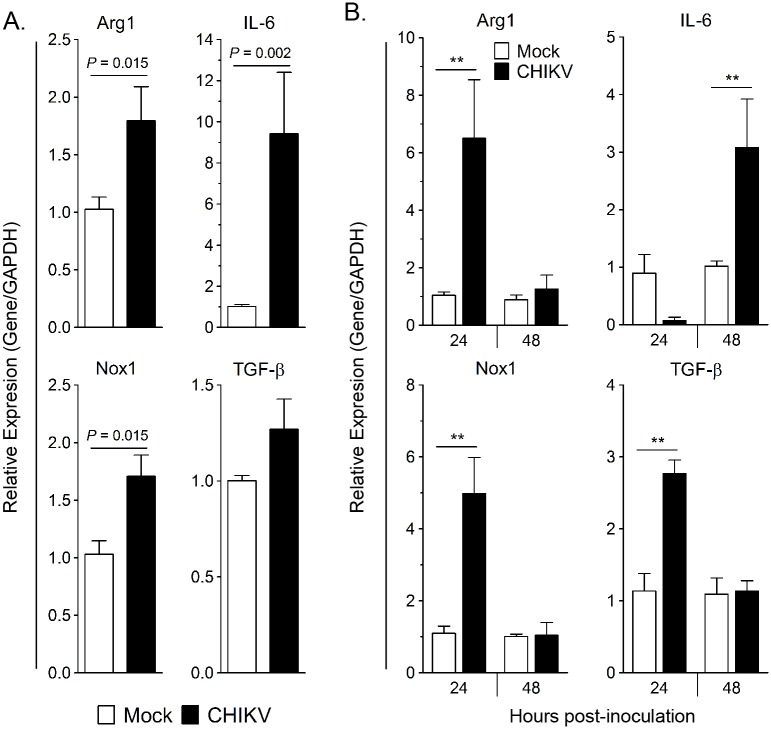
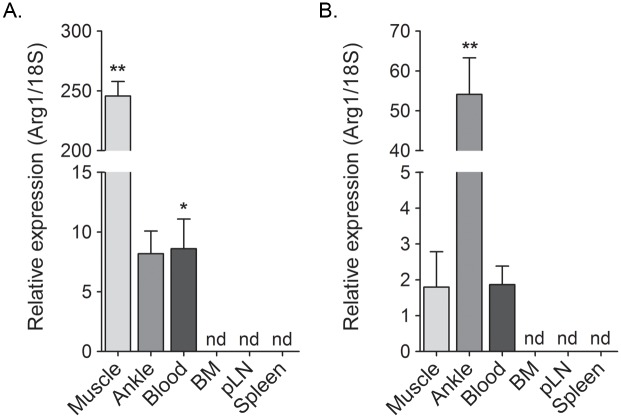
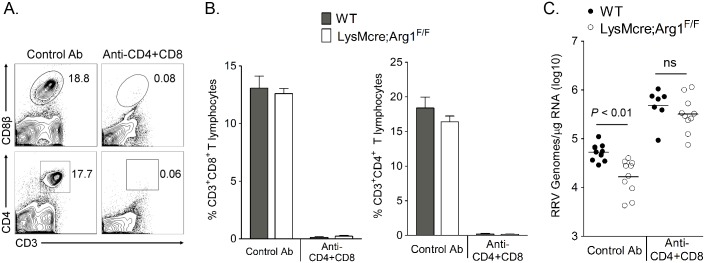
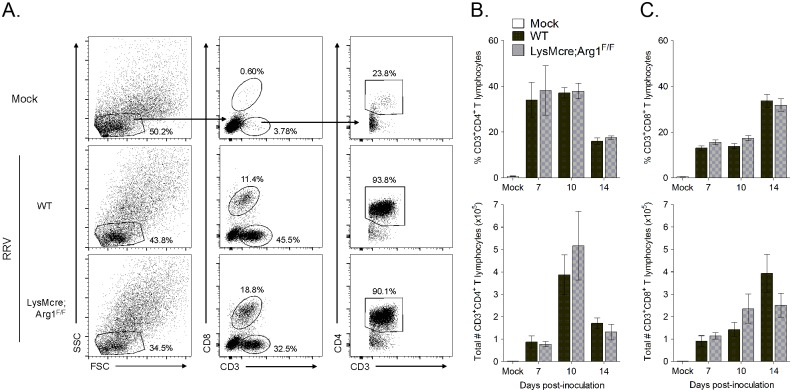
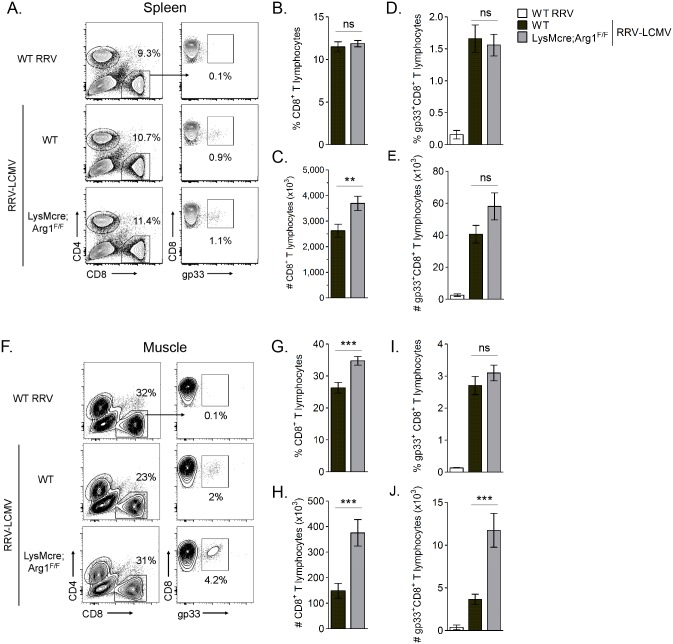
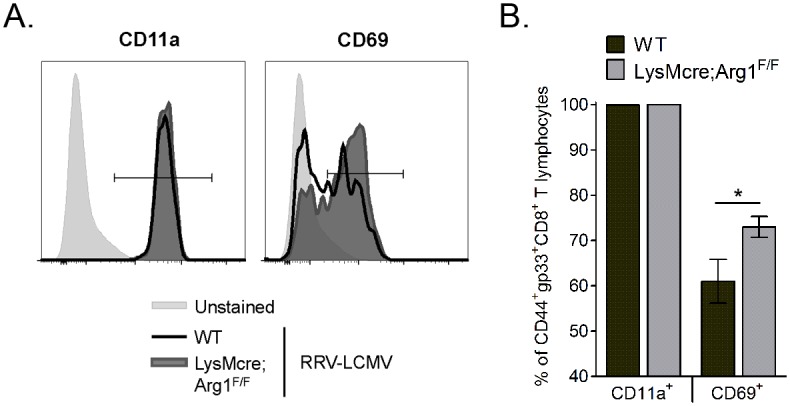
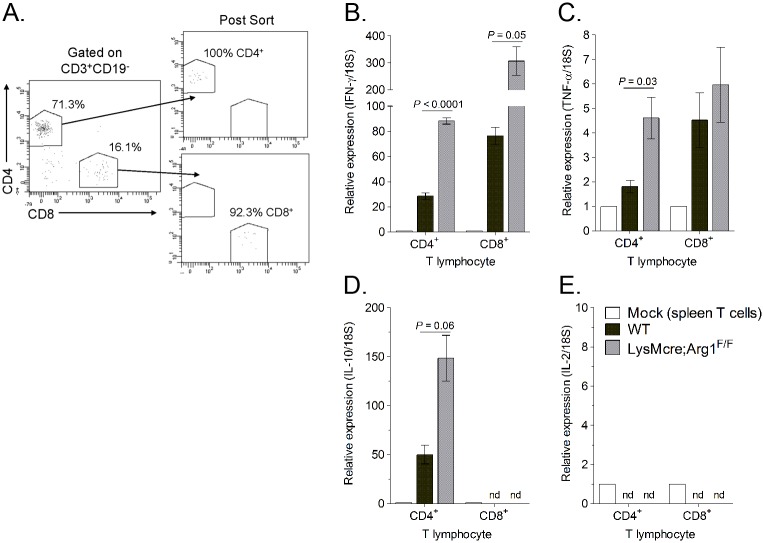
Arthritogenic alphaviruses, including Ross River virus (RRV) and chikungunya virus (CHIKV), are responsible for explosive epidemics involving millions of cases. These mosquito-transmitted viruses cause inflammation and injury in skeletal muscle and joint tissues that results in debilitating pain. We previously showed that arginase 1 (Arg1) was highly expressed in myeloid cells in the infected and inflamed musculoskeletal tissues of RRV- and CHIKV-infected mice, and specific deletion of Arg1 from myeloid cells resulted in enhanced viral control. Here, we show that Arg1, along with other genes associated with suppressive myeloid cells, is induced in PBMCs isolated from CHIKV-infected patients during the acute phase as well as the chronic phase, and that high Arg1 expression levels were associated with high viral loads and disease severity. Depletion of both CD4 and CD8 T cells from RRV-infected Arg1-deficient mice restored viral loads to levels detected in T cell-depleted wild-type mice. Moreover, Arg1-expressing myeloid cells inhibited virus-specific T cells in the inflamed and infected musculoskeletal tissues, but not lymphoid tissues, following RRV infection in mice, including suppression of interferon-γ and CD69 expression. Collectively, these data enhance our understanding of the immune response following arthritogenic alphavirus infection and suggest that immunosuppressive myeloid cells may contribute to the duration or severity of these debilitating infections.
包括罗斯河病毒(RRV)和基孔肯雅病毒(CHIKV)在内的致关节炎甲病毒,是数百万病例爆发性流行的罪魁祸首。这些由蚊子传播的病毒会导致骨骼肌和关节组织发生炎症和损伤,进而引起使人衰弱的疼痛。我们之前表明,精氨酸酶1(Arg1)在RRV和CHIKV感染小鼠的受感染和发炎的肌肉骨骼组织中的髓样细胞中高度表达,并且从髓样细胞中特异性删除Arg1会增强病毒控制。在此,我们表明,Arg1以及与抑制性髓样细胞相关的其他基因,在急性期和慢性期从CHIKV感染患者分离的外周血单核细胞(PBMC)中均被诱导表达,并且高Arg1表达水平与高病毒载量和疾病严重程度相关。从RRV感染的Arg1缺陷小鼠中耗尽CD4和CD8 T细胞后,病毒载量恢复到在T细胞耗尽的野生型小鼠中检测到的水平。此外,在小鼠感染RRV后,表达Arg1的髓样细胞在发炎和受感染的肌肉骨骼组织中抑制病毒特异性T细胞,但在淋巴组织中则不然,包括抑制干扰素-γ和CD69的表达。总体而言,这些数据加深了我们对致关节炎甲病毒感染后免疫反应的理解,并表明免疫抑制性髓样细胞可能导致这些使人衰弱的感染的持续时间或严重程度。