Ikai Ryota, Hasegawa Yoshiaki, Izumigawa Masashi, Nagano Keiji, Yoshida Yasuo, Kitai Noriyuki, Lamont Richard J, Yoshimura Fuminobu, Murakami Yukitaka
Department of Oral Microbiology, Asahi University School of Dentistry, Mizuho, Gifu, Japan; Department of Orthodontics, Asahi University School of Dentistry, Mizuho, Gifu, Japan.
Department of Oral Microbiology, Asahi University School of Dentistry, Mizuho, Gifu, Japan; Department of Microbiology, School of Dentistry, Aichi Gakuin University, Nagoya, Aichi, Japan.
PLoS One. 2015 Oct 5;10(10):e0139454. doi: 10.1371/journal.pone.0139454. eCollection 2015.
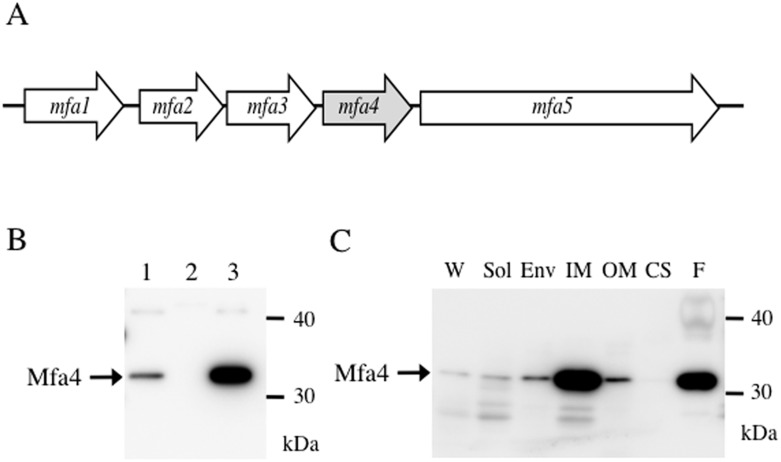
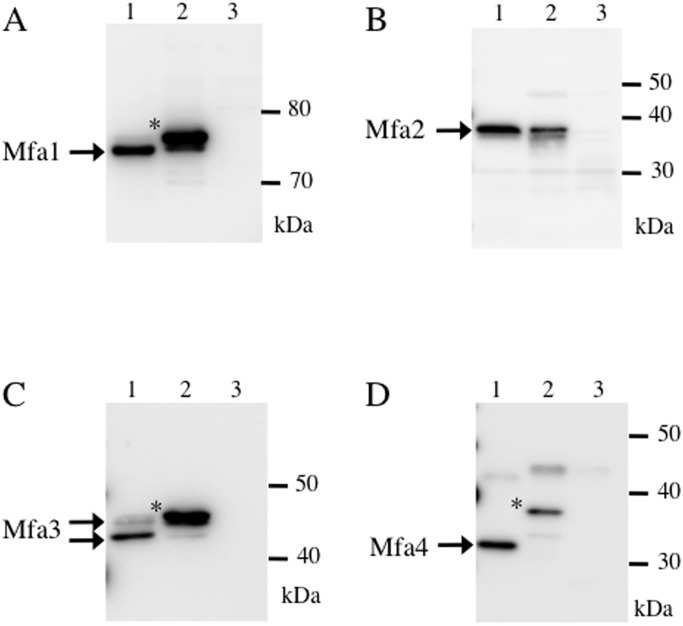
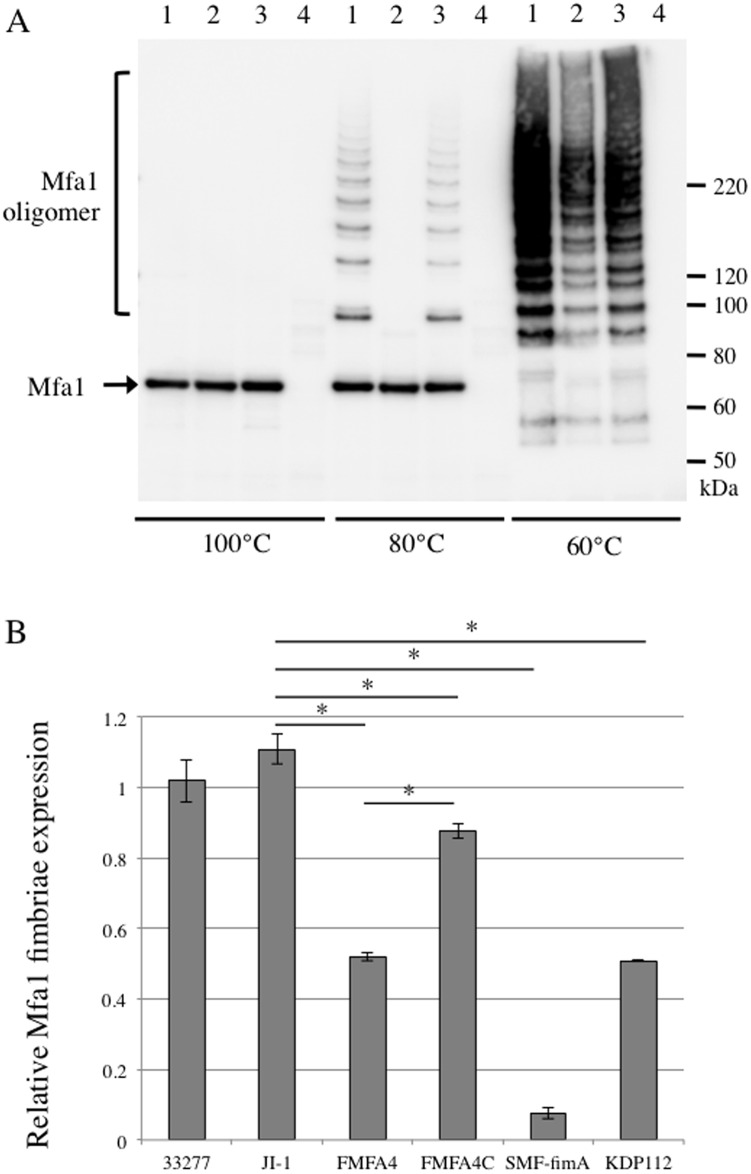
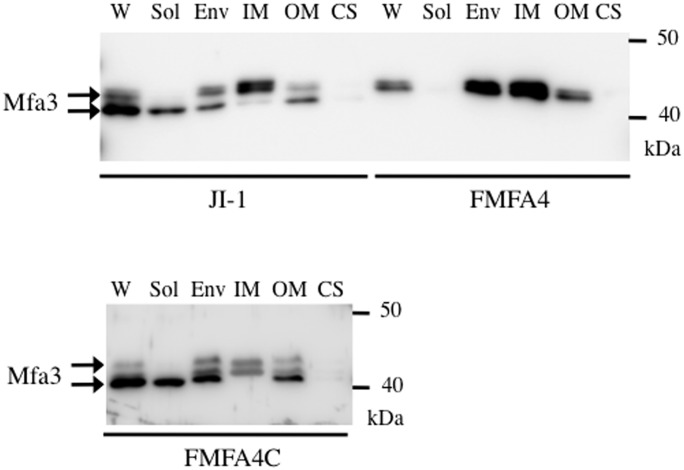
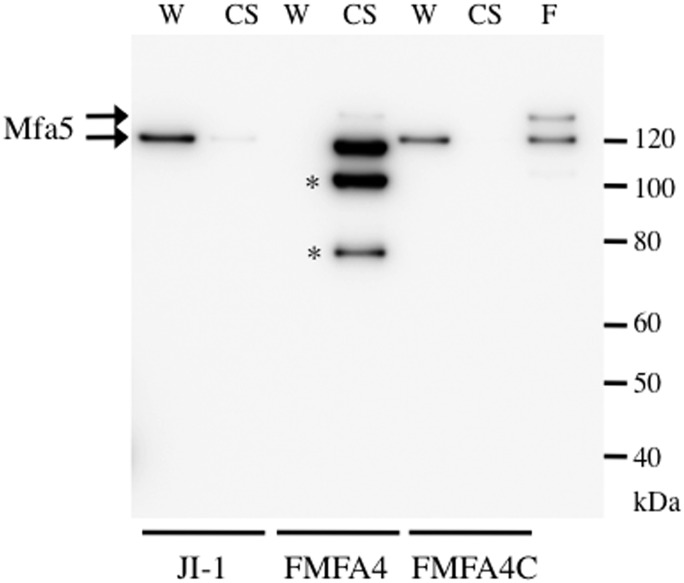
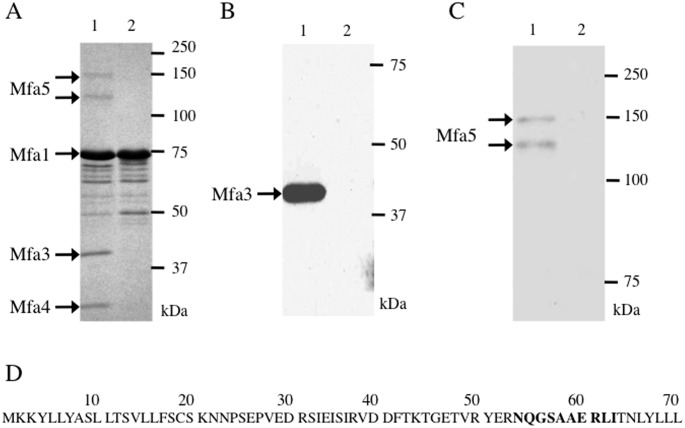
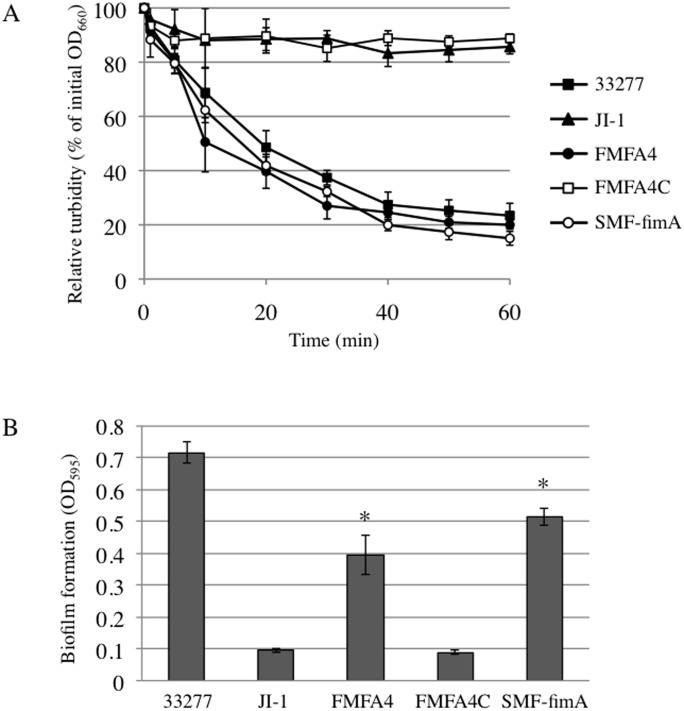
Porphyromonas gingivalis, a gram-negative obligate anaerobic bacterium, is considered to be a key pathogen in periodontal disease. The bacterium expresses Mfa1 fimbriae, which are composed of polymers of Mfa1. The minor accessory components Mfa3, Mfa4, and Mfa5 are incorporated into these fimbriae. In this study, we characterized Mfa4 using genetically modified strains. Deficiency in the mfa4 gene decreased, but did not eliminate, expression of Mfa1 fimbriae. However, Mfa3 and Mfa5 were not incorporated because of defects in posttranslational processing and leakage into the culture supernatant, respectively. Furthermore, the mfa4-deficient mutant had an increased tendency to auto-aggregate and form biofilms, reminiscent of a mutant completely lacking Mfa1. Notably, complementation of mfa4 restored expression of structurally intact and functional Mfa1 fimbriae. Taken together, these results indicate that the accessory proteins Mfa3, Mfa4, and Mfa5 are necessary for assembly of Mfa1 fimbriae and regulation of auto-aggregation and biofilm formation of P. gingivalis. In addition, we found that Mfa3 and Mfa4 are processed to maturity by the same RgpA/B protease that processes Mfa1 subunits prior to polymerization.
牙龈卟啉单胞菌是一种革兰氏阴性专性厌氧菌,被认为是牙周病的关键病原体。该细菌表达由Mfa1聚合物组成的Mfa1菌毛。次要辅助成分Mfa3、Mfa4和Mfa5被整合到这些菌毛中。在本研究中,我们利用基因改造菌株对Mfa4进行了表征。mfa4基因的缺失降低了Mfa1菌毛的表达,但并未消除。然而,Mfa3和Mfa5分别由于翻译后加工缺陷和泄漏到培养上清液中而未被整合。此外,mfa4缺陷突变体具有增加的自聚集和形成生物膜的倾向,这让人联想到完全缺乏Mfa1的突变体。值得注意的是,mfa4的互补恢复了结构完整且功能正常的Mfa1菌毛的表达。综上所述,这些结果表明辅助蛋白Mfa3、Mfa4和Mfa5对于牙龈卟啉单胞菌Mfa1菌毛的组装以及自聚集和生物膜形成的调节是必要的。此外,我们发现Mfa3和Mfa4由与在聚合之前加工Mfa1亚基相同的RgpA/B蛋白酶加工成熟。