de Wispelaere Mélissanne, Ricklin Meret, Souque Philippe, Frenkiel Marie-Pascale, Paulous Sylvie, Garcìa-Nicolàs Obdulio, Summerfield Artur, Charneau Pierre, Desprès Philippe
Interactions Moléculaires Flavivirus-Hôtes, Institut Pasteur, Paris, France.
Institute of Virology and Immunology, Mittelhäusern, Switzerland.
PLoS Negl Trop Dis. 2015 Oct 5;9(10):e0004081. doi: 10.1371/journal.pntd.0004081. eCollection 2015.
Japanese encephalitis virus (JEV) is the major cause of viral encephalitis in Southeast Asia. Vaccination of domestic pigs has been suggested as a "one health" strategy to reduce viral disease transmission to humans. The efficiency of two lentiviral TRIP/JEV vectors expressing the JEV envelope prM and E glycoproteins at eliciting protective humoral response was assessed in a mouse model and piglets.
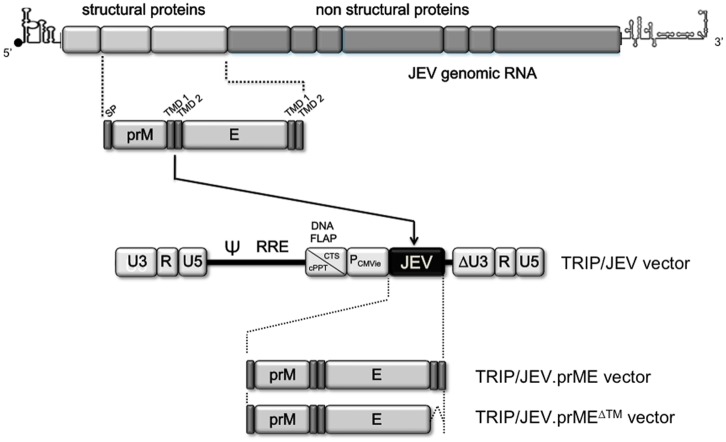
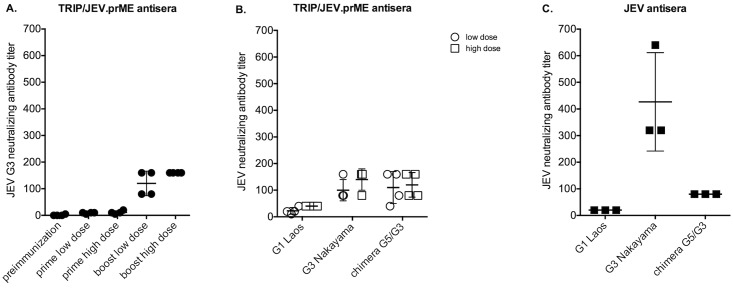
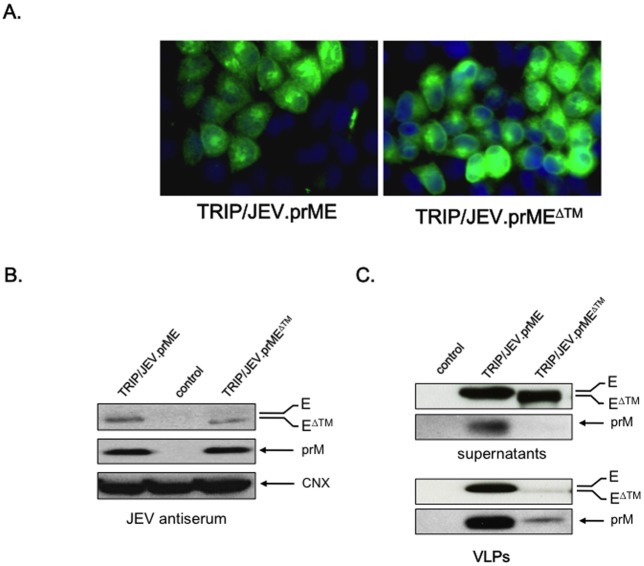
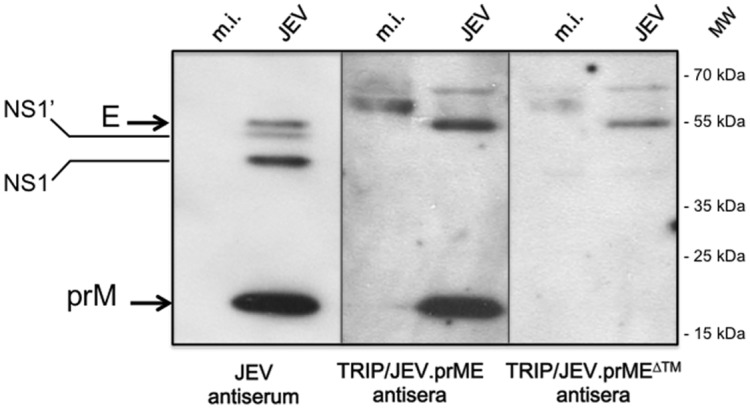
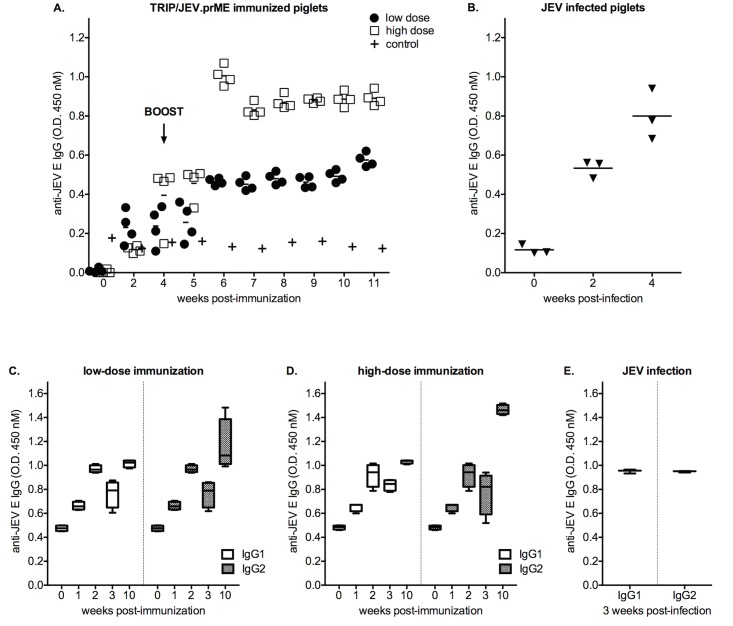
METHODOLOGY/PRINCIPAL FINDINGS: A gene encoding the envelope proteins prM and E from a genotype 3 JEV strain was inserted into a lentiviral TRIP vector. Two lentiviral vectors TRIP/JEV were generated, each expressing the prM signal peptide followed by the prM protein and the E glycoprotein, the latter being expressed either in its native form or lacking its two C-terminal transmembrane domains. In vitro transduction of cells with the TRIP/JEV vector expressing the native prM and E resulted in the efficient secretion of virus-like particles of Japanese encephalitis virus. Immunization of BALB/c mice with TRIP/JEV vectors resulted in the production of IgGs against Japanese encephalitis virus, and the injection of a second dose one month after the prime injection greatly boosted antibody titers. The TRIP/JEV vectors elicited neutralizing antibodies against JEV strains belonging to genotypes 1, 3, and 5. Immunization of piglets with two doses of the lentiviral vector expressing JEV virus-like particles led to high titers of anti-JEV antibodies, that had efficient neutralizing activity regardless of the JEV genotype tested.
CONCLUSIONS/SIGNIFICANCE: Immunization of pigs with the lentiviral vector expressing JEV virus-like particles is particularly efficient to prime antigen-specific humoral immunity and trigger neutralizing antibody responses against JEV genotypes 1, 3, and 5. The titers of neutralizing antibodies elicited by the TRIP/JEV vector are sufficient to confer protection in domestic pigs against different genotypes of JEV and this could be of a great utility in endemic regions where more than one genotype is circulating.
日本脑炎病毒(JEV)是东南亚病毒性脑炎的主要病因。有人建议对家猪进行疫苗接种,作为一种“同一健康”策略,以减少病毒病向人类的传播。在小鼠模型和仔猪中评估了两种表达JEV包膜prM和E糖蛋白的慢病毒TRIP/JEV载体引发保护性体液反应的效率。
方法/主要发现:将编码来自3型JEV毒株包膜蛋白prM和E的基因插入慢病毒TRIP载体。构建了两种慢病毒载体TRIP/JEV,每种载体都表达prM信号肽,其后是prM蛋白和E糖蛋白,E糖蛋白以天然形式表达或缺少其两个C末端跨膜结构域。用表达天然prM和E的TRIP/JEV载体体外转导细胞,导致高效分泌日本脑炎病毒样颗粒。用TRIP/JEV载体免疫BALB/c小鼠可产生抗日本脑炎病毒的IgG,初次注射后1个月注射第二剂可显著提高抗体滴度。TRIP/JEV载体引发了针对属于1型、3型和5型的JEV毒株的中和抗体。用两剂表达JEV病毒样颗粒的慢病毒载体免疫仔猪,可导致产生高滴度的抗JEV抗体,无论测试的JEV基因型如何,这些抗体都具有有效的中和活性。
结论/意义:用表达JEV病毒样颗粒的慢病毒载体免疫猪,对于启动抗原特异性体液免疫和触发针对1型、3型和5型JEV基因型的中和抗体反应特别有效。TRIP/JEV载体引发的中和抗体滴度足以在家猪中提供针对不同JEV基因型的保护,这在多种基因型流行的 endemic 地区可能非常有用。