Lim Seung-Jae, Yeo Ingwon, Park Chan-Woo, Moon Young-Wan, Park Youn-Soo
Department of Orthopedic Surgery, Samsung Medical Center, Sungkyunkwan University School of Medicine, 81 Irwon-ro, Gangnam-gu, Seoul, 135-710, South Korea.
BMC Musculoskelet Disord. 2015 Oct 5;16:278. doi: 10.1186/s12891-015-0742-8.
Immune thrombocytopenia (ITP) is an immune-mediated acquired disease that is characterized by a decrease in the platelet count and an increased risk of bleeding. There is little information in the literature about the results of major joint replacement surgery in patients with ITP. The aim of this study was to report on the results of total hip arthroplasty (THA) in patients with primary ITP.
We retrospectively identified 15 THAs performed in 11 patients with primary ITP. The study group was matched (1:2) to a non-ITP control group of 30 THAs in 22 patients. According to the perioperative hematologic evaluation, blood management interventions were performed. All procedures were performed by a single surgeon and all patients received cementless components with ceramic-on-ceramic bearing. Mean duration of follow-up was 7.1 years (range, 2-13).
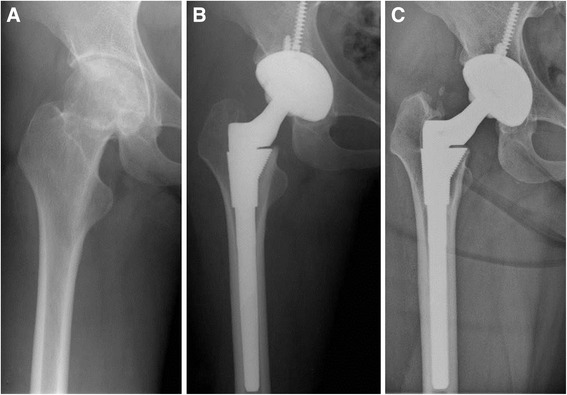
No significant differences were found between the two groups with regard to mean operative time, intraoperative blood loss, amount of closed suction drainage, length of hospital stay, and readmission rate. However, the proportion of patients requiring transfusion of packed red blood cells and/or platelet concentrate was higher in the ITP group when compared to the non-ITP group. Mean Harris hip score improved from 49.5 points preoperatively to 93.4 points at the final follow-up and no hips were revised for loosening or osteolysis in the ITP group. No significant differences were found between the two groups with respect to mean postoperative Harris hip scores and complication rates.
Our study showed encouraging clinical and radiographic results of THA in patients with ITP without increased risk of adverse events compared to those in patients without ITP. On the basis of these findings, we suggest that modern cementless THA might be a viable treatment for achieving functional improvement in patients with ITP and end-stage hip disease.
免疫性血小板减少症(ITP)是一种免疫介导的获得性疾病,其特征为血小板计数减少和出血风险增加。关于ITP患者进行大关节置换手术的结果,文献中报道较少。本研究的目的是报告原发性ITP患者全髋关节置换术(THA)的结果。
我们回顾性确定了11例原发性ITP患者接受的15例THA手术。研究组与22例患者接受30例THA手术的非ITP对照组进行匹配(1:2)。根据围手术期血液学评估,实施血液管理干预措施。所有手术均由同一位外科医生进行,所有患者均接受无骨水泥假体组件及陶瓷对陶瓷关节面。平均随访时间为7.1年(范围2 - 13年)。
两组在平均手术时间、术中失血量、闭式引流血量、住院时间和再入院率方面未发现显著差异。然而,与非ITP组相比,ITP组中需要输注浓缩红细胞和/或血小板的患者比例更高。平均Harris髋关节评分从术前的49.5分提高到末次随访时的93.4分,ITP组中无髋关节因松动或骨溶解而翻修。两组在术后平均Harris髋关节评分和并发症发生率方面未发现显著差异。
我们的研究表明,与非ITP患者相比,ITP患者进行THA的临床和影像学结果令人鼓舞,且不良事件风险未增加。基于这些发现,我们建议现代无骨水泥THA可能是改善ITP合并终末期髋关节疾病患者功能的一种可行治疗方法。