Leguen Isabelle, Le Cam Aurélie, Montfort Jérôme, Peron Sandrine, Fautrel Alain
INRA, UR1037 Fish Physiology and Genomics, Rennes, France.
INSERM UMR991, Rennes, France; Université de Rennes 1 Plateforme H2P2, Biosit, Rennes, France.
PLoS One. 2015 Oct 6;10(10):e0139938. doi: 10.1371/journal.pone.0139938. eCollection 2015.
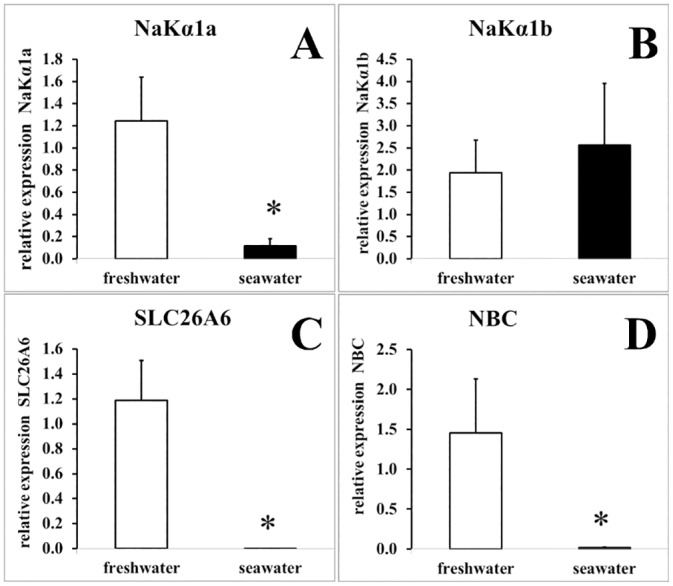
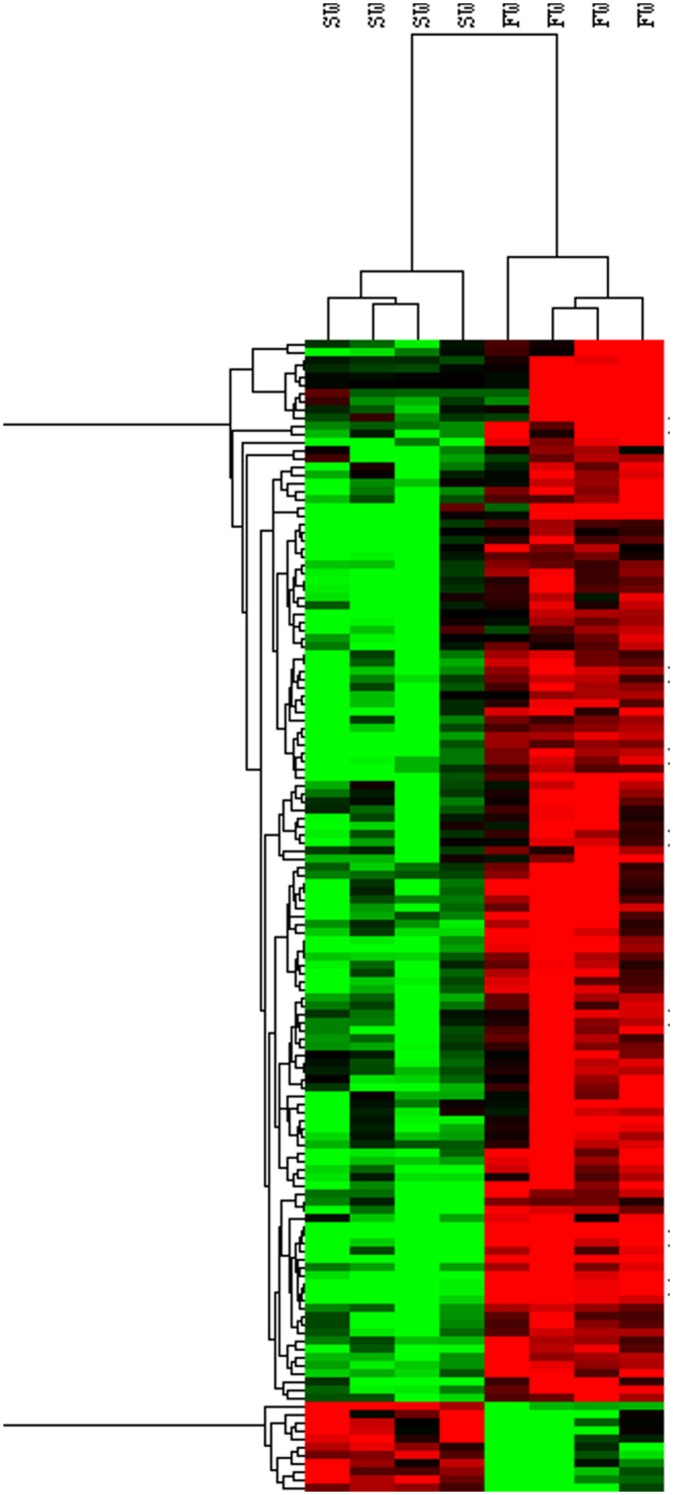
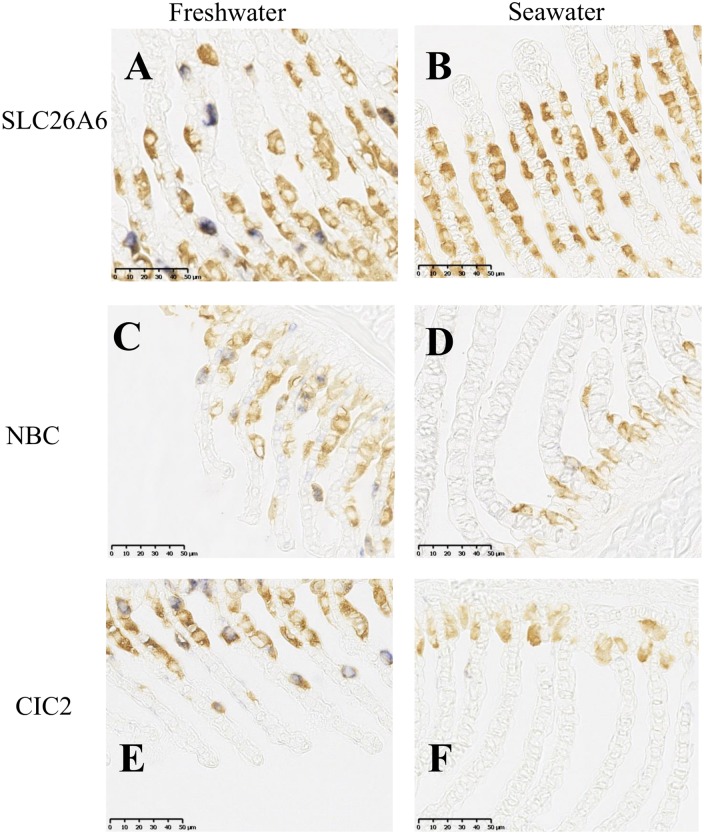
Fish gills represent a complex organ composed of several cell types that perform multiple physiological functions. Among these cells, ionocytes are implicated in the maintenance of ion homeostasis. However, because the ionocyte represents only a small percent of whole gill tissue, its specific transcriptome can be overlooked among the numerous cell types included in the gill. The objective of this study is to better understand ionocyte functions by comparing the RNA expression of this cell type in freshwater and seawater acclimated rainbow trout. To realize this objective, ionocytes were captured from gill cryosections using laser capture microdissection after immunohistochemistry. Then, transcriptome analyses were performed on an Agilent trout oligonucleotide microarray. Gene expression analysis identified 108 unique annotated genes differentially expressed between freshwater and seawater ionocytes, with a fold change higher than 3. Most of these genes were up-regulated in freshwater cells. Interestingly, several genes implicated in ion transport, extracellular matrix and structural cellular proteins appeared up-regulated in freshwater ionocytes. Among them, several ion transporters, such as CIC2, SLC26A6, and NBC, were validated by qPCR and/or in situ hybridization. The latter technique allowed us to localize the transcripts of these ion transporters in only ionocytes and more particularly in the freshwater cells. Genes involved in metabolism and also several genes implicated in transcriptional regulation, cell signaling and the cell cycle were also enhanced in freshwater ionocytes. In conclusion, laser capture microdissection combined with microarray analysis allowed for the determination of the transcriptional signature of scarce cells in fish gills, such as ionocytes, and aided characterization of the transcriptome of these cells in freshwater and seawater acclimated trout.
鱼鳃是一个复杂的器官,由多种细胞类型组成,执行多种生理功能。在这些细胞中,离子细胞与离子稳态的维持有关。然而,由于离子细胞仅占整个鳃组织的一小部分,其特定的转录组可能会在鳃中包含的众多细胞类型中被忽视。本研究的目的是通过比较淡水和海水适应的虹鳟鱼中这种细胞类型的RNA表达,更好地了解离子细胞的功能。为了实现这一目标,在免疫组织化学后,使用激光捕获显微切割技术从鳃冰冻切片中捕获离子细胞。然后,在安捷伦鳟鱼寡核苷酸微阵列上进行转录组分析。基因表达分析确定了108个独特的注释基因,在淡水和海水离子细胞之间差异表达,倍数变化高于3。这些基因中的大多数在淡水细胞中上调。有趣的是,一些与离子转运、细胞外基质和结构细胞蛋白相关的基因在淡水离子细胞中似乎上调。其中,几种离子转运蛋白,如CIC2、SLC26A6和NBC,通过qPCR和/或原位杂交得到验证。后一种技术使我们能够仅在离子细胞中,更特别是在淡水细胞中定位这些离子转运蛋白的转录本。参与代谢的基因以及一些与转录调控、细胞信号传导和细胞周期相关的基因在淡水离子细胞中也得到增强。总之,激光捕获显微切割与微阵列分析相结合,能够确定鱼鳃中稀缺细胞(如离子细胞)的转录特征,并有助于表征淡水和海水适应的鳟鱼中这些细胞的转录组。