Winslow Brent D, Carroll Meredith B, Martin Jonathan W, Surpris Glenn, Chadderdon George L
Design Interactive, Inc. Orlando, FL, USA.
Front Neurosci. 2015 Sep 16;9:328. doi: 10.3389/fnins.2015.00328. eCollection 2015.
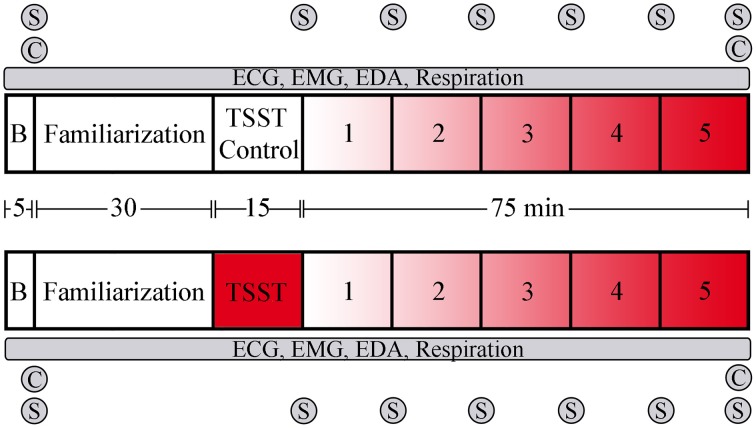
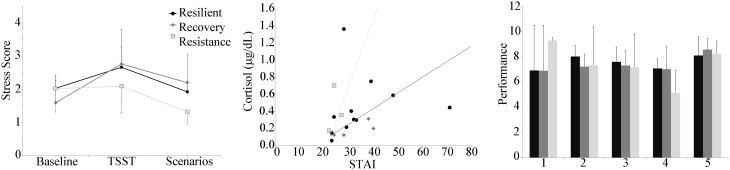
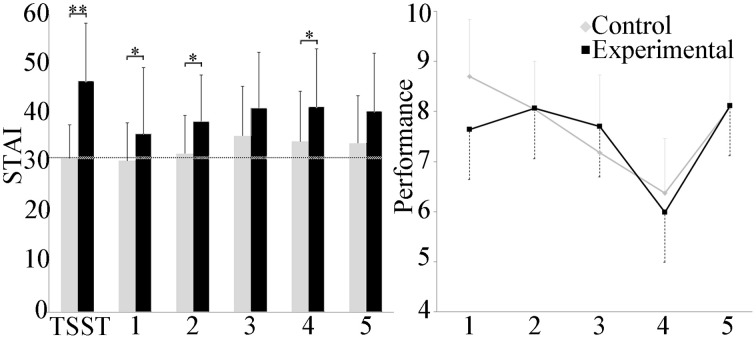
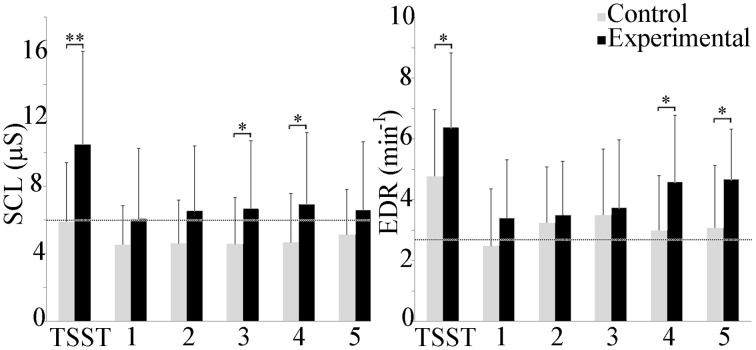
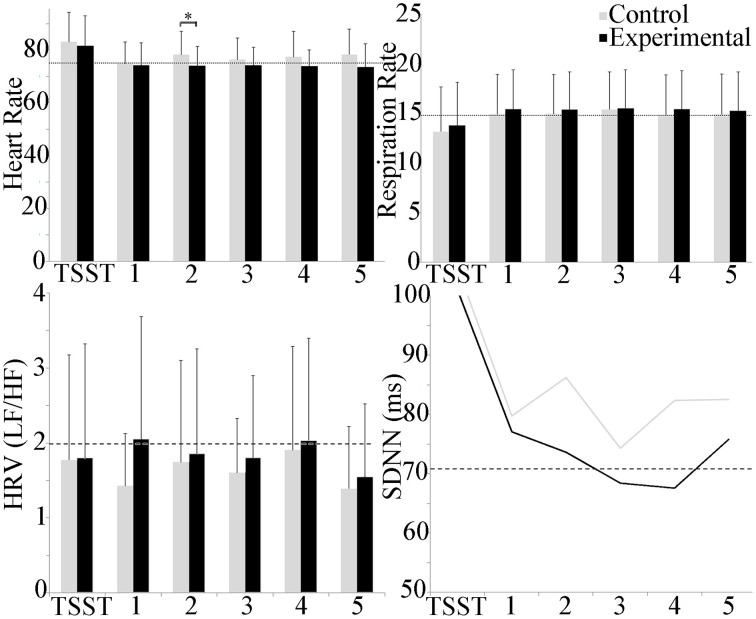
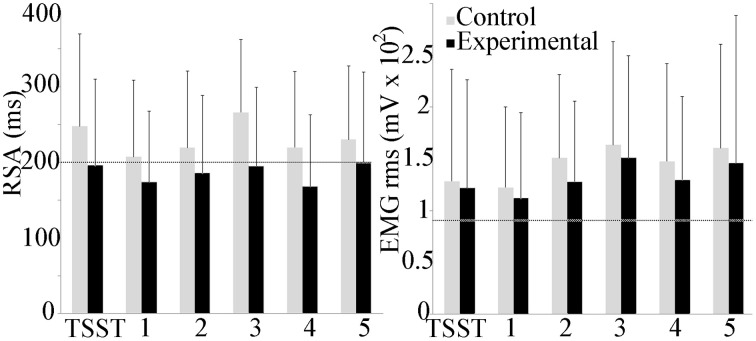
Human task performance is affected by exposure to physiological and psychological stress. The ability to measure the physiological response to stressors and correlate that to task performance could be used to identify resilient individuals or those at risk for stress-related performance decrements. Accomplishing this prior to performance under severe stress or the development of clinical stress disorders could facilitate focused preparation such as tailoring training to individual needs. Here we measure the effects of stress on physiological response and performance through behavior, physiological sensors, and subjective ratings, and identify which individuals are at risk for stress-related performance decrements. Participants performed military-relevant training tasks under stress in a virtual environment, with autonomic and hypothalamic-pituitary-adrenal axis (HPA) reactivity analyzed. Self-reported stress, as well as physiological indices of stress, increased in the group pre-exposed to socioevaluative stress. Stress response was effectively captured via electrodermal and cardiovascular measures of heart rate and skin conductance level. A resilience classification algorithm was developed based upon physiological reactivity, which correlated with baseline unstressed physiological and self-reported stress values. Outliers were identified in the experimental group that had a significant mismatch between self-reported stress and salivary cortisol. Baseline stress measurements were predictive of individual resilience to stress, including the impact stress had on physiological reactivity and performance. Such an approach may have utility in identifying individuals at risk for problems performing under severe stress. Continuing work has focused on adapting this method for military personnel, and assessing the utility of various coping and decision-making strategies on performance and physiological stress.
人类的任务表现会受到生理和心理压力的影响。测量对应激源的生理反应并将其与任务表现相关联的能力,可用于识别具有复原力的个体或那些有与压力相关的表现下降风险的个体。在面临严重压力下执行任务之前或临床应激障碍发展之前做到这一点,有助于进行有针对性的准备,比如根据个体需求定制训练。在此,我们通过行为、生理传感器和主观评分来测量压力对生理反应和表现的影响,并识别哪些个体有与压力相关的表现下降风险。参与者在虚拟环境中的压力下执行与军事相关的训练任务,并分析自主神经和下丘脑 - 垂体 - 肾上腺轴(HPA)的反应性。在预先暴露于社会评价压力的组中,自我报告的压力以及压力的生理指标均有所增加。通过心率和皮肤电导水平的皮肤电和心血管测量有效地捕捉到了压力反应。基于生理反应性开发了一种复原力分类算法,该算法与基线无压力的生理和自我报告的压力值相关。在实验组中识别出了自我报告的压力与唾液皮质醇之间存在显著不匹配的异常值。基线压力测量可预测个体对压力的复原力,包括压力对生理反应性和表现的影响。这种方法可能有助于识别在严重压力下执行任务存在问题风险的个体。后续工作集中在将此方法应用于军事人员,并评估各种应对和决策策略对表现和生理压力的效用。