Kyrtsos Christina Rose, Baras John S
University of Pittsburgh Medical Center, Department of Neurology, Pittsburgh, Pennsylvania, United States of America; Institute for Systems Research, University of Maryland, College Park, Maryland, United States of America.
Institute for Systems Research, University of Maryland, College Park, Maryland, United States of America; Department of Electrical and Computer Engineering, University of Maryland, College Park, Maryland, United States of America.
PLoS One. 2015 Oct 8;10(10):e0139574. doi: 10.1371/journal.pone.0139574. eCollection 2015.
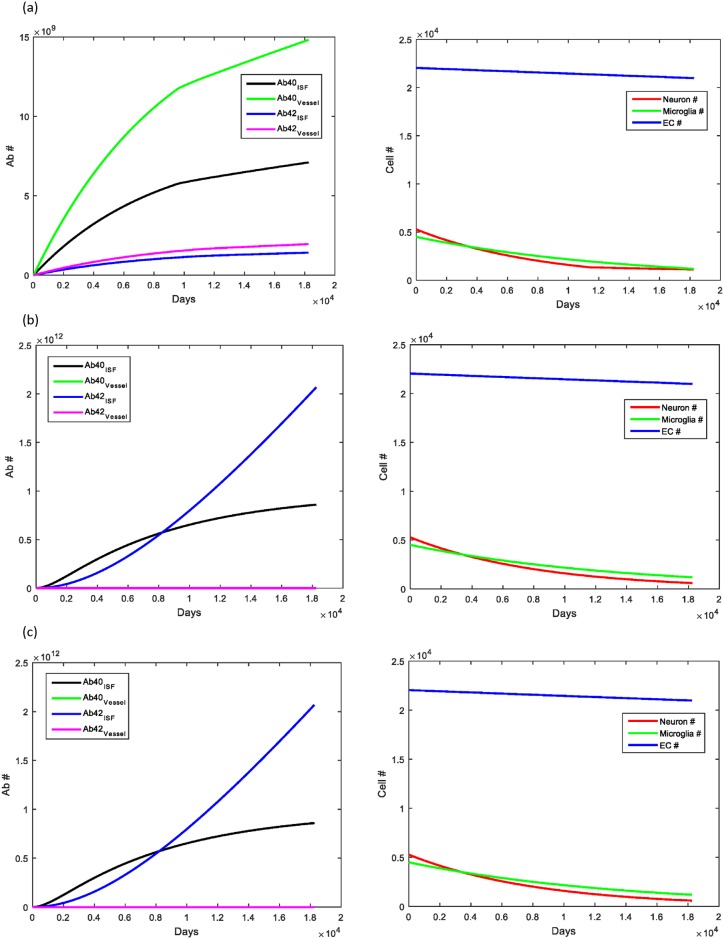
Alzheimer's disease (AD) is the most common cause of dementia in the elderly, affecting over 10% population over the age of 65 years. Clinically, AD is described by the symptom set of short term memory loss and cognitive decline, changes in mentation and behavior, and eventually long-term memory deficit as the disease progresses. On imaging studies, significant atrophy with subsequent increase in ventricular volume have been observed. Pathology on post-mortem brain specimens demonstrates the classic findings of increased beta amyloid (Aβ) deposition and the presence of neurofibrillary tangles (NFTs) within affected neurons. Neuroinflammation, dysregulation of blood-brain barrier transport and clearance, deposition of Aβ in cerebral blood vessels, vascular risk factors such as atherosclerosis and diabetes, and the presence of the apolipoprotein E4 allele have all been identified as playing possible roles in AD pathogenesis. Recent research has demonstrated the importance of the glymphatic system in the clearance of Aβ from the brain via the perivascular space surrounding cerebral blood vessels. Given the variety of hypotheses that have been proposed for AD pathogenesis, an interconnected, multilayer model offers a unique opportunity to combine these ideas into a single unifying model. Results of this model demonstrate the importance of vessel stiffness and heart rate in maintaining adequate clearance of Aβ from the brain.
阿尔茨海默病(AD)是老年人痴呆最常见的病因,影响超过10%的65岁以上人群。临床上,AD的症状表现为短期记忆丧失和认知衰退、精神状态和行为改变,随着疾病进展最终出现长期记忆缺陷。在影像学研究中,已观察到明显萎缩以及随后脑室容积增加。尸检脑标本的病理学表现为β淀粉样蛋白(Aβ)沉积增加以及受影响神经元内存在神经原纤维缠结(NFTs)的典型发现。神经炎症、血脑屏障转运和清除功能失调、Aβ在脑血管中的沉积、动脉粥样硬化和糖尿病等血管危险因素以及载脂蛋白E4等位基因的存在,均已被确定在AD发病机制中可能发挥作用。最近的研究表明,类淋巴系统在通过脑血管周围的血管周围间隙清除大脑中的Aβ方面具有重要作用。鉴于针对AD发病机制提出了多种假说,一个相互关联的多层模型提供了一个独特的机会,可将这些观点整合为一个统一模型。该模型的结果表明血管僵硬度和心率在维持大脑中Aβ的充分清除方面具有重要性。