Zhou Jun, Wan Ji, Gao Xiangwei, Zhang Xingqian, Jaffrey Samie R, Qian Shu-Bing
Division of Nutritional Sciences, Cornell University, Ithaca, New York 14853, USA.
Department of Pharmacology, Weill Cornell Medical College, Cornell University, New York City, New York 10065, USA.
Nature. 2015 Oct 22;526(7574):591-4. doi: 10.1038/nature15377. Epub 2015 Oct 12.
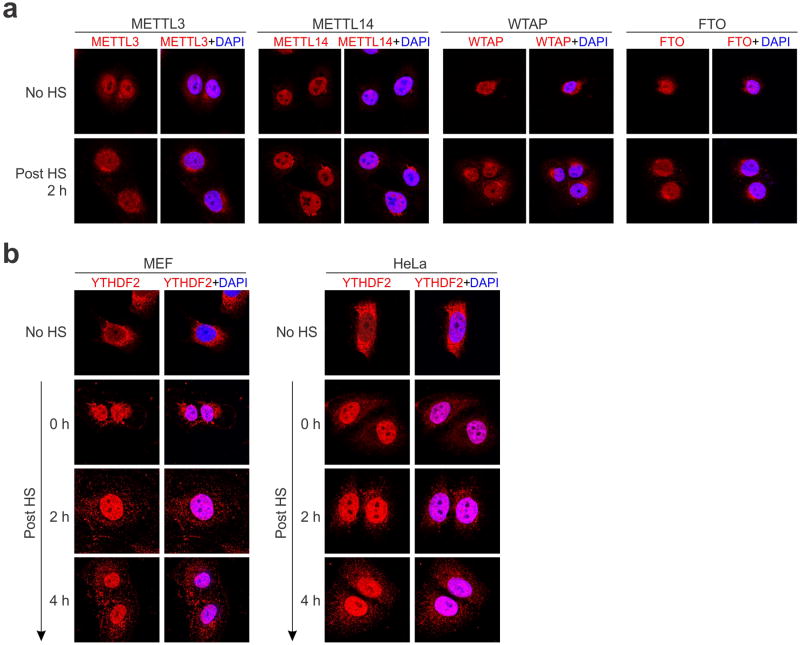
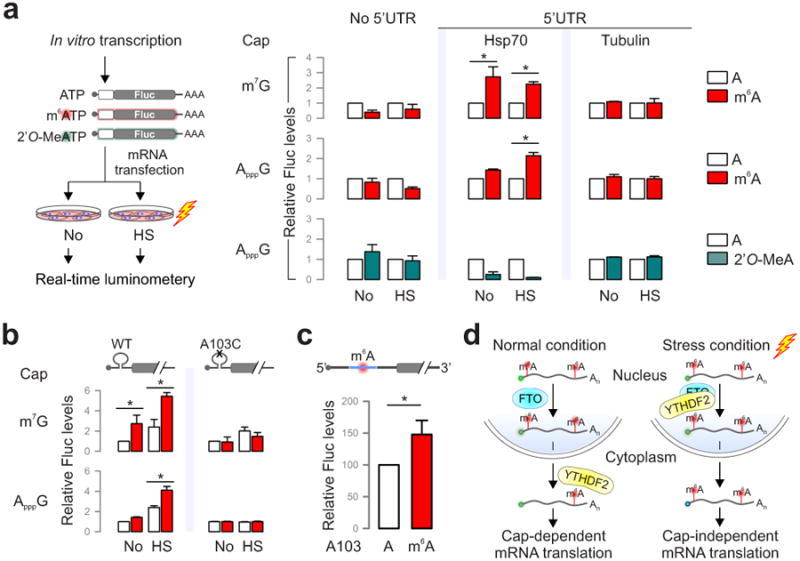
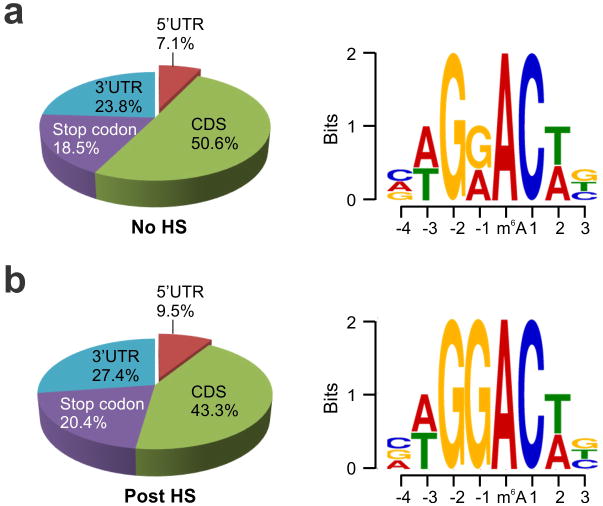
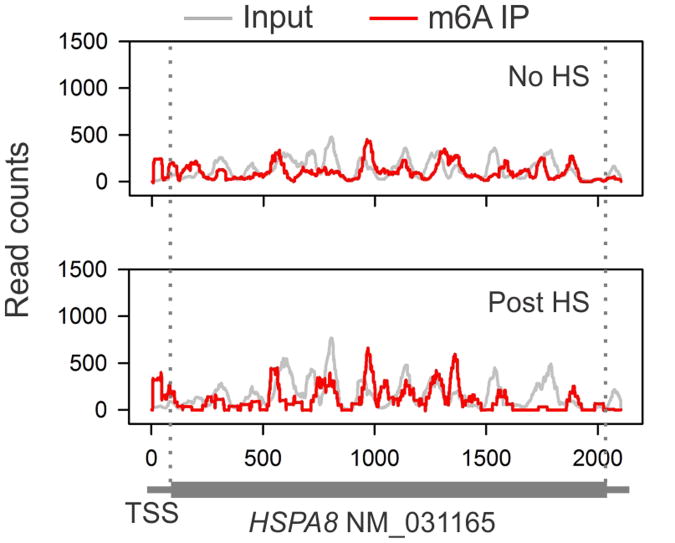
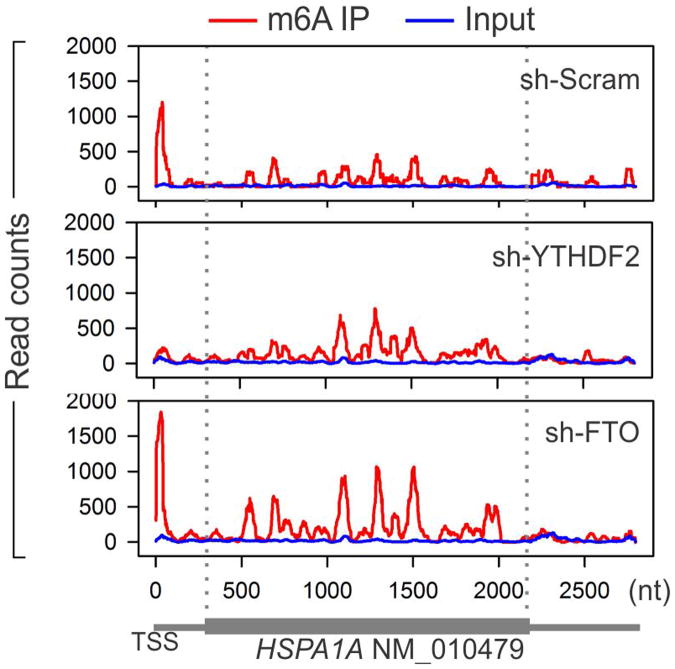
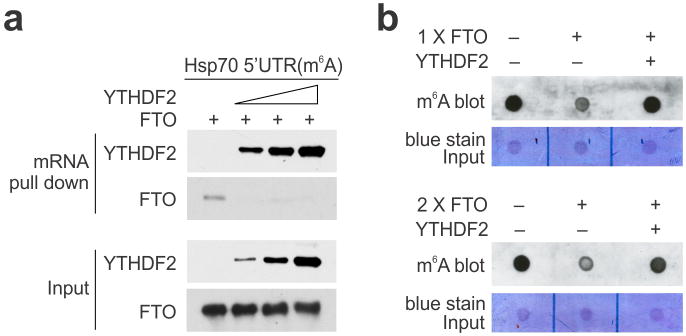
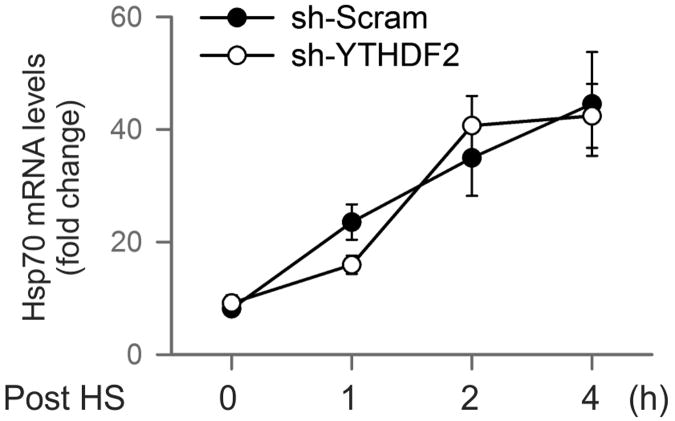
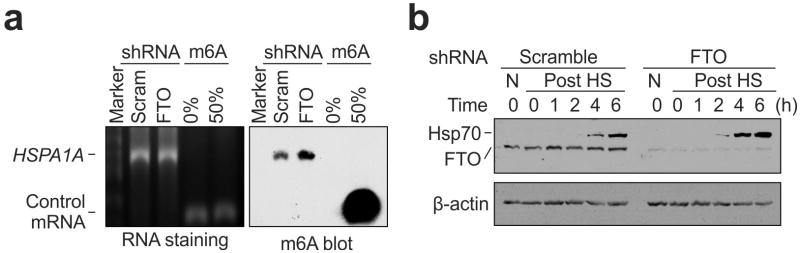
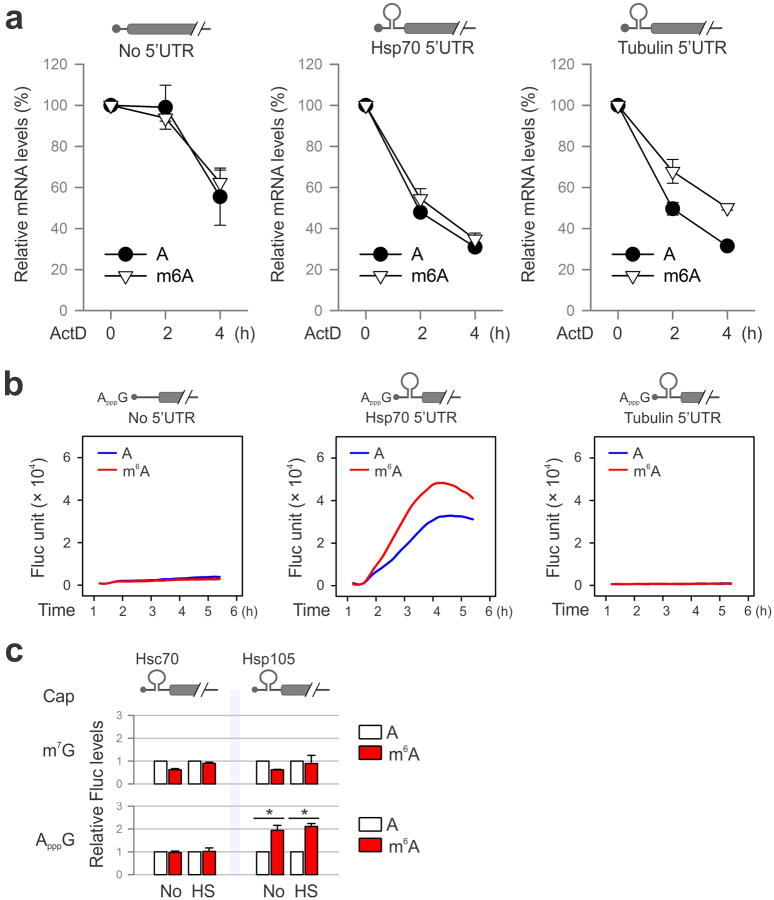
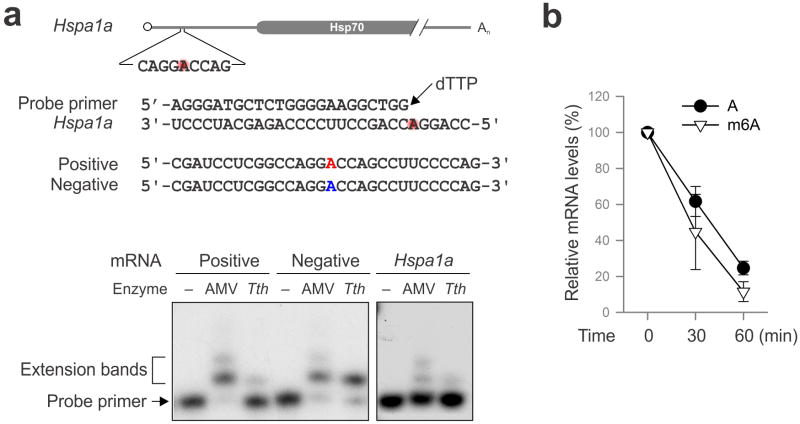
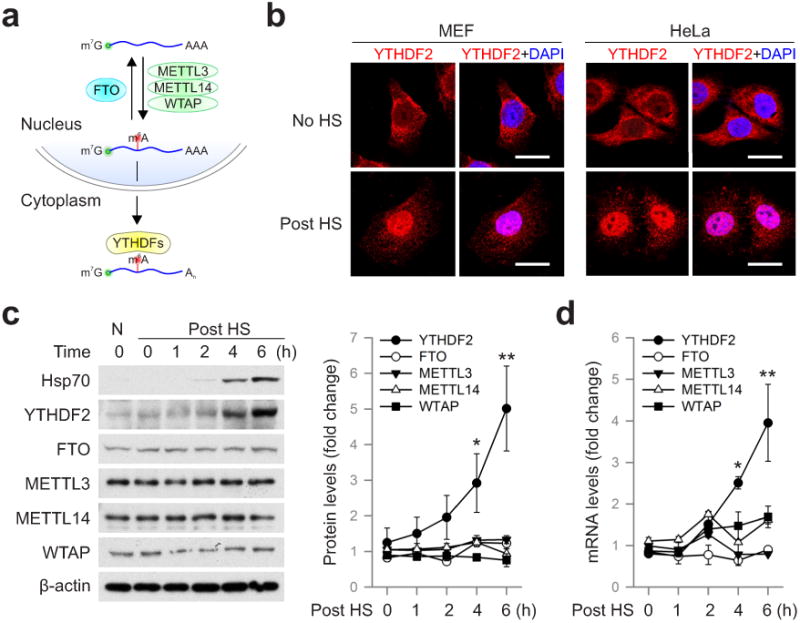
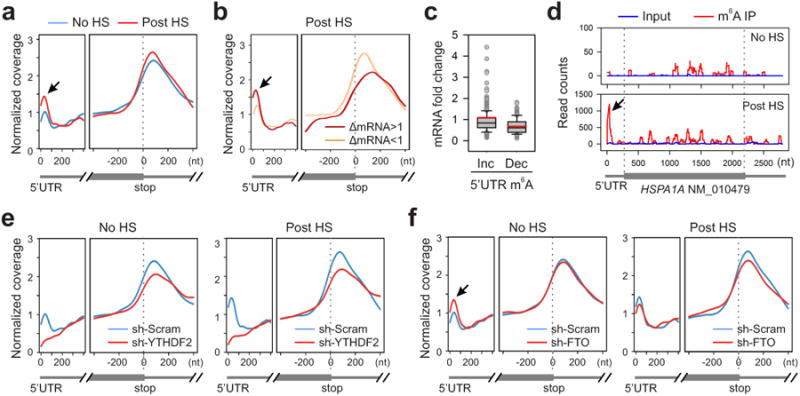
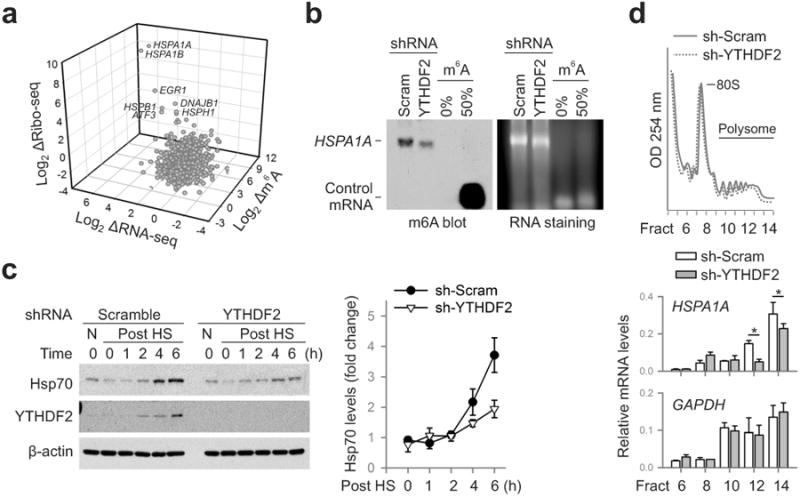
The most abundant mRNA post-transcriptional modification is N(6)-methyladenosine (m(6)A), which has broad roles in RNA biology. In mammalian cells, the asymmetric distribution of m(6)A along mRNAs results in relatively less methylation in the 5' untranslated region (5'UTR) compared to other regions. However, whether and how 5'UTR methylation is regulated is poorly understood. Despite the crucial role of the 5'UTR in translation initiation, very little is known about whether m(6)A modification influences mRNA translation. Here we show that in response to heat shock stress, certain adenosines within the 5'UTR of newly transcribed mRNAs are preferentially methylated. We find that the dynamic 5'UTR methylation is a result of stress-induced nuclear localization of YTHDF2, a well-characterized m(6)A 'reader'. Upon heat shock stress, the nuclear YTHDF2 preserves 5'UTR methylation of stress-induced transcripts by limiting the m(6)A 'eraser' FTO from demethylation. Remarkably, the increased 5'UTR methylation in the form of m(6)A promotes cap-independent translation initiation, providing a mechanism for selective mRNA translation under heat shock stress. Using Hsp70 mRNA as an example, we demonstrate that a single m(6)A modification site in the 5'UTR enables translation initiation independent of the 5' end N(7)-methylguanosine cap. The elucidation of the dynamic features of 5'UTR methylation and its critical role in cap-independent translation not only expands the breadth of physiological roles of m(6)A, but also uncovers a previously unappreciated translational control mechanism in heat shock response.
最丰富的mRNA转录后修饰是N⁶-甲基腺苷(m⁶A),它在RNA生物学中具有广泛作用。在哺乳动物细胞中,m⁶A沿mRNA的不对称分布导致5'非翻译区(5'UTR)的甲基化相对于其他区域较少。然而,5'UTR甲基化是如何被调控的以及是否受到调控,目前尚不清楚。尽管5'UTR在翻译起始中起着关键作用,但关于m⁶A修饰是否影响mRNA翻译却知之甚少。在这里,我们表明,在热休克应激反应中,新转录的mRNA的5'UTR内的某些腺苷优先被甲基化。我们发现,动态的5'UTR甲基化是应激诱导的YTHDF2核定位的结果,YTHDF2是一种特征明确的m⁶A“读取器”。在热休克应激时,核内的YTHDF2通过限制m⁶A“擦除器”FTO的去甲基化作用,保留应激诱导转录本的5'UTR甲基化。值得注意的是,以m⁶A形式增加的5'UTR甲基化促进了不依赖帽结构的翻译起始,为热休克应激下的选择性mRNA翻译提供了一种机制。以Hsp70 mRNA为例,我们证明了5'UTR中的单个m⁶A修饰位点能够实现独立于5'端N⁷-甲基鸟苷帽的翻译起始。对5'UTR甲基化动态特征及其在不依赖帽结构翻译中的关键作用的阐明,不仅扩展了m⁶A的生理作用广度,还揭示了热休克反应中一种以前未被认识的翻译控制机制。