Division of Endocrinology and Metabolism, Department of Internal Medicine; Kaohsiung Municipal Siaogang Hospital, Kaohsiung Municipal Ta-Tung Hospital, Kaohsiung Medical University Hospital, Kaohsiung, Taiwan.
School of Medicine, College of Medicine, Kaohsiung Medical University, 100 Tzyou 1st Rd, Kaohsiung, 807, Taiwan.
BMC Med Genet. 2015 Oct 12;16:93. doi: 10.1186/s12881-015-0242-6.
Microsomal triglyceride transfer protein (MTP) works to lipidate and assemble the apoB-containing lipoproteins in liver. It closely links up the hepatic secretion of lipid to regulate serum lipid and atherosclerosis. Cases of MTTP gene mutation is characterized by abetalipoproteinemia and remarkable hepatic steatosis or cirrhosis. Several MTTP polymorphisms have been reported relating to metabolic syndrome, hyperlipidemia and steatohepatitis. We supposed the regulation of serum lipids and risk of non-alcoholic fatty liver disease (NAFLD) formation may be modified by individual susceptibility related to the MTTP polymorphisms.
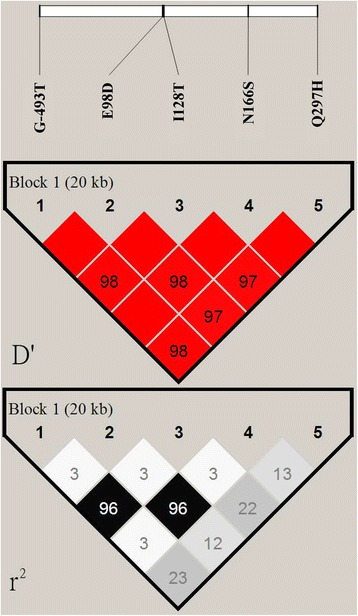
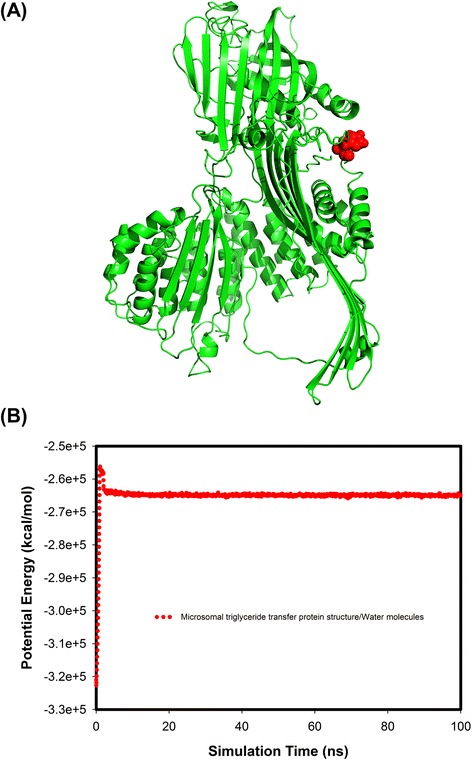
A cross-sectional population of 1193 subjects, 1087 males and 106 females mean aged 45.9 ± 8.9 years, were enrolled without recognized secondary hyperlipidemia. Fasting serum lipid, insulin, and non-esterified fatty acid were assessed and transformed to insulin resistance index, HOMA-IR and Adipo-IR. After ruling out alcohol abuser, non-alcoholic fatty liver disease (NAFLD) was diagnosed by abdominal ultrasound. Five common MTTP polymorphisms (promoter -493 G/T, E98D, I128T, N166S, and Q297H) were conducted by TaqMan assay. Multivariate regression analysis was used to estimate their impact on serum lipid and NAFLD risk. Assessment revealed a differential impact on LDL-C and non-HDL-C, which were sequentially determined by the Q297H polymorphism, insulin resistance, body mass index and age. Carriers of homozygous minor allele (297 H) had significantly lower LDL-C and non-HDL-C but higher risk for NAFLD. Molecular modeling of the 297 H variant demonstrated higher free energy, potentially referring to an unstable structure and functional sequence.
These results evidenced the MTTP polymorphisms could modulate the lipid homeostasis to determine the serum lipids and risk of NAFLD. The MTTP 297 H polymorphism interacted with age, insulin resistance and BMI to decrease serum apoB containing lipoproteins (LDL-C and non-HDL-C) but increase the risk of NAFLD formation.
微粒体甘油三酯转移蛋白(MTP)在肝脏中发挥作用,使载脂蛋白 B 所含的脂蛋白脂质化并组装。它密切连接肝脏的脂质分泌,以调节血清脂质和动脉粥样硬化。MTP 基因突变的病例表现为无载脂蛋白血症和明显的肝脂肪变性或肝硬化。已有多项 MTP 多态性与代谢综合征、高脂血症和脂肪性肝炎有关的报道。我们推测,血清脂质的调节和非酒精性脂肪肝(NAFLD)形成的风险可能会因与 MTP 多态性相关的个体易感性而发生改变。
我们纳入了 1193 名无继发性高脂血症的受试者,其中 1087 名男性和 106 名女性,平均年龄为 45.9±8.9 岁。检测了空腹血清脂质、胰岛素和非酯化脂肪酸,并将其转化为胰岛素抵抗指数(HOMA-IR)和脂联素抵抗指数(Adipo-IR)。排除酒精滥用者后,通过腹部超声诊断为非酒精性脂肪肝(NAFLD)。采用 TaqMan 法检测 5 种常见的 MTP 多态性(启动子-493 G/T、E98D、I128T、N166S 和 Q297H)。采用多元回归分析评估其对血清脂质和 NAFLD 风险的影响。评估结果显示,Q297H 多态性、胰岛素抵抗、体重指数和年龄依次决定了 LDL-C 和非 HDL-C 的不同影响。纯合子小等位基因(297H)携带者的 LDL-C 和非 HDL-C 显著降低,但 NAFLD 风险增加。297H 变异体的分子建模显示,自由能更高,可能表明结构和功能序列不稳定。
这些结果表明,MTP 多态性可以调节脂质稳态,从而决定血清脂质和 NAFLD 的风险。MTP 297H 多态性与年龄、胰岛素抵抗和 BMI 相互作用,降低载脂蛋白 B 含脂蛋白(LDL-C 和非 HDL-C),但增加 NAFLD 形成的风险。