De Wolf Katrien, Vermaelen Karim, De Meerleer Gert, Lambrecht Bart N, Ost Piet
Department of Radiation Oncology and Experimental Cancer Research; Ghent University Hospital ; Ghent, Belgium.
Tumor Immunology Laboratory; Department of Pulmonary Medicine; Ghent University Hospital ; Ghent, Belgium.
Oncoimmunology. 2015 May 27;4(10):e1042198. doi: 10.1080/2162402X.2015.1042198. eCollection 2015 Oct.
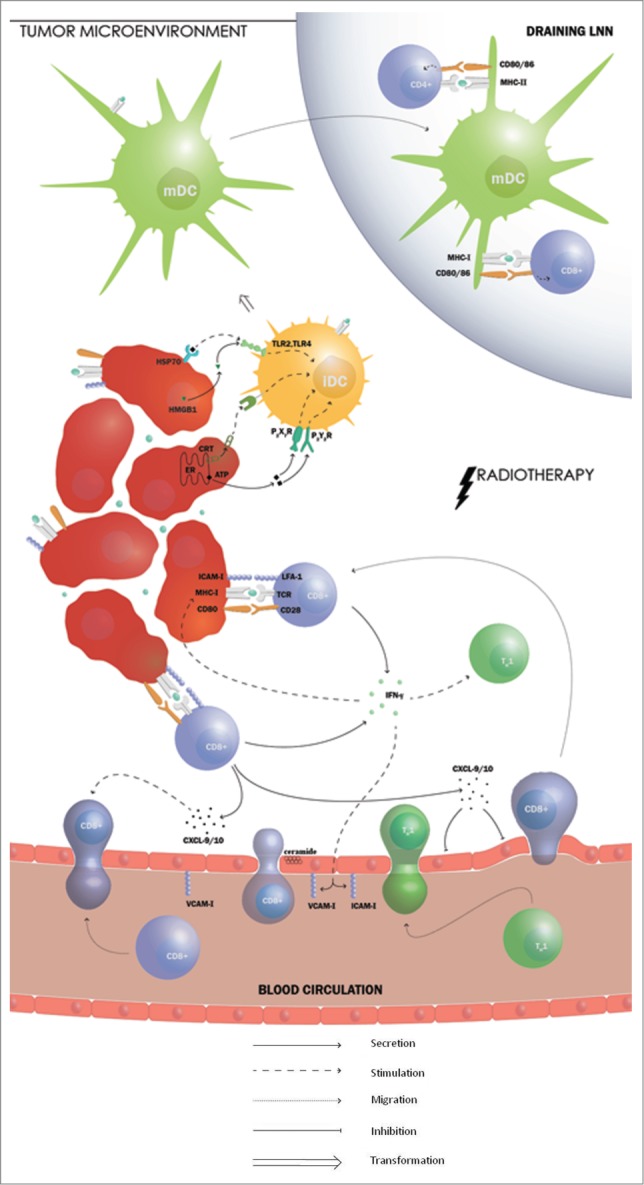
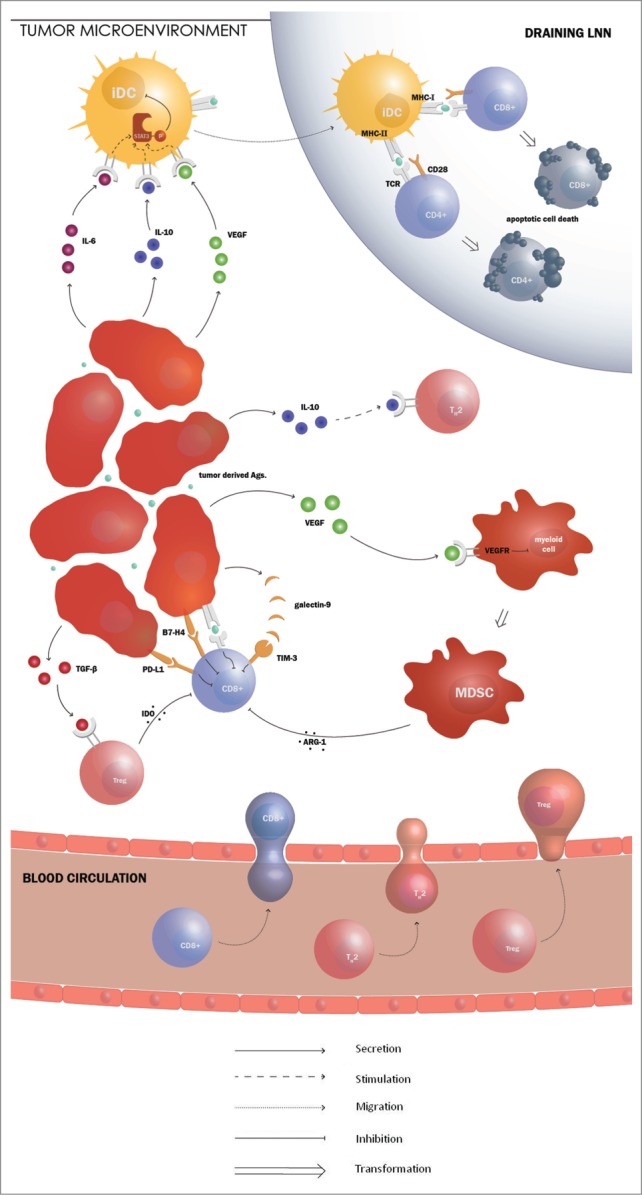
Renal cell carcinoma (RCC) is an immunogenic tumor, but uses several immune-suppressive mechanisms to shift the balance from tumor immune response toward tumor growth. Although RCC has traditionally been considered to be radiation resistant, recent evidence suggests that hypofractionated radiotherapy contributes to systemic antitumor immunity. Because the efficacy of antitumor immune responses depends on the complex balance between diverse immune cells and progressing tumor cells, radiotherapy alone is unlikely to induce persistent antitumor immunity. Therefore, the combination of radiotherapy with drugs having synergistic immunomodulatory properties holds great promise with the optimal timing and sequence of modalities depending on the agent used. We highlight the immunomodulatory properties of targeted therapies, such as tyrosine kinase inhibitors, mammalian target of rapamycin (mTOR) inhibitors and vascular endothelial growth factor (VEGF) neutralizing antibodies, and will suggest a combination schedule with radiotherapy based on the available literature. We also address the combination of radiotherapy with innovative treatments in the field of immunotherapy.
肾细胞癌(RCC)是一种具有免疫原性的肿瘤,但它利用多种免疫抑制机制将平衡从肿瘤免疫反应转向肿瘤生长。尽管传统上认为RCC对放疗具有抗性,但最近的证据表明,短程分割放疗有助于全身抗肿瘤免疫。由于抗肿瘤免疫反应的疗效取决于多种免疫细胞与进展中的肿瘤细胞之间的复杂平衡,单纯放疗不太可能诱导持久的抗肿瘤免疫。因此,放疗与具有协同免疫调节特性的药物联合使用,根据所使用的药物,在最佳的时间和方式顺序下,具有很大的前景。我们重点介绍了靶向治疗的免疫调节特性,如酪氨酸激酶抑制剂、雷帕霉素靶蛋白(mTOR)抑制剂和血管内皮生长因子(VEGF)中和抗体,并将根据现有文献提出放疗联合方案。我们还讨论了放疗与免疫治疗领域创新疗法的联合应用。