Department of Neuroscience, Carleton University , Ottawa, Ontario, Canada , K1S 5B6.
eNeuro. 2015 Apr 24;2(2). doi: 10.1523/ENEURO.0053-14.2015. eCollection 2015 Mar-Apr.
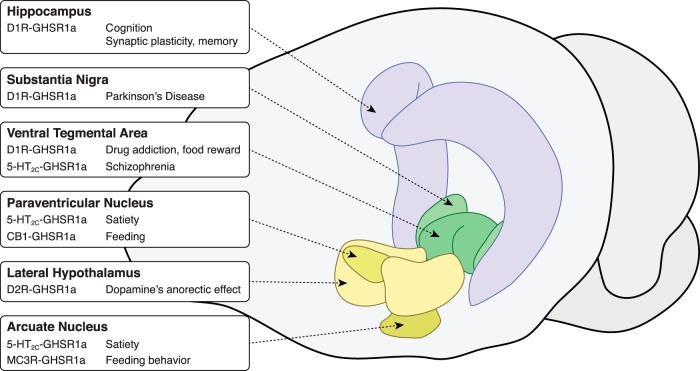
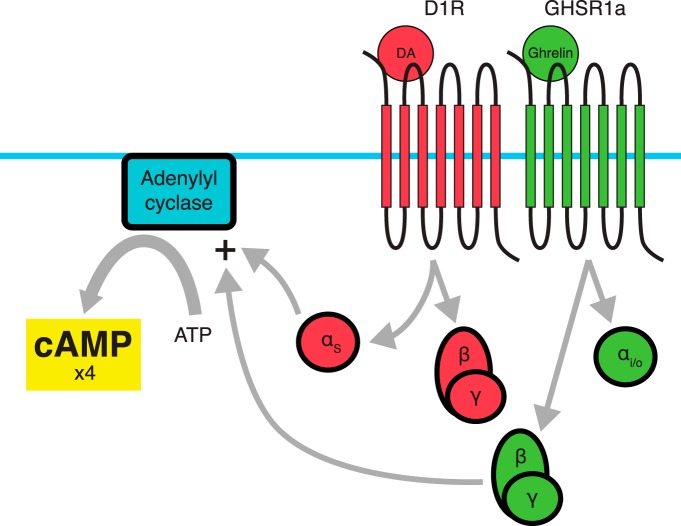
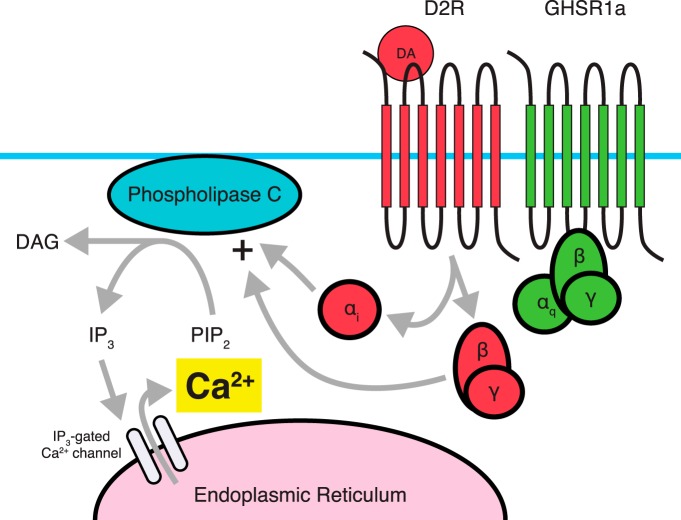
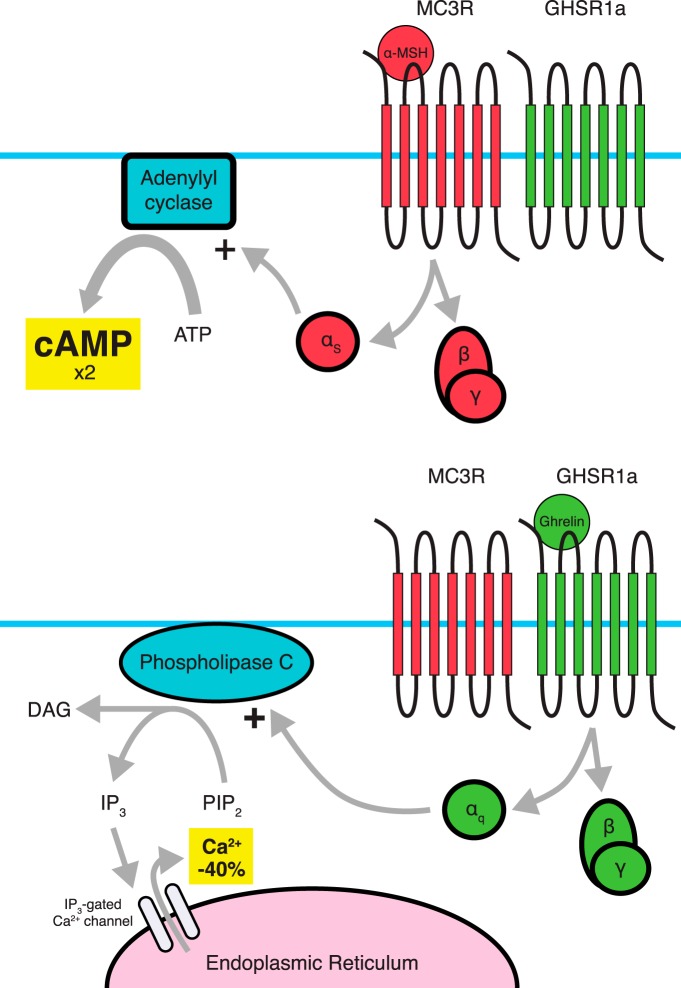
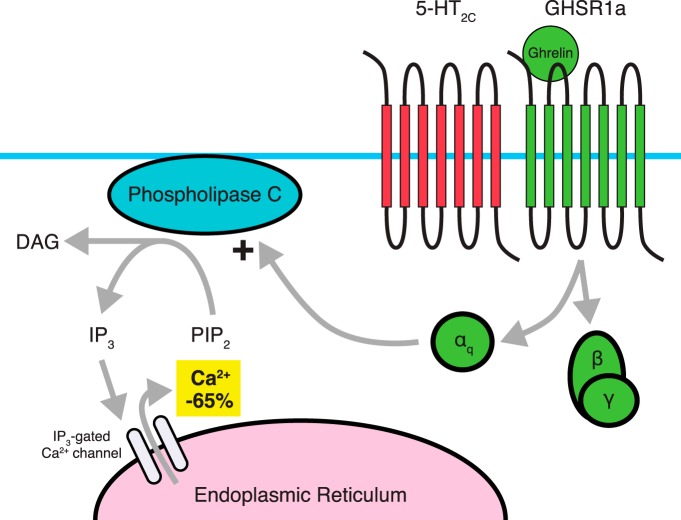
The growth hormone secretagogue receptor (GHSR1a), the target of the ghrelin peptide, is widely distributed throughout the brain, and, while studies have often reported very low or absent levels of central ghrelin, it is now known that GHSR1a, even in the absence of a natural ligand, has physiological roles. Not only do these roles originate from the receptor's constitutive activity, but recent data indicate that GHSR1a dimerizes with a wide array of other receptors. These include the dopamine 1 receptor (D1R), the dopamine 2 receptor (D2R), the melanocortin-3 receptor (MC3R), the serotonin 2C receptor (5-HT2C), and possibly the cannabinoid type 1 receptor (CB1). Within these dimers, signaling of the protomers involved are modified through facilitation, inhibition, and even modification of signaling pathways resulting in physiological consequences not seen in the absence of these dimers. While in some cases the ghrelin peptide is not required for these modifications to occur, in others, the presence is necessary for these changes to take effect. These heterodimers demonstrate the broad array of roles and complexity of the ghrelin system. By better understanding how these dimers work, it is hoped that improved treatments for a variety of disorders, including Parkinson's disease, schizophrenia, addiction, obesity, diabetes, and more, can be devised. In this review, we examine the current state of knowledge surrounding GHSR heterodimers, and how we can apply this knowledge to various pharmacological treatments.
生长激素促分泌素受体 (GHSR1a) 是胃饥饿素肽的靶标,广泛分布于大脑中,虽然研究经常报告中枢胃饥饿素水平非常低或不存在,但现在已知 GHSR1a 即使没有天然配体,也具有生理作用。这些作用不仅源于受体的组成型活性,而且最近的数据表明 GHSR1a 与广泛的其他受体二聚化。这些受体包括多巴胺 1 受体 (D1R)、多巴胺 2 受体 (D2R)、黑素细胞皮质素-3 受体 (MC3R)、血清素 2C 受体 (5-HT2C), 并且可能还有大麻素 1 型受体 (CB1)。在这些二聚体中,涉及的原聚体的信号被通过易化、抑制甚至信号通路的修饰进行修饰,从而导致在不存在这些二聚体的情况下看不到的生理后果。虽然在某些情况下不需要胃饥饿素肽发生这些修饰,但在其他情况下,存在是这些变化生效的必要条件。这些异源二聚体展示了胃饥饿素系统的广泛作用和复杂性。通过更好地了解这些二聚体如何工作,有望设计出针对各种疾病的改良治疗方法,包括帕金森病、精神分裂症、成瘾、肥胖、糖尿病等。在这篇综述中,我们检查了围绕 GHSR 异源二聚体的当前知识状态,以及我们如何将这些知识应用于各种药理学治疗。