Laboratory for Social and Neural Systems Research, Department of Economics, University of Zurich , 8006 Zürich, Switzerland.
University of Ulm, University Hospital for Psychiatry , 89075 Ulm, Germany.
eNeuro. 2015 Jun 24;2(3). doi: 10.1523/ENEURO.0066-14.2015. eCollection 2015 May-Jun.
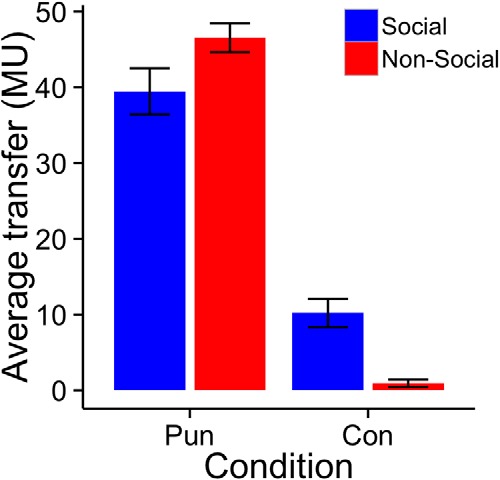
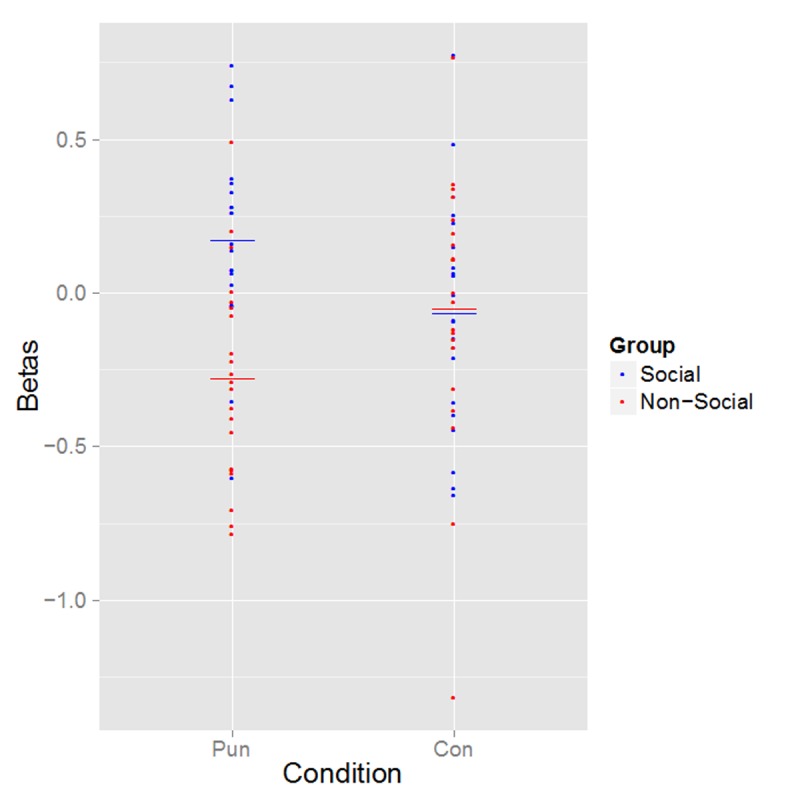
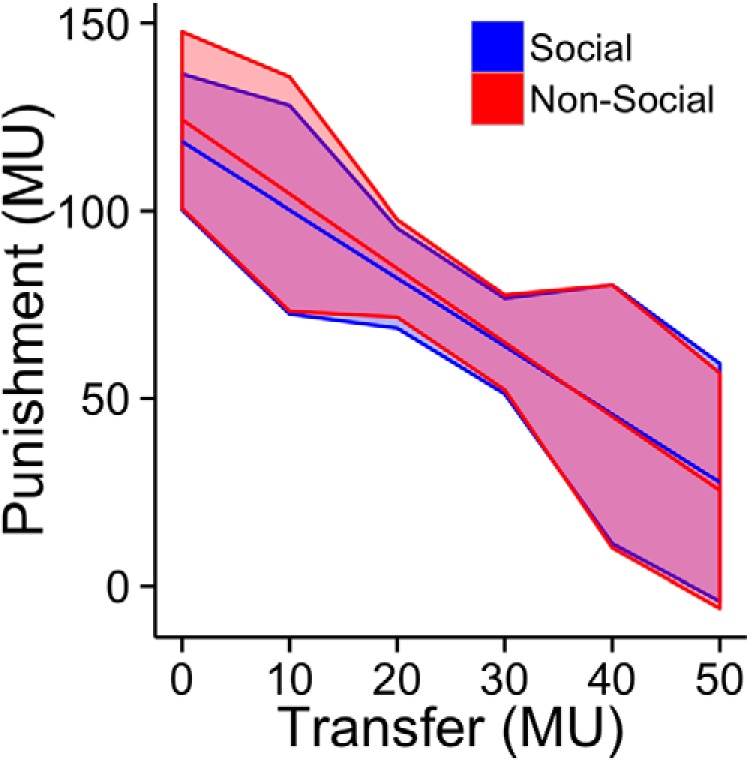
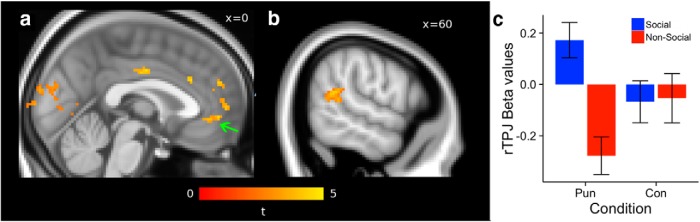
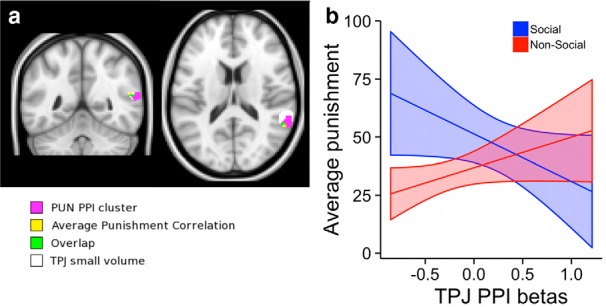
In recent years, much has been learned about the representation of subjective value in simple, nonstrategic choices. However, a large fraction of our daily decisions are embedded in social interactions in which value guided decisions require balancing benefits for self against consequences imposed by others in response to our choices. Yet, despite their ubiquity, much less is known about how value computation takes place in strategic social contexts that include the possibility of retribution for norm violations. Here, we used functional magnetic resonance imaging (fMRI) to show that when human subjects face such a context connectivity increases between the temporoparietal junction (TPJ), implicated in the representation of other peoples' thoughts and intentions, and regions of ventromedial prefrontal cortex (vmPFC) that are associated with value computation. In contrast, we find no increase in connectivity between these regions in social nonstrategic cases where decision-makers are immune from retributive monetary punishments from a human partner. Moreover, there was also no increase in TPJ-vmPFC connectivity when the potential punishment was performed by a computer programmed to punish fairness norm violations in the same manner as a human would. Thus, TPJ-vmPFC connectivity is not simply a function of the social or norm enforcing nature of the decision, but rather occurs specifically in situations where subjects make decisions in a social context and strategically consider putative consequences imposed by others.
近年来,人们对简单、非策略性选择中主观价值的表示有了更多的了解。然而,我们日常生活中的很大一部分决策都嵌入在社会互动中,在这些互动中,价值导向的决策需要平衡自我利益和他人对我们选择的回应所施加的后果。然而,尽管它们无处不在,但人们对战略社会环境中的价值计算是如何发生的知之甚少,这些环境包括对违反规范的行为进行报复的可能性。在这里,我们使用功能磁共振成像 (fMRI) 表明,当人类受试者面临这种情况时,颞顶联合区 (TPJ) 与腹内侧前额叶皮层 (vmPFC) 之间的连接增加,TPJ 涉及到他人思想和意图的表示,而 vmPFC 与价值计算有关。相比之下,我们发现,在社会非策略性情况下,决策者不会受到来自人类伙伴的报复性金钱惩罚,这两个区域之间的连接没有增加。此外,当潜在的惩罚是由一台计算机执行的,而这台计算机的编程方式与人类相同,以同样的方式惩罚公平规范的违反,那么 TPJ-vmPFC 的连接也不会增加。因此,TPJ-vmPFC 的连接不仅仅是决策的社会或规范执行性质的函数,而是在受试者在社会环境中做出决策并战略性地考虑他人施加的潜在后果的情况下才会发生。