School of Anatomy, Physiology, and Human Biology, The University of Western Australia , Perth, Western Australia 6009, Australia.
School of Anatomy, Physiology, and Human Biology, The University of Western Australia , Perth, Western Australia 6009, Australia ; Department of Neuroscience, Karolinska Institutet , 17177 Stockholm, Sweden.
eNeuro. 2015 Jul 10;2(3). doi: 10.1523/ENEURO.0044-14.2015. eCollection 2015 May-Jun.
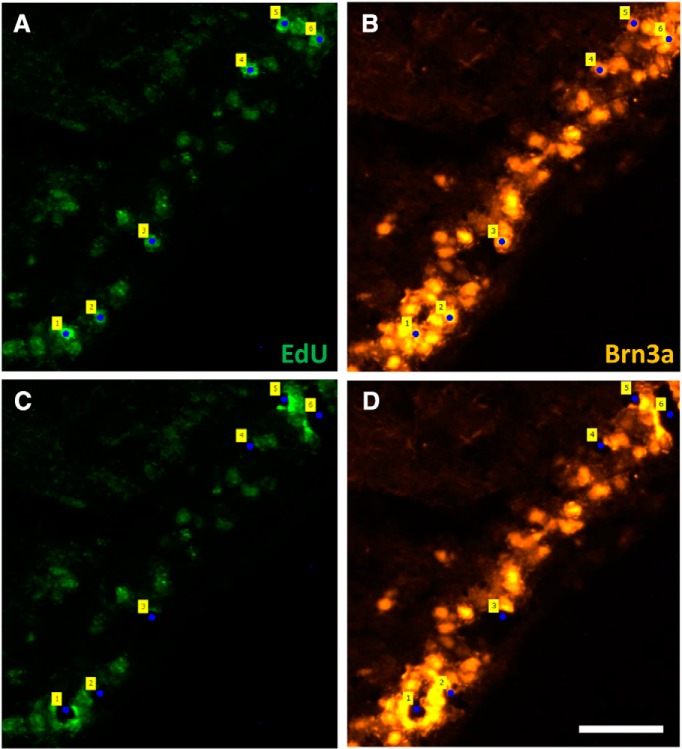
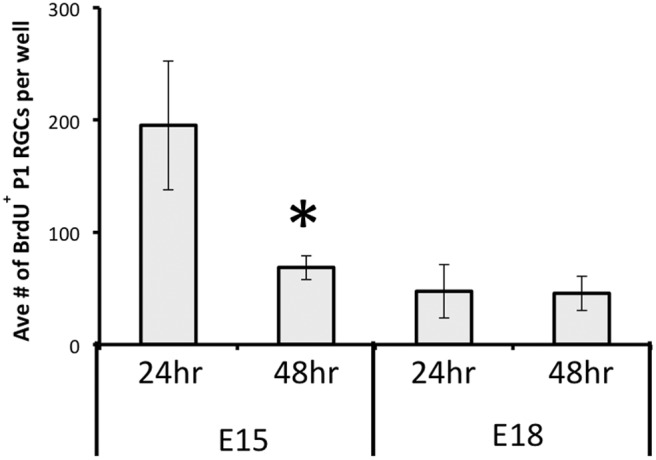
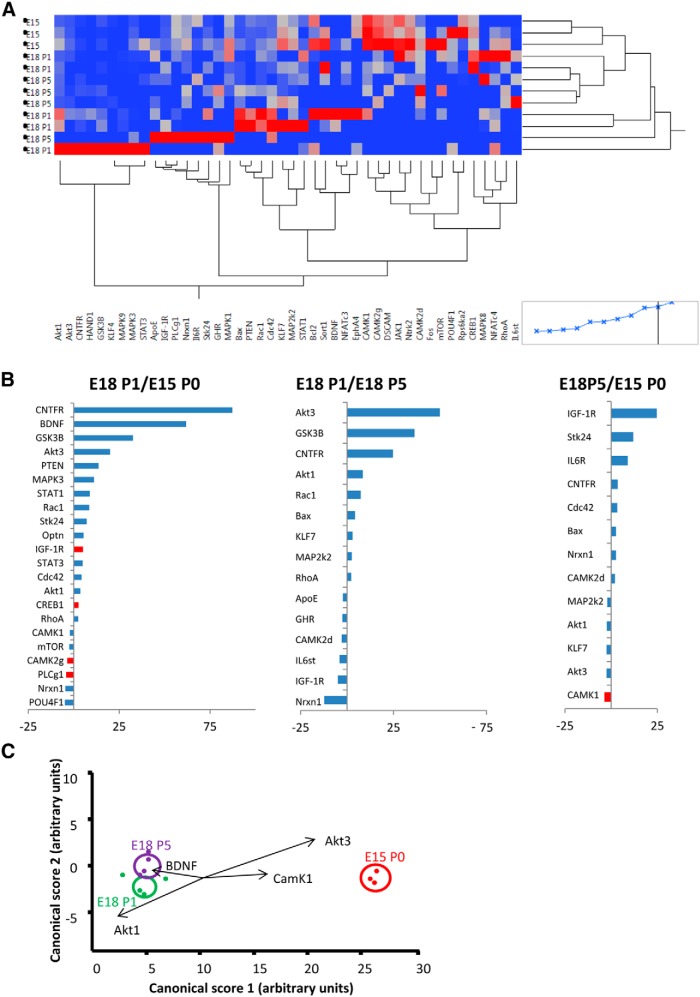
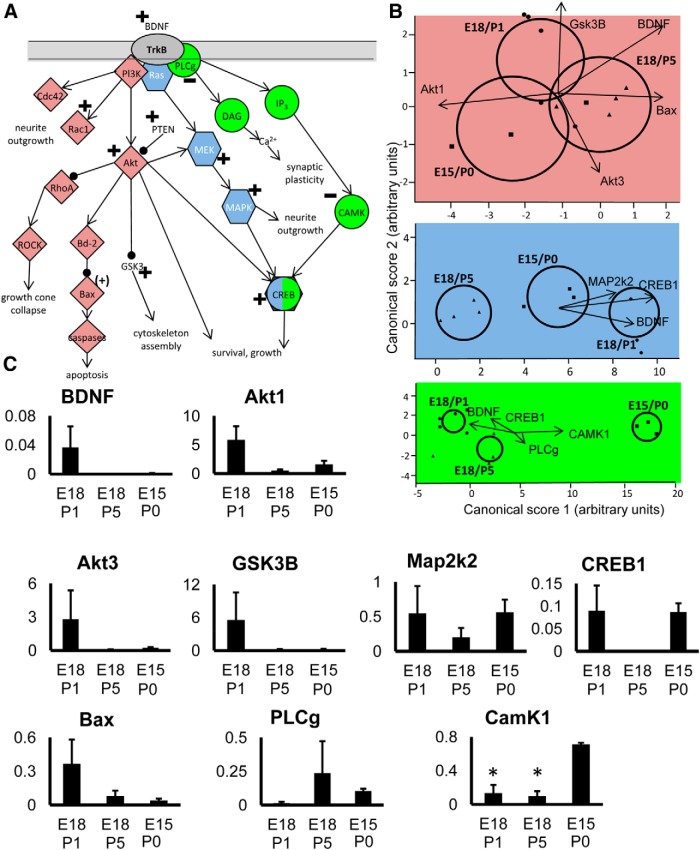
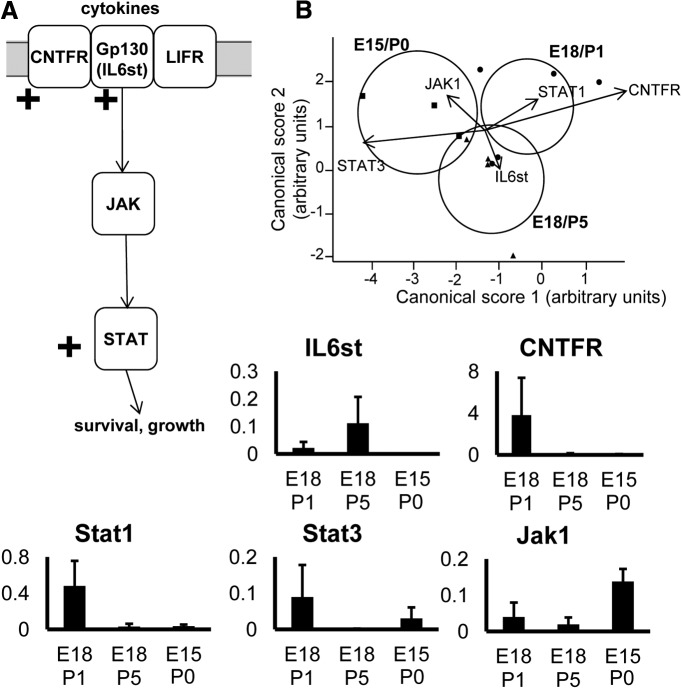
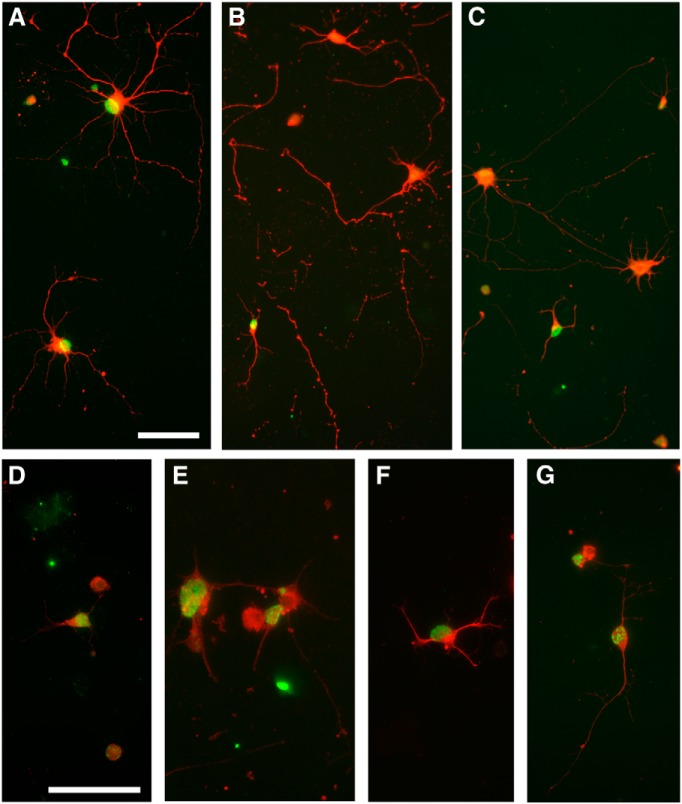
Similar to neurons in the peripheral nervous system, immature CNS-derived RGCs become dependent on target-derived neurotrophic support as their axons reach termination sites in the brain. To study the factors that influence this developmental transition we took advantage of the fact that rat RGCs are born, and target innervation occurs, over a protracted period of time. Early-born RGCs have axons in the SC by birth (P0), whereas axons from late-born RGCs do not innervate the SC until P4-P5. Birth dating RGCs using EdU allowed us to identify RGCs (1) with axons still growing toward targets, (2) transitioning to target dependence, and (3) entirely dependent on target-derived support. Using laser-capture microdissection we isolated ∼34,000 EdU(+) RGCs and analyzed transcript expression by custom qPCR array. Statistical analyses revealed a difference in gene expression profiles in actively growing RGCs compared with target-dependent RGCs, as well as in transitional versus target-dependent RGCs. Prior to innervation RGCs expressed high levels of BDNF and CNTFR α but lower levels of neurexin 1 mRNA. Analysis also revealed greater expression of transcripts for signaling molecules such as MAPK, Akt, CREB, and STAT. In a supporting in vitro study, purified birth-dated P1 RGCs were cultured for 24-48 h with or without BDNF; lack of BDNF resulted in significant loss of early-born but not late-born RGCs. In summary, we identified several important changes in RGC signaling that may form the basis for the switch from target independence to dependence.
类似于外周神经系统中的神经元,未成熟的中枢神经系统来源的 RGC 在其轴突到达大脑中的终末部位时,会变得依赖于靶源性神经营养支持。为了研究影响这种发育转变的因素,我们利用了这样一个事实,即大鼠 RGC 的产生和靶神经支配发生在一个很长的时间内。早期出生的 RGC 在出生时(P0)就有轴突在 SC 中,而晚期出生的 RGC 的轴突直到 P4-P5 才支配 SC。使用 EdU 对 RGC 进行出生日期标记,使我们能够鉴定出(1)轴突仍向靶标生长的 RGC、(2)正在向靶标依赖过渡的 RGC 和(3)完全依赖靶标衍生支持的 RGC。使用激光捕获显微切割,我们分离了约 34000 个 EdU(+)RGC,并通过定制 qPCR 阵列分析了转录表达。统计分析显示,与靶依赖性 RGC 相比,在活跃生长的 RGC 与靶依赖性 RGC 之间以及在过渡性与靶依赖性 RGC 之间存在差异。在神经支配之前,RGC 表达高水平的 BDNF 和 CNTFR α,但神经连接蛋白 1 mRNA 水平较低。分析还显示,信号分子如 MAPK、Akt、CREB 和 STAT 的转录本表达增加。在一项支持性的体外研究中,纯化的出生日期为 P1 的 RGC 在有或没有 BDNF 的情况下培养 24-48 小时;缺乏 BDNF 会导致早期出生的 RGC 显著丢失,但不会导致晚期出生的 RGC 丢失。总之,我们确定了 RGC 信号中的几个重要变化,这些变化可能构成从依赖于靶标到依赖于靶标的转变的基础。