Department of Applied Science, The College of William & Mary , Williamsburg, Virginia 23187-8795.
Department of Biology, The College of William & Mary , Williamsburg, Virginia 23187-8795.
eNeuro. 2015 Aug 31;2(4). doi: 10.1523/ENEURO.0031-15.2015. eCollection 2015 Jul-Aug.
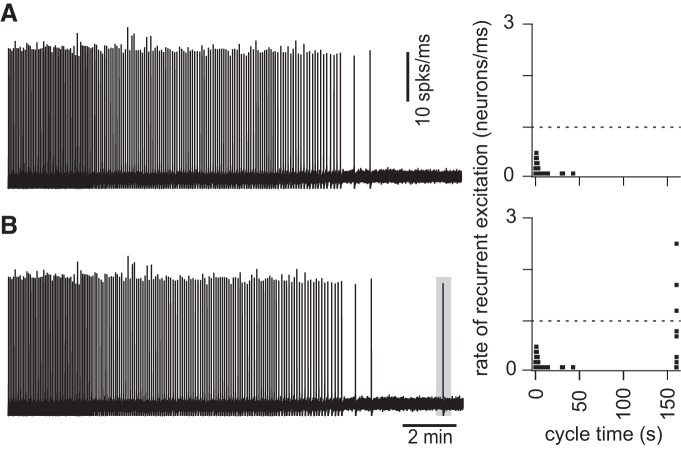
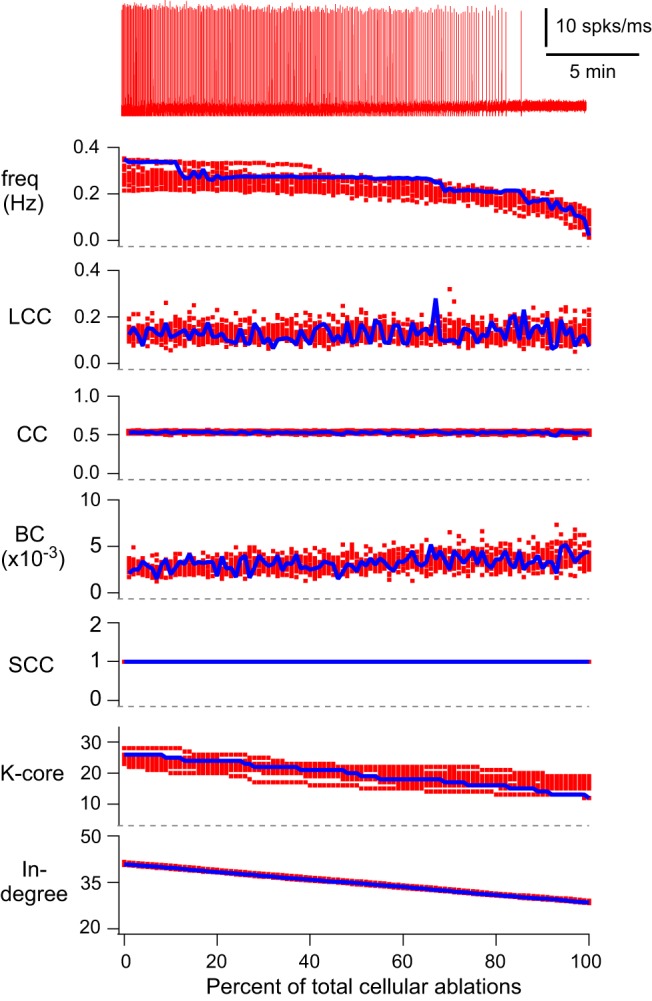
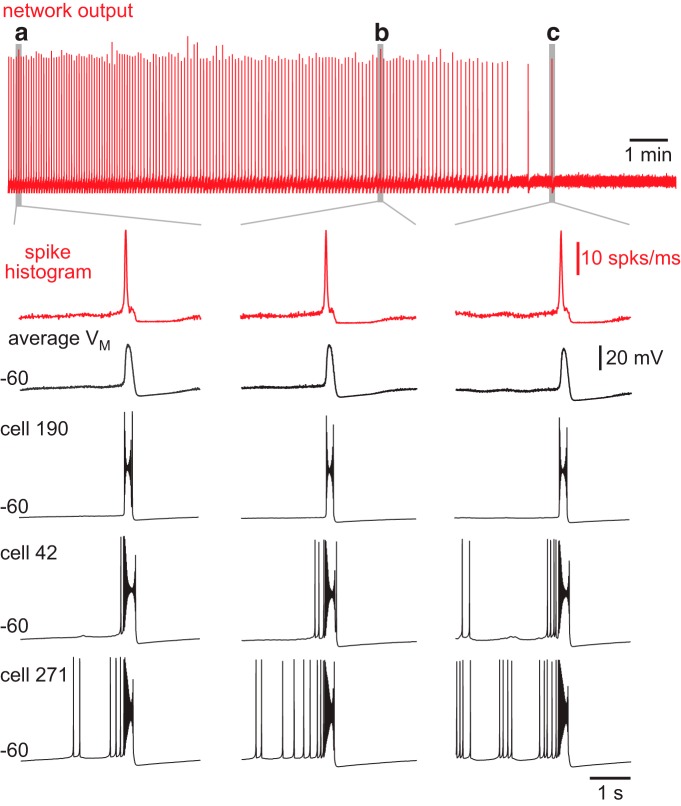
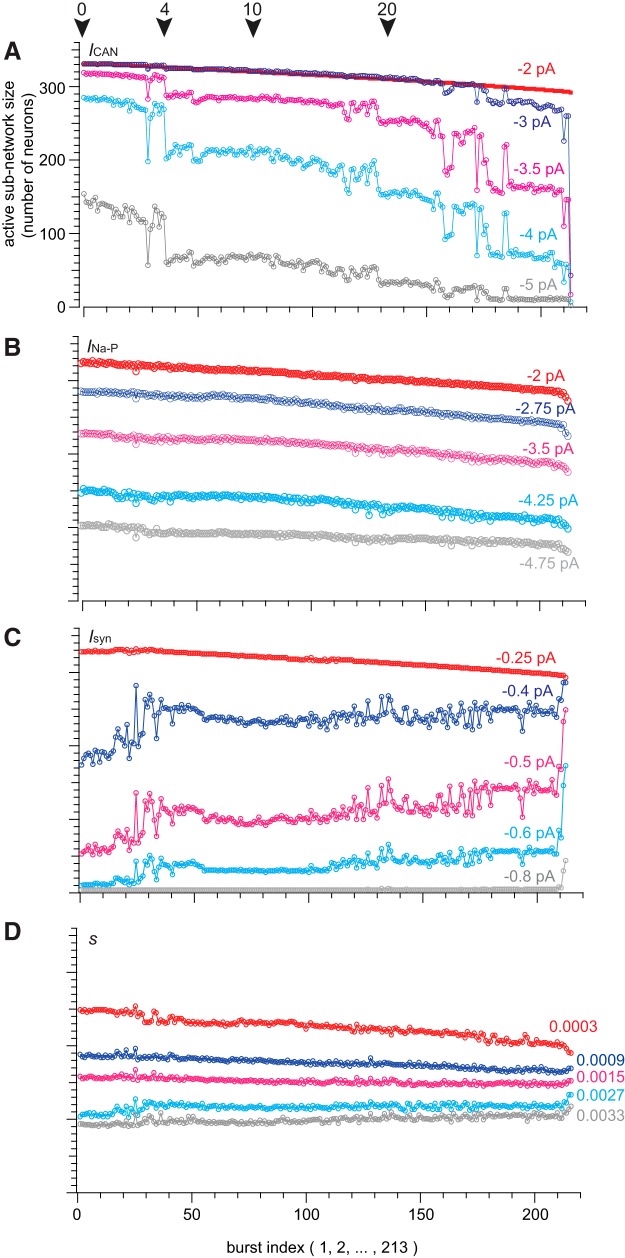
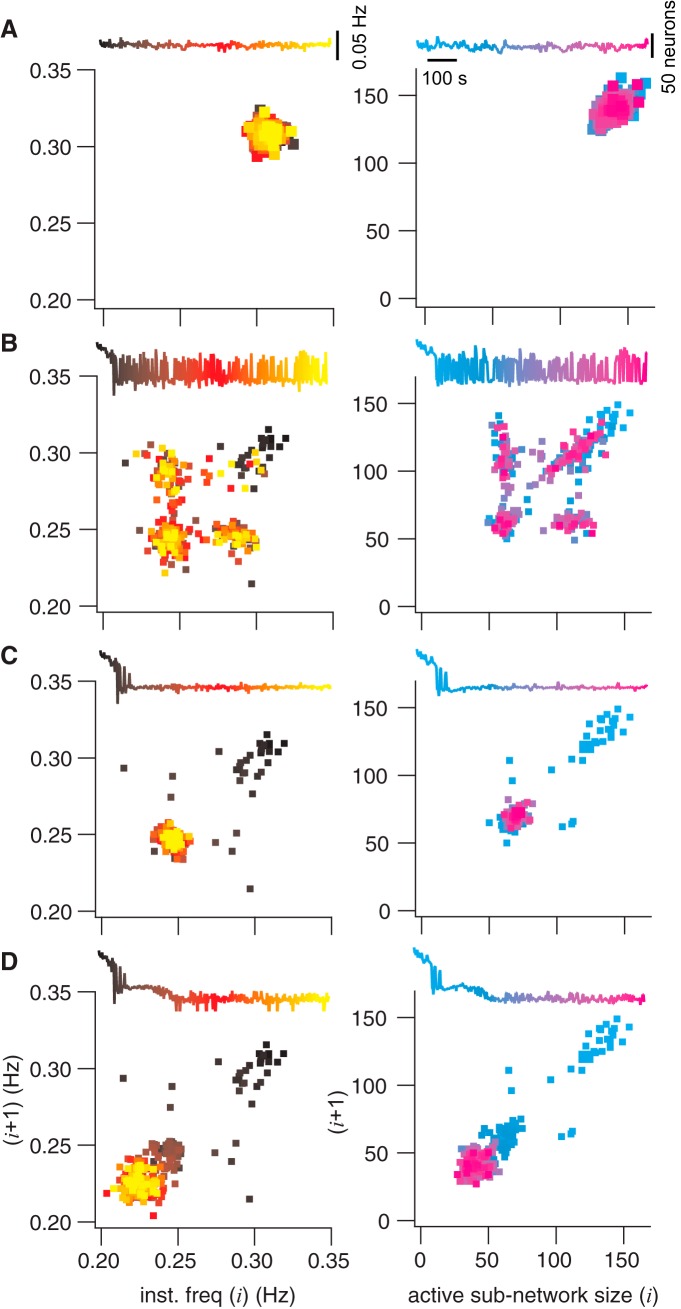
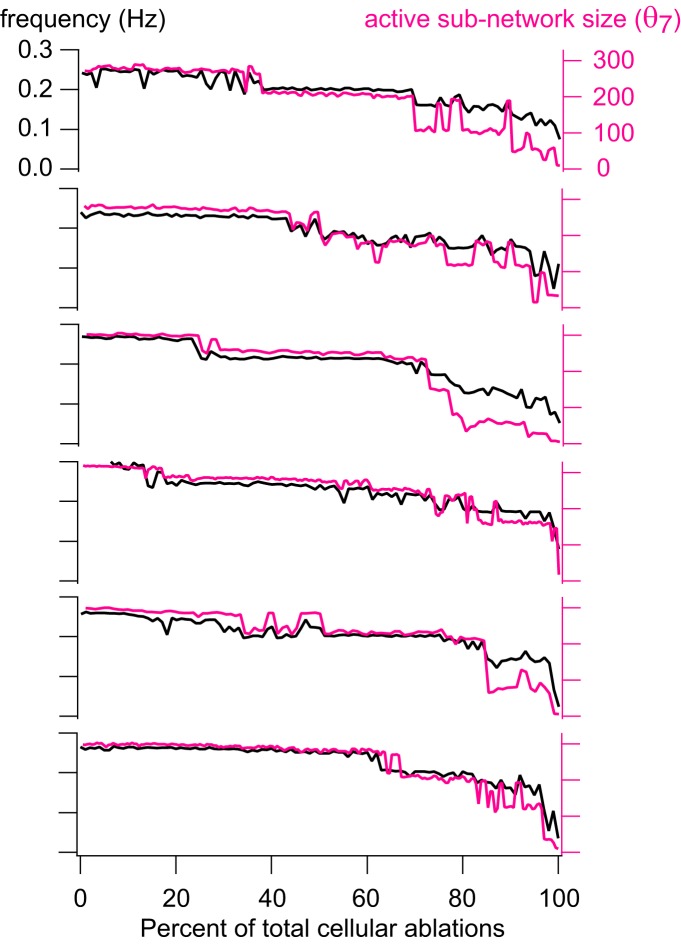
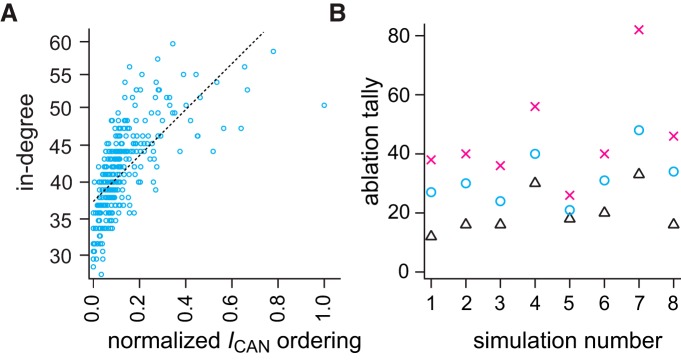
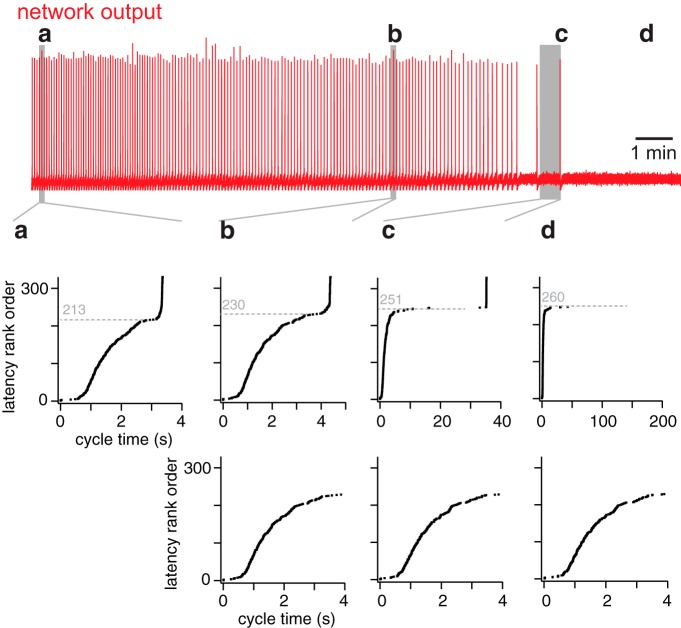
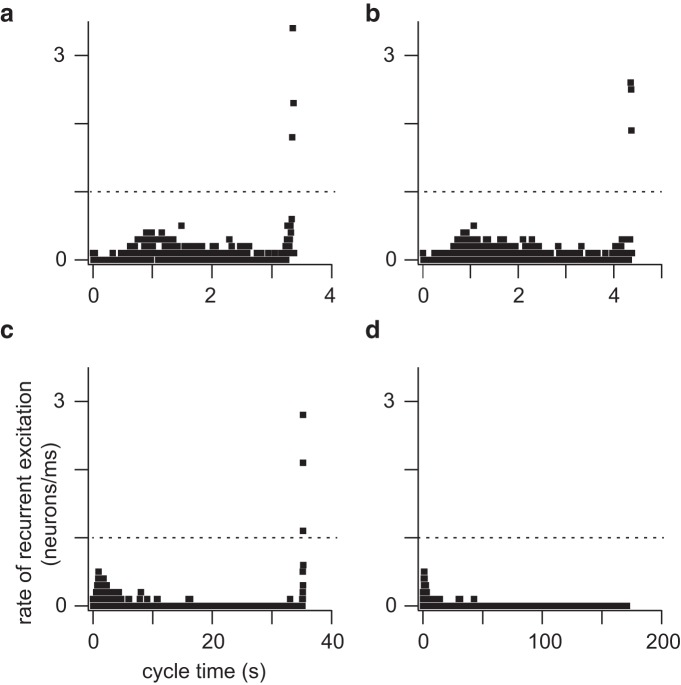
The mammalian breathing rhythm putatively originates from Dbx1-derived interneurons in the preBötzinger complex (preBötC) of the ventral medulla. Cumulative deletion of ∼15% of Dbx1 preBötC neurons in an in vitro breathing model stops rhythmic bursts of respiratory-related motor output. Here we assemble in silico models of preBötC networks using random graphs for structure, and ordinary differential equations for dynamics, to examine the mechanisms responsible for the loss of spontaneous respiratory rhythm and motor output measured experimentally in vitro. Model networks subjected to cellular ablations similarly discontinue functionality. However, our analyses indicate that model preBötC networks remain topologically intact even after rhythm cessation, suggesting that dynamics coupled with structural properties of the underlying network are responsible for rhythm cessation. Simulations show that cumulative cellular ablations diminish the number of neurons that can be recruited to spike per unit time. When the recruitment rate drops below 1 neuron/ms the network stops spontaneous rhythmic activity. Neurons that play pre-eminent roles in rhythmogenesis include those that commence spiking during the quiescent phase between respiratory bursts and those with a high number of incoming synapses, which both play key roles in recruitment, i.e., recurrent excitation leading to network bursts. Selectively ablating neurons with many incoming synapses impairs recurrent excitation and stops spontaneous rhythmic activity and motor output with lower ablation tallies compared with random deletions. This study provides a theoretical framework for the operating mechanism of mammalian central pattern generator networks and their susceptibility to loss-of-function in the case of disease or neurodegeneration.
哺乳动物的呼吸节律据称源自腹侧延髓的 PreBötzinger 复合体(preBötC)中 Dbx1 衍生的中间神经元。在体外呼吸模型中,累积删除约 15%的 Dbx1 preBötC 神经元会停止与呼吸相关的运动输出的节律性爆发。在这里,我们使用随机图作为结构,使用常微分方程作为动力学,组装了 preBötC 网络的计算机模型,以研究负责体外实验中测量到的自发呼吸节律和运动输出丧失的机制。模型网络经历细胞消融后同样停止了功能。然而,我们的分析表明,即使在节律停止后,模型 preBötC 网络仍然保持拓扑完整性,这表明动力学与基础网络的结构特性相结合是导致节律停止的原因。模拟表明,累积的细胞消融会减少每单位时间可以募集到爆发的神经元数量。当募集率降至 1 个神经元/毫秒以下时,网络停止自发的节律性活动。在呼吸爆发之间的静止期开始爆发的神经元以及具有大量传入突触的神经元在节律发生中起着重要作用,它们都在募集中起着关键作用,即导致网络爆发的递归兴奋。选择性消融具有大量传入突触的神经元会损害递归兴奋,并停止自发的节律性活动和运动输出,与随机删除相比,消融计数较低。这项研究为哺乳动物中枢模式发生器网络的工作机制及其在疾病或神经退行性变情况下丧失功能的易感性提供了理论框架。