Sutton Andrew J, Breheny Katie, Deeks Jon, Khunti Kamlesh, Sharpe Claire, Ottridge Ryan S, Stevens Paul E, Cockwell Paul, Kalra Philp A, Lamb Edmund J
Health Economics Unit, University of Birmingham, Birmingham, United Kingdom.
School of Health and Population Sciences, University of Birmingham, Birmingham, United Kingdom.
PLoS One. 2015 Oct 14;10(10):e0140063. doi: 10.1371/journal.pone.0140063. eCollection 2015.
The prevalence of chronic kidney disease (CKD) is high in general populations around the world. Targeted testing and screening for CKD are often conducted to help identify individuals that may benefit from treatment to ameliorate or prevent their disease progression.
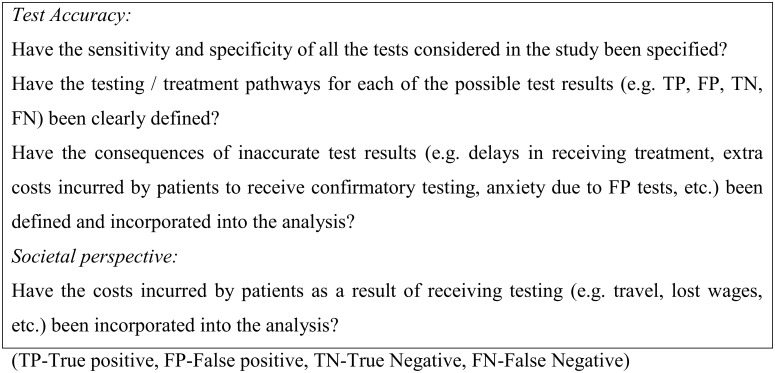
This systematic review examines the methods used in economic evaluations of testing and screening in CKD, with a particular focus on whether test accuracy has been considered, and how analysis has incorporated issues that may be important to the patient, such as the impact of testing on quality of life and the costs they incur.
Articles that described model-based economic evaluations of patient testing interventions focused on CKD were identified through the searching of electronic databases and the hand searching of the bibliographies of the included studies.
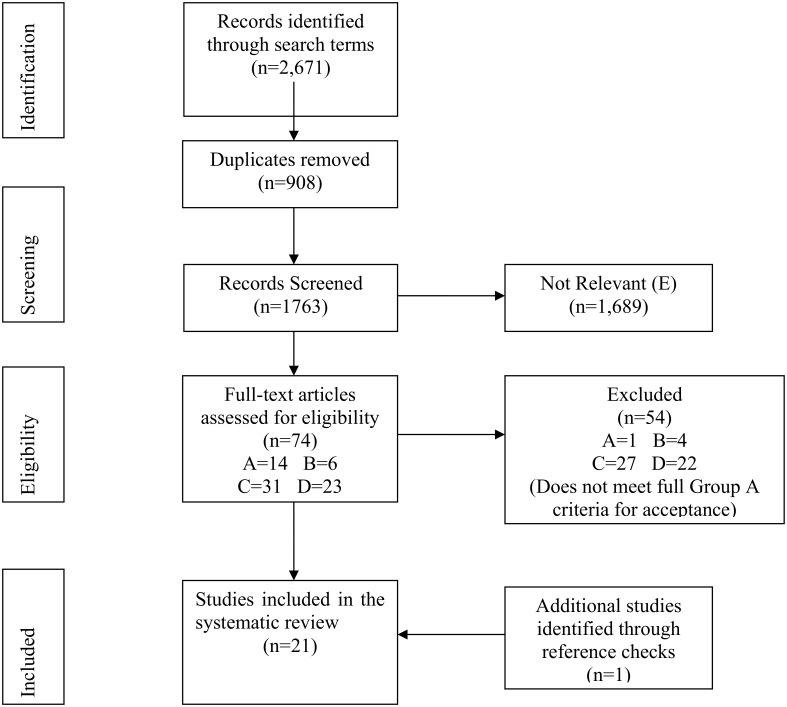
The initial electronic searches identified 2,671 papers of which 21 were included in the final review. Eighteen studies focused on proteinuria, three evaluated glomerular filtration rate testing and one included both tests. The full impact of inaccurate test results was frequently not considered in economic evaluations in this setting as a societal perspective was rarely adopted. The impact of false positive tests on patients in terms of the costs incurred in re-attending for repeat testing, and the anxiety associated with a positive test was almost always overlooked. In one study where the impact of a false positive test on patient quality of life was examined in sensitivity analysis, it had a significant impact on the conclusions drawn from the model.
Future economic evaluations of kidney function testing should examine testing and monitoring pathways from the perspective of patients, to ensure that issues that are important to patients, such as the possibility of inaccurate test results, are properly considered in the analysis.
慢性肾脏病(CKD)在世界各地普通人群中的患病率很高。通常会进行针对性的CKD检测和筛查,以帮助识别可能从治疗中受益从而改善或预防疾病进展的个体。
本系统评价考察了CKD检测和筛查经济评估中所使用的方法,特别关注是否考虑了检测准确性,以及分析如何纳入对患者可能重要的问题,如检测对生活质量的影响以及患者所产生的费用。
通过检索电子数据库以及手工检索纳入研究的参考文献,识别出描述基于模型的CKD患者检测干预经济评估的文章。
初步电子检索识别出2671篇论文,其中21篇纳入最终评价。18项研究聚焦于蛋白尿,3项评估肾小球滤过率检测,1项同时包含这两种检测。在这种情况下,经济评估中常常未考虑不准确检测结果的全部影响,因为很少采用社会视角。假阳性检测对患者的影响,如再次进行重复检测所产生的费用,以及与阳性检测相关的焦虑,几乎总是被忽视。在一项敏感性分析中考察假阳性检测对患者生活质量影响的研究中,它对模型得出的结论有重大影响。
未来肾功能检测的经济评估应从患者角度考察检测和监测途径,以确保在分析中适当考虑对患者重要的问题,如检测结果不准确的可能性。