Cathalot Cecile, Rabouille Christophe, Sauter Eberhard, Schewe Ingo, Soltwedel Thomas
Laboratoire des Sciences du Climat et de l'Environnement, UMR CEA/CNRS/UVSQ, Gif-sur-Yvette, France.
Alfred-Wegener-Institut I Helmholtz-Zentrum für Polar-und Meeresforschung, Bremerhaven, Germany.
PLoS One. 2015 Oct 14;10(10):e0138339. doi: 10.1371/journal.pone.0138339. eCollection 2015.
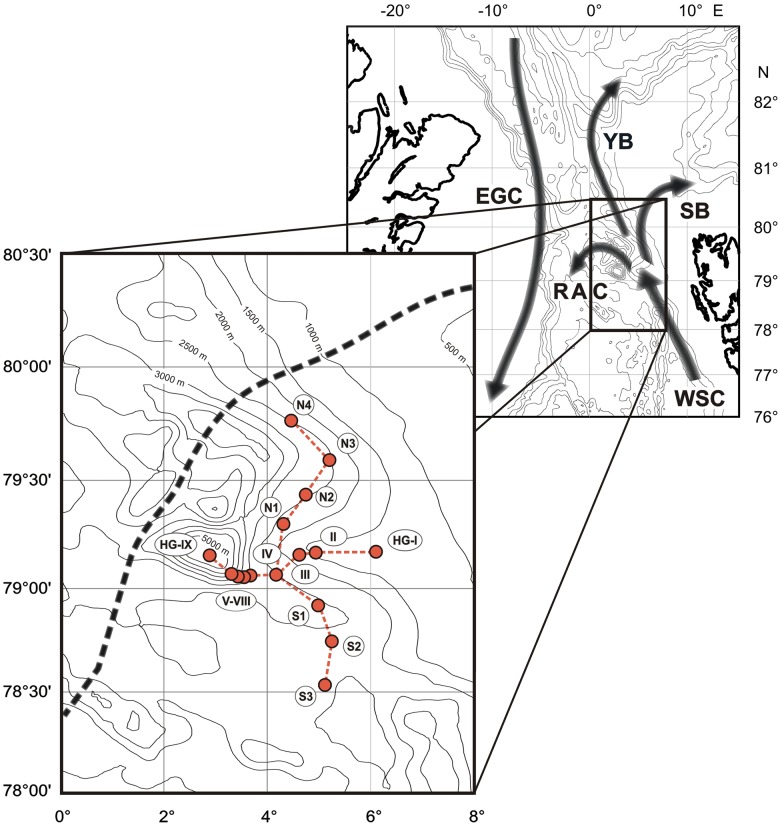
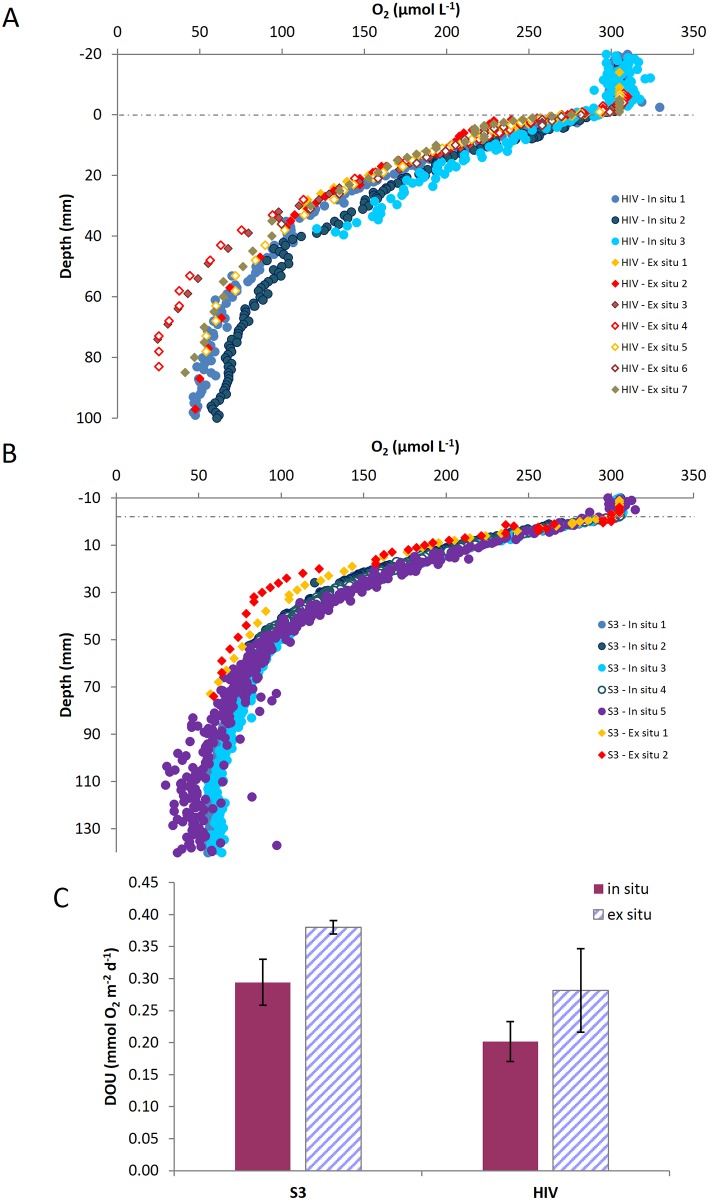
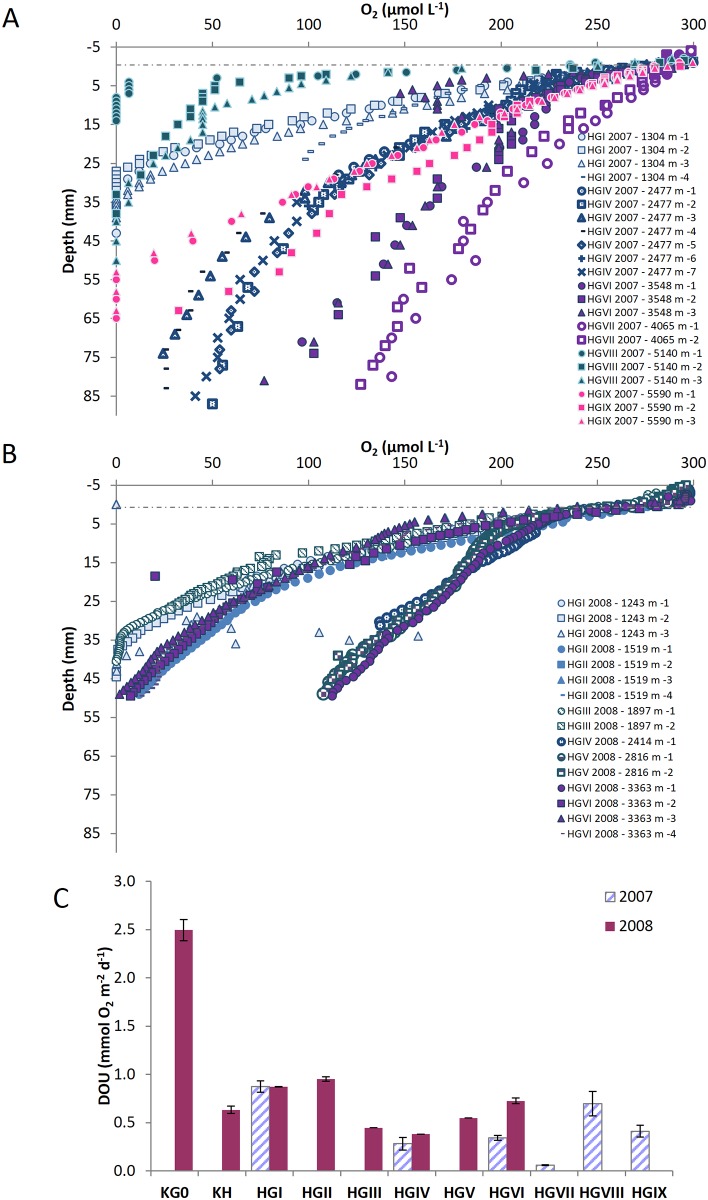
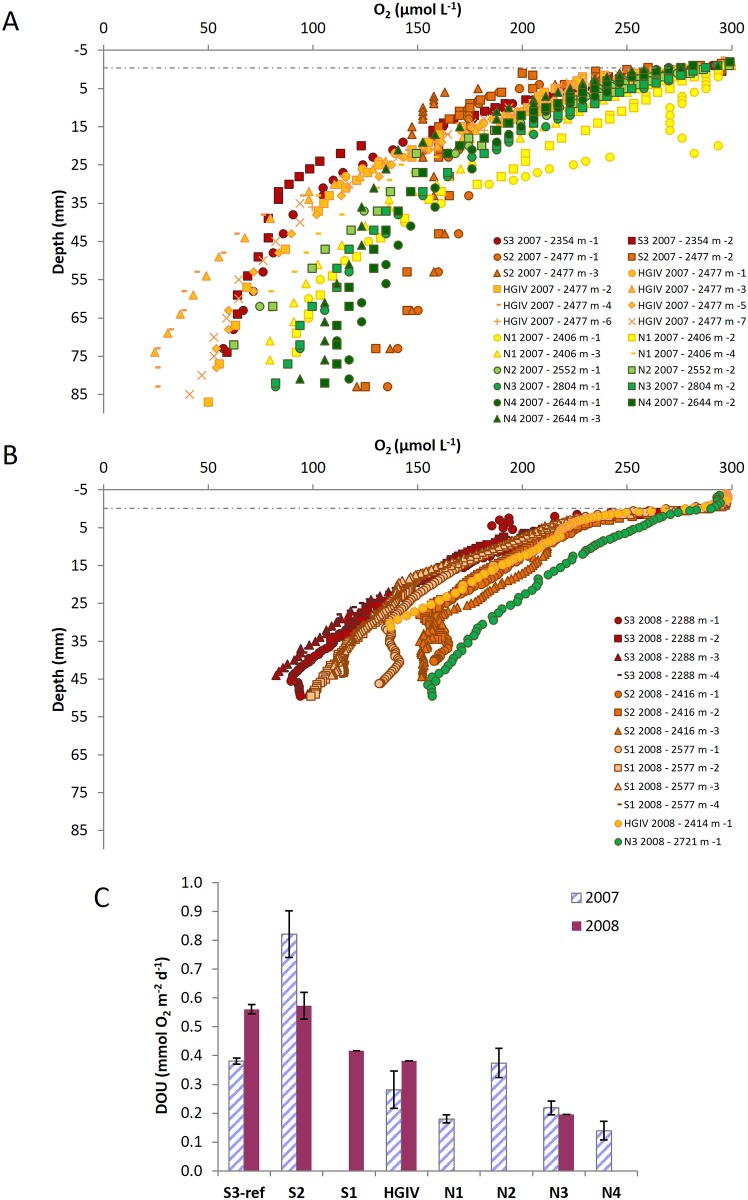
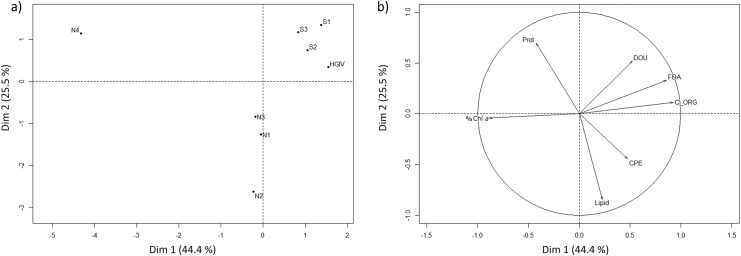
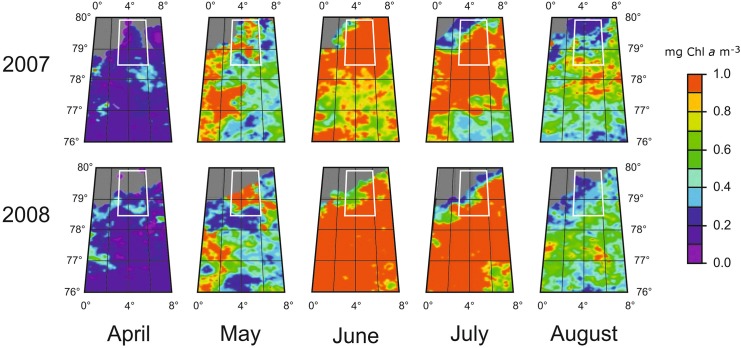
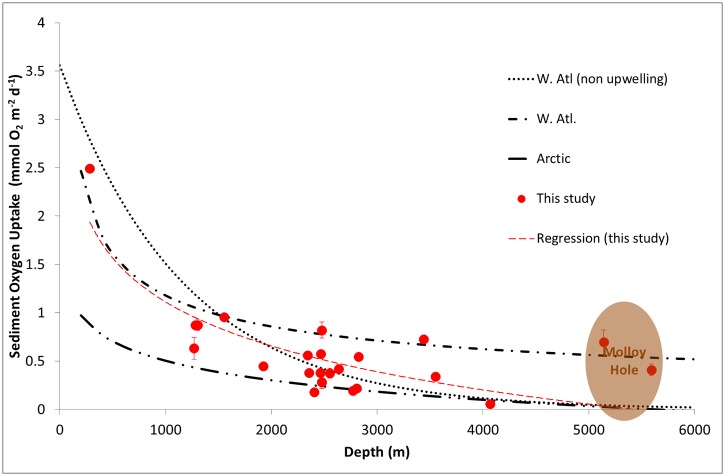
The past decades have seen remarkable changes in the Arctic, a hotspot for climate change. Nevertheless, impacts of such changes on the biogeochemical cycles and Arctic marine ecosystems are still largely unknown. During cruises to the deep-sea observatory HAUSGARTEN in July 2007 and 2008, we investigated the biogeochemical recycling of organic matter in Arctic margin sediments by performing shipboard measurements of oxygen profiles, bacterial activities and biogenic sediment compounds (pigment, protein, organic carbon, and phospholipid contents). Additional in situ oxygen profiles were performed at two sites. This study aims at characterizing benthic mineralization activity along local bathymetric and latitudinal transects. The spatial coverage of this study is unique since it focuses on the transition from shelf to Deep Ocean, and from close to the ice edge to more open waters. Biogeochemical recycling across the continental margin showed a classical bathymetric pattern with overall low fluxes except for the deepest station located in the Molloy Hole (5500 m), a seafloor depression acting as an organic matter depot center. A gradient in benthic mineralization rates arises along the latitudinal transect with clearly higher values at the southern stations (average diffusive oxygen uptake of 0.49 ± 0.18 mmol O2 m-2 d-1) compared to the northern sites (0.22 ± 0.09 mmol O2 m-2 d-1). The benthic mineralization activity at the HAUSGARTEN observatory thus increases southward and appears to reflect the amount of organic matter reaching the seafloor rather than its lability. Although organic matter content and potential bacterial activity clearly follow this gradient, sediment pigments and phospholipids exhibit no increase with latitude whereas satellite images of surface ocean chlorophyll a indicate local seasonal patterns of primary production. Our results suggest that predicted increases in primary production in the Arctic Ocean could induce a larger export of more refractory organic matter due to the longer production season and the extension of the ice-free zone.
在过去几十年里,北极地区发生了显著变化,这里是气候变化的热点地区。然而,这些变化对生物地球化学循环和北极海洋生态系统的影响仍 largely unknown。在2007年7月和2008年前往深海观测站豪斯加滕的航行中,我们通过在船上测量氧剖面、细菌活动和生源沉积物化合物(色素、蛋白质、有机碳和磷脂含量),研究了北极边缘沉积物中有机物质的生物地球化学循环。在两个站点进行了额外的原位氧剖面测量。本研究旨在沿局部测深和纬度断面表征底栖矿化活动。这项研究的空间覆盖范围是独一无二的,因为它关注的是从大陆架到深海的过渡,以及从靠近冰缘到更开阔水域的过渡。整个大陆边缘的生物地球化学循环呈现出一种典型的测深模式,除了位于莫洛伊海渊(5500米)的最深站点外,通量总体较低,莫洛伊海渊是一个作为有机物质储存中心的海底凹陷。沿着纬度断面出现了底栖矿化速率梯度,南部站点(平均扩散氧吸收量为0.49±0.18 mmol O2 m-2 d-1)的值明显高于北部站点(0.22±0.09 mmol O2 m-2 d-1)。因此,豪斯加滕观测站的底栖矿化活动向南增加,似乎反映了到达海底的有机物质数量,而不是其易分解性。尽管有机物质含量和潜在细菌活动明显遵循这一梯度,但沉积物色素和磷脂并未随纬度增加,而海洋表面叶绿素a的卫星图像显示了初级生产的局部季节性模式。我们的结果表明,由于生产季节延长和无冰区扩大,北冰洋初级生产的预测增加可能导致更多难分解有机物质的更大输出。