Liu Minxia, Zhou Kecheng, Huang Yunchao, Cao Yi
Laboratory of Molecular and Experimental Pathology, Kunming Institute of Zoology, Chinese Academy of Sciences, Kunming, China.
Kunming College of Life Science, University of Chinese Academy of Sciences, Kunming, China.
J Exp Clin Cancer Res. 2015 Oct 14;34:121. doi: 10.1186/s13046-015-0235-5.
Microspherule protein 1 (MCRS1) is a candidate oncogene and participates in various cellular processes, including growth, migration, senescence and transformation. MCRS1 is overexpressed in non-small cell lung cancer (NSCLC) and promotes the growth of cancer cells. However, the mechanisms driving these processes are not fully understood.
Retrovirus-mediated RNA interference was employed to knockdown MCRS1 expression in cell lines. Cell proliferation assays and animal experiments were respectively performed to evaluate the growth of NSCLC cells in vitro and in vivo. Microarray analysis was carried out for mRNA profiling. Luciferase reporter assay and microRNA (miRNA) transfection were used to investigate the interaction between miRNA and gene.
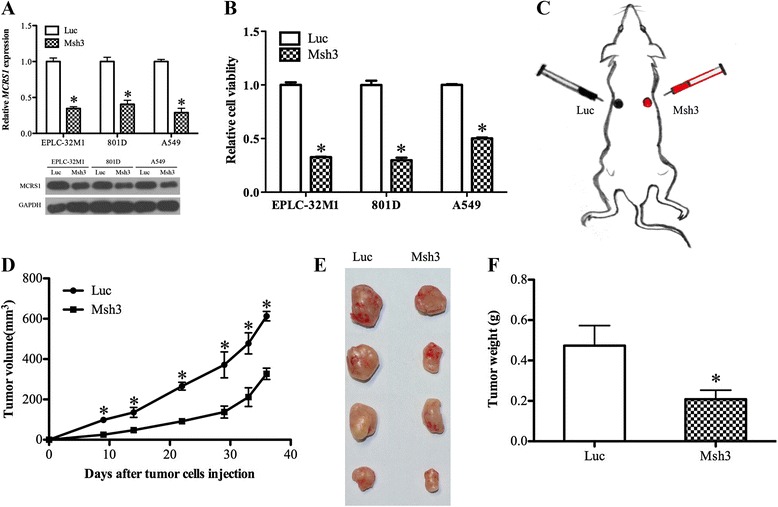
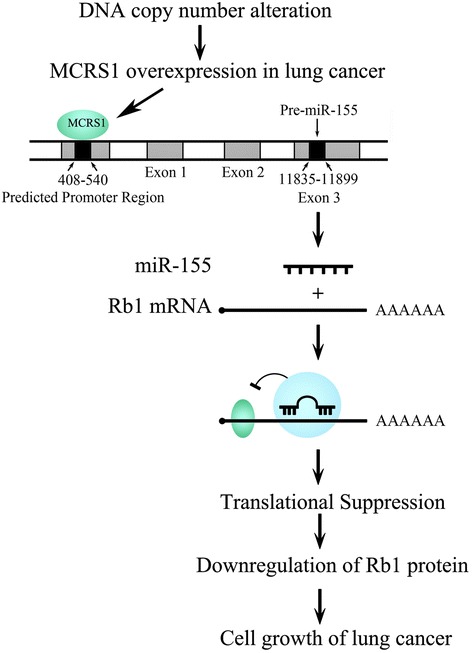
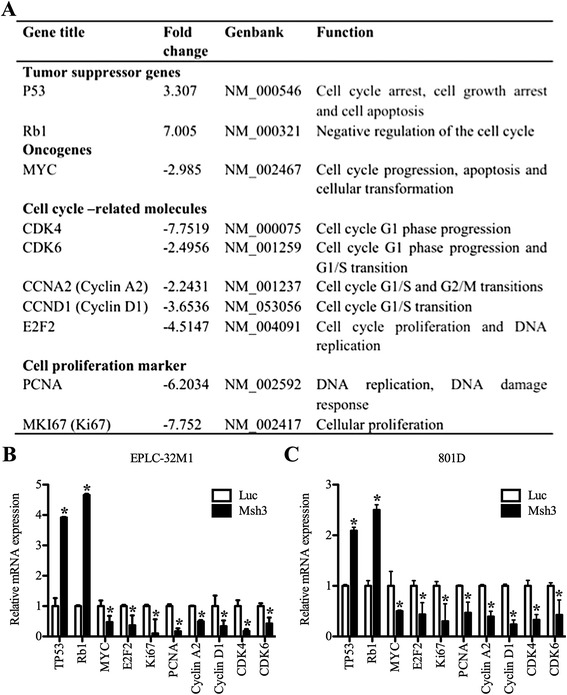
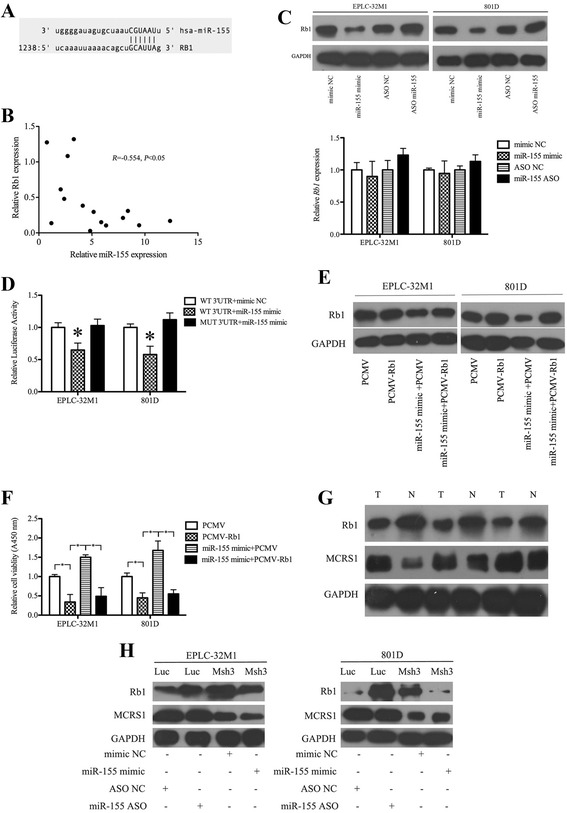
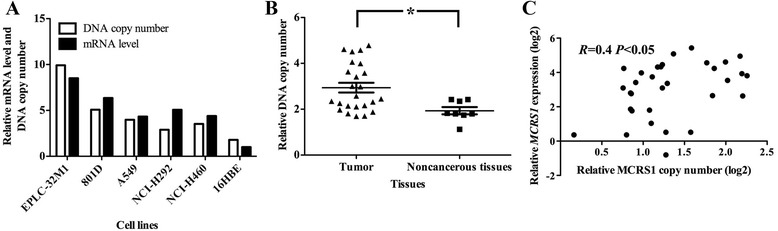
Stably knocking down MCRS1 expression inhibited the proliferation of NSCLC cells in vitro and in vivo. By comparing the mRNA expression profiles of NSCLC cells with or without MCRS1 silencing, we found that MCRS1 regulated expressions of various genes related to cell proliferation, including Rb1, TP53, cell cycle-related genes, MYC, E2F2, PCNA, and Ki67. However, MCRS1 did not directly bind to these differentially expressed genes. Here, we confirmed that Rb1, an important tumor suppression gene (TSG), is a direct target of miR-155 which is directly up-regulated by MCRS1. Furthermore, the level of Rb1 expression in NSCLC tissues was inversely correlated with those of miR-155 and MCRS1, and MCRS1 regulated expression of Rb1 via miR-155. Additionally, we found that the DNA copy number of the MCRS1 gene played a role in MCRS1 overexpression in NSCLCs.
MCRS1 overexpression induced NSCLC proliferation through the miR-155-Rb1 pathway and DNA copy-number amplification is one of the mechanisms underlying MCRS1 overexpression in NSCLC. Moreover, we put forward the hypothesis that there are regulatory relationships between oncogenes and TSGs apart from the functional synergy of both; the oncogene-miRNA-TSG networks are one of mechanisms among the regulatory relationships; the regulatory relationships and the networks might play active roles in the development and progression of cancer.
微球蛋白1(MCRS1)是一种候选癌基因,参与多种细胞过程,包括生长、迁移、衰老和转化。MCRS1在非小细胞肺癌(NSCLC)中过表达,促进癌细胞生长。然而,驱动这些过程的机制尚未完全了解。
采用逆转录病毒介导的RNA干扰技术在细胞系中敲低MCRS1表达。分别进行细胞增殖试验和动物实验,以评估NSCLC细胞在体外和体内的生长情况。进行基因芯片分析以获取mRNA表达谱。采用荧光素酶报告基因检测和微小RNA(miRNA)转染来研究miRNA与基因之间的相互作用。
稳定敲低MCRS1表达可抑制NSCLC细胞在体外和体内的增殖。通过比较有无MCRS1沉默的NSCLC细胞的mRNA表达谱,我们发现MCRS1调节多种与细胞增殖相关基因的表达,包括Rb1、TP53、细胞周期相关基因、MYC、E2F2、PCNA和Ki67。然而,MCRS1并不直接与这些差异表达基因结合。在此,我们证实重要的肿瘤抑制基因(TSG)Rb1是miR-155的直接靶点,而miR-155由MCRS1直接上调。此外,NSCLC组织中Rb1的表达水平与miR-155和MCRS1的表达水平呈负相关,且MCRS1通过miR-155调节Rb1的表达。另外,我们发现MCRS1基因的DNA拷贝数在NSCLC中MCRS1过表达中起作用。
MCRS1过表达通过miR-155-Rb1途径诱导NSCLC增殖,DNA拷贝数扩增是NSCLC中MCRS1过表达的潜在机制之一。此外,我们提出假说:癌基因与TSG之间除了功能协同外还存在调控关系;癌基因-miRNA-TSG网络是调控关系中的机制之一;这些调控关系和网络可能在癌症的发生发展中发挥积极作用。