Trewick Steven A, Wallis Graham P, Morgan-Richards Mary
Phoenix Lab, Ecology Group, Institute of Natural Resources, Massey University, Private Bag 11-222, Palmerston North 4442, New Zealand.
Department of Zoology, University of Otago, P.O. Box 56, Dunedin North 9016, New Zealand.
Insects. 2011 Jul 1;2(3):297-325. doi: 10.3390/insects2030297.
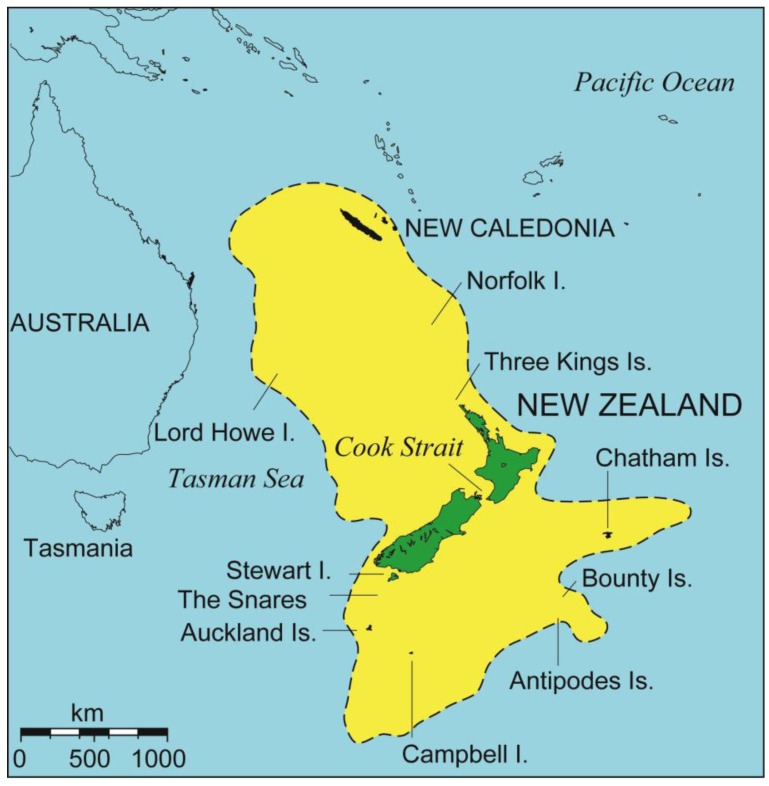
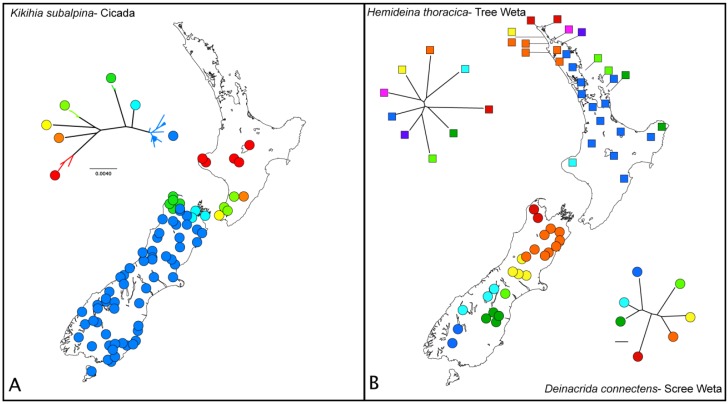
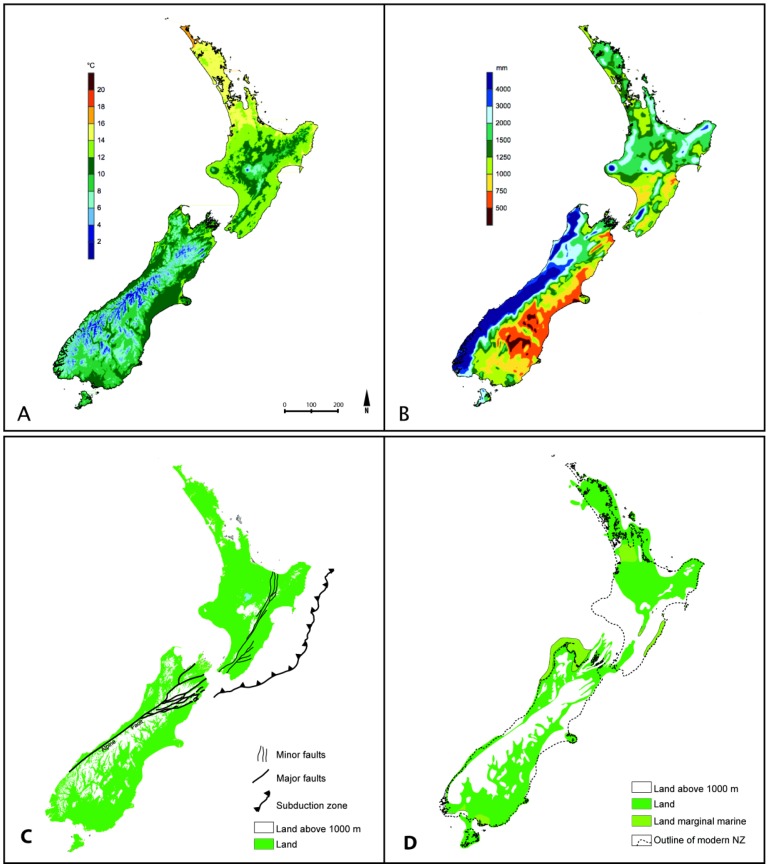
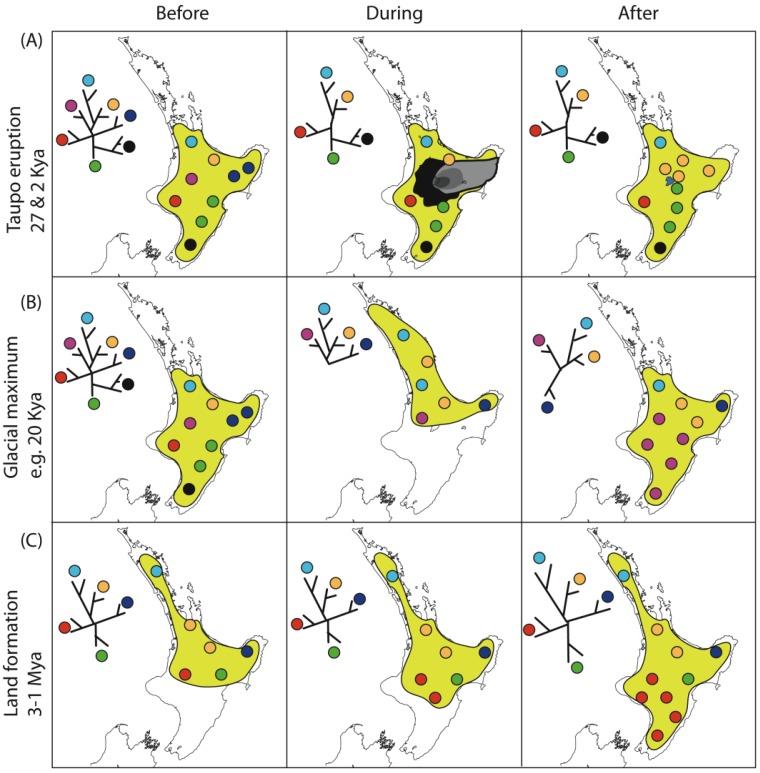
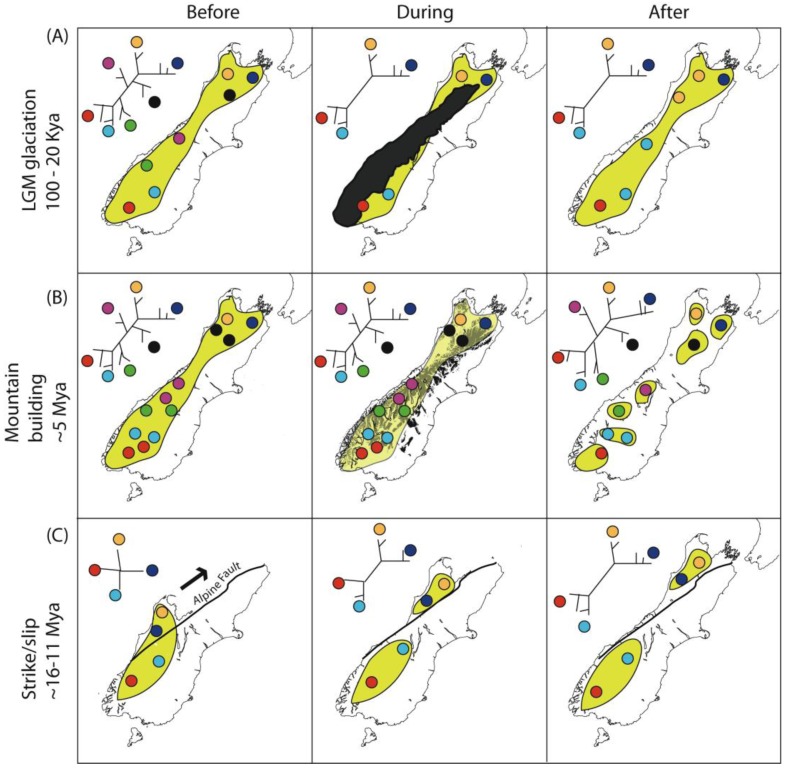
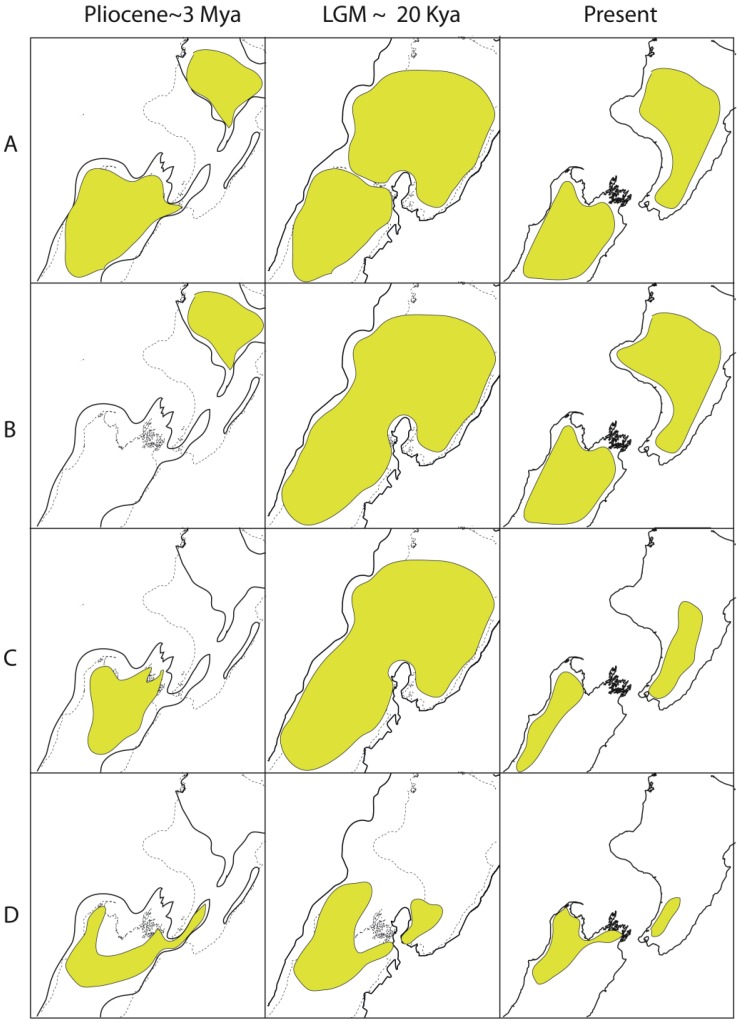
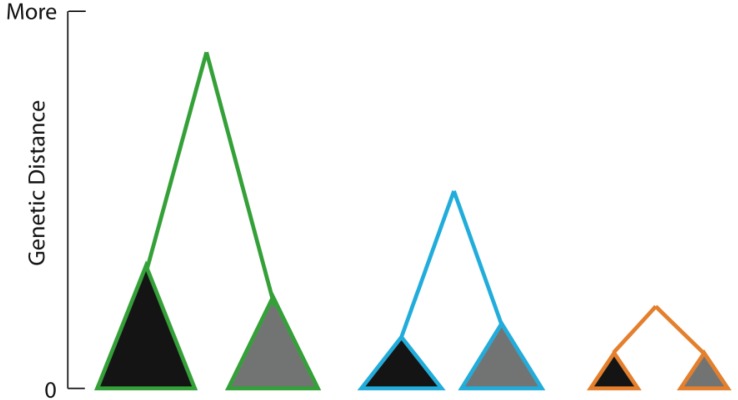
Phylogeography contributes to our knowledge of regional biotas by integrating spatial and genetic information. In New Zealand, comprising two main islands and hundreds of smaller ones, phylogeography has transformed the way we view our biology and allowed comparison with other parts of the world. Here we review studies on New Zealand terrestrial and freshwater invertebrates. We find little evidence of congruence among studies of different taxa; instead there are signatures of partitioning in many different regions and expansion in different directions. A number of studies have revealed unusually high genetic distances within putative species, and in those where other data confirm this taxonomy, the revealed phylogeographic structure contrasts with northern hemisphere continental systems. Some taxa show a signature indicative of Pliocene tectonic events encompassing land extension and mountain building, whereas others are consistent with range expansion following the last glacial maximum (LGM) of the Pleistocene. There is some indication that montane taxa are more partitioned than lowland ones, but this observation is obscured by a broad range of patterns within the sample of lowland/forest taxa. We note that several geophysical processes make similar phylogeographic predictions for the same landscape, rendering confirmation of the drivers of partitioning difficult. Future multi-gene analyses where applied to testable alternative hypotheses may help resolve further the rich evolutionary history of New Zealand's invertebrates.
系统发育地理学通过整合空间和遗传信息,增进了我们对区域生物群的了解。在由两个主要岛屿和数百个较小岛屿组成的新西兰,系统发育地理学改变了我们看待自身生物学的方式,并使得与世界其他地区进行比较成为可能。在此,我们综述了关于新西兰陆地和淡水无脊椎动物的研究。我们发现不同分类群的研究之间几乎没有一致性的证据;相反,在许多不同区域存在分化的特征,且在不同方向上有扩张的迹象。一些研究揭示了假定物种内异常高的遗传距离,并且在其他数据证实这种分类的研究中,所揭示的系统发育地理结构与北半球大陆系统形成对比。一些分类群显示出上新世构造事件的特征,包括陆地扩张和山脉形成,而其他分类群则与更新世末次盛冰期(LGM)之后的分布范围扩张相一致。有迹象表明山地分类类比低地分类群的分化程度更高,但在低地/森林分类群样本中广泛存在的各种模式掩盖了这一观察结果。我们注意到,几种地球物理过程对同一景观做出了相似的系统发育地理预测,这使得确定分化的驱动因素变得困难。未来应用于可检验替代假设的多基因分析可能有助于进一步解析新西兰无脊椎动物丰富的进化历史。