Andersen John Roger, Hernæs Ulrikke J V, Hufthammer Karl Ove, Våge Villy
Faculty of Health Studies, Sogn og Fjordane University College , Førde , Norway ; Centre of Health Research, Førde Hospital Trust , Førde , Norway.
Centre of Health Research, Førde Hospital Trust , Førde , Norway ; Department of Research and Development, Haukeland University Hospital , Bergen , Norway.
PeerJ. 2015 Sep 29;3:e1285. doi: 10.7717/peerj.1285. eCollection 2015.
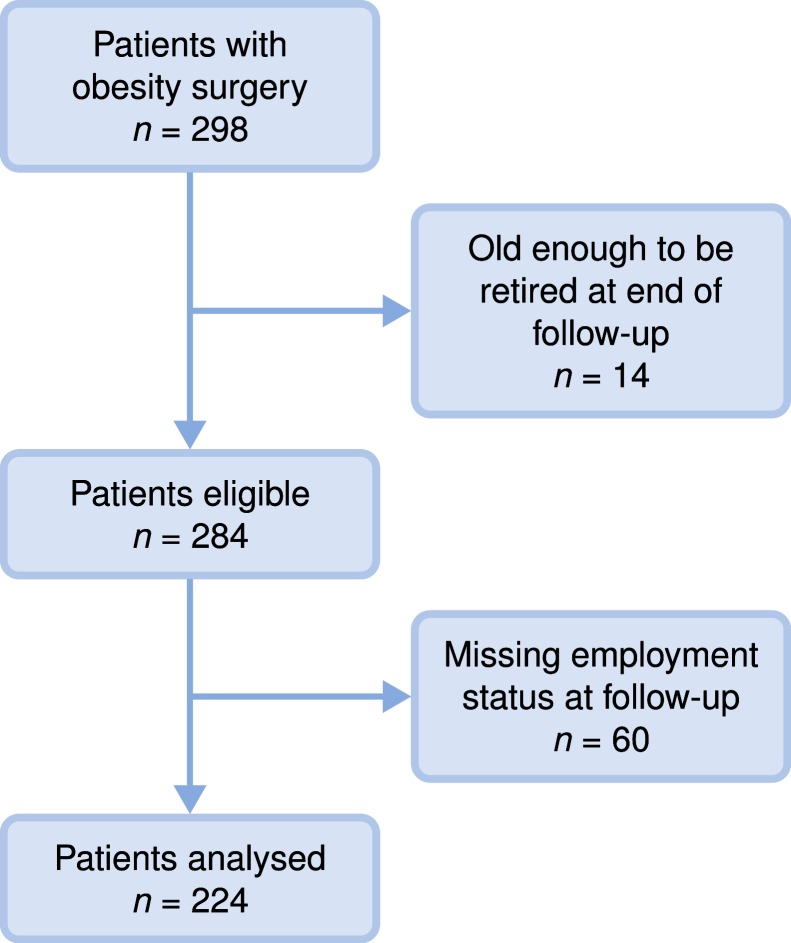
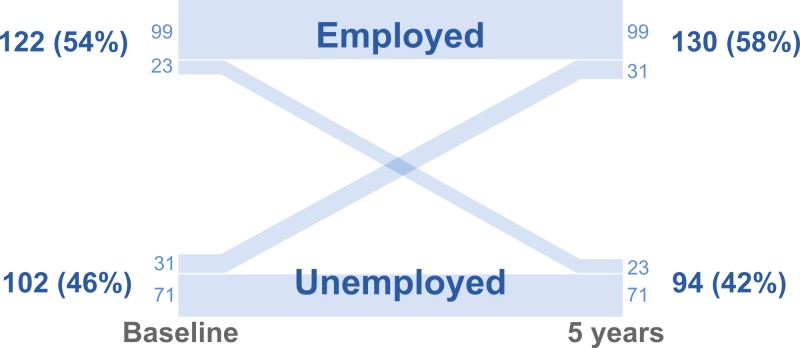
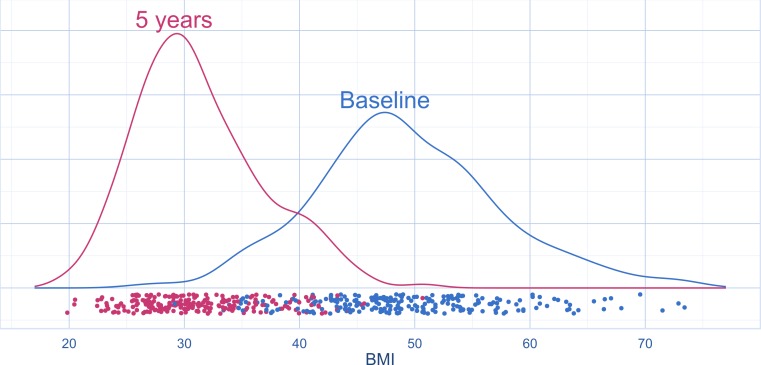
Background. Severe obesity is a risk factor for lower participation in paid work, but whether employment increases and sick leave decreases after obesity surgery is not well documented. Methods. We assessed 224 Norwegian patients with severe obesity (mean age: 40; mean BMI: 49; 61% female) regarding employment status (working versus not working) and the number of days of sick leave during the preceding 12 months, before and five years after obesity surgery (75% follow-up rate). Logistic regression analysis was used to study preoperative predictors of employment status after surgery. Results. There were no change in the employment rate over time (54% versus 58%), but the number of days of sick leave per year was significantly reduced, from a mean of 63 to a mean of 26, and from a median of 36 to a median of 4. Most of this change was attributable to patients with zero days of sick leave, which increased from 25% to 41%. Being female, older, having low education level, receiving disability pension and not being employed before obesity surgery were important risk factors for not being employed after obesity surgery. The type of obesity surgery, BMI and marital status were not useful predictors. Conclusions. Our findings suggest that undergoing obesity surgery is not associated with a higher rate of employment, although it may reduce the number of days of sick leave. Additional interventions are likely needed to influence the employment status of these patients. The significant preoperative predictors of not being employed in this study provide suggestions for further research.
背景。重度肥胖是导致从事有偿工作的参与度较低的一个风险因素,但肥胖手术后就业是否增加以及病假是否减少,目前尚无充分的文献记载。方法。我们评估了224名挪威重度肥胖患者(平均年龄:40岁;平均体重指数:49;61%为女性),了解他们在肥胖手术前及术后五年的就业状况(在职与非在职)以及前12个月的病假天数(随访率75%)。采用逻辑回归分析研究术前预测术后就业状况的因素。结果。随着时间推移,就业率没有变化(分别为54%和58%),但每年的病假天数显著减少,从平均63天降至平均26天,中位数从36天降至4天。这种变化主要归因于病假天数为零的患者,其比例从25%增至41%。女性、年龄较大、教育水平低、领取残疾抚恤金以及肥胖手术前未就业是肥胖手术后未就业的重要风险因素。肥胖手术类型、体重指数和婚姻状况并非有效的预测因素。结论。我们的研究结果表明,接受肥胖手术与更高的就业率无关,尽管它可能减少病假天数。可能需要额外的干预措施来影响这些患者的就业状况。本研究中术前未就业的显著预测因素为进一步研究提供了建议。