Malkin Alexander D, Sheehan Robert P, Mathew Shibin, Federspiel William J, Redl Heinz, Clermont Gilles
McGowan Institute for Regenerative Medicine, University of Pittsburgh, Pittsburgh, Pennsylvania, United States of America; Department of Bioengineering, University of Pittsburgh, Pittsburgh, Pennsylvania, United States of America.
Department of Computational and Systems Biology, University of Pittsburgh, Pittsburgh, Pennsylvania, United States of America.
PLoS Comput Biol. 2015 Oct 15;11(10):e1004314. doi: 10.1371/journal.pcbi.1004314. eCollection 2015 Oct.
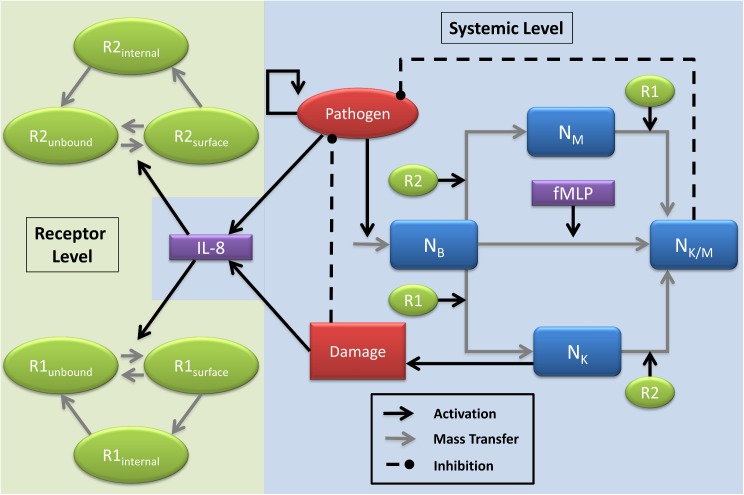
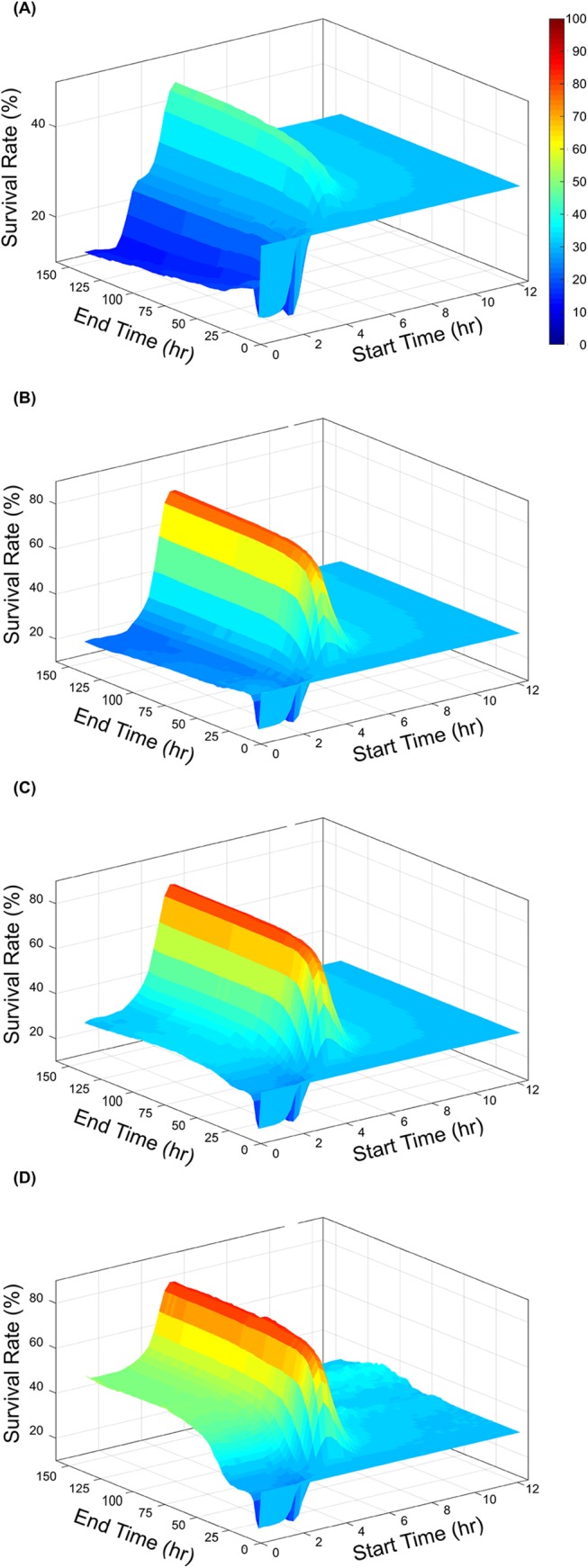
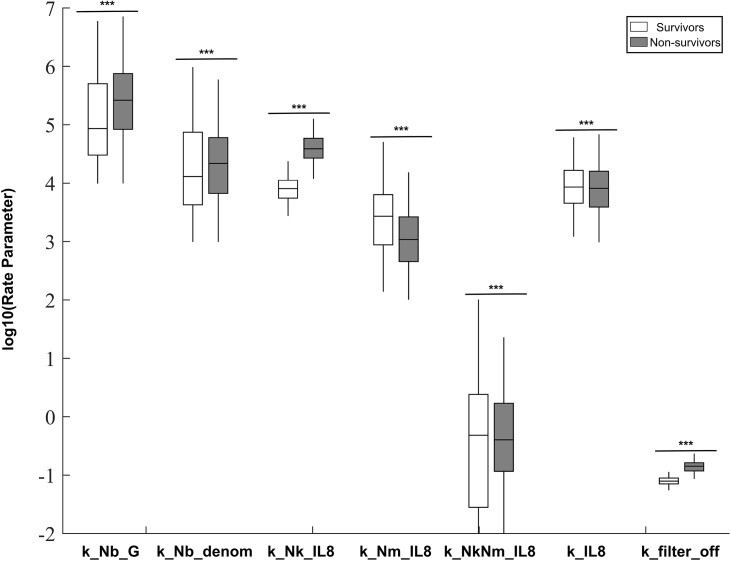
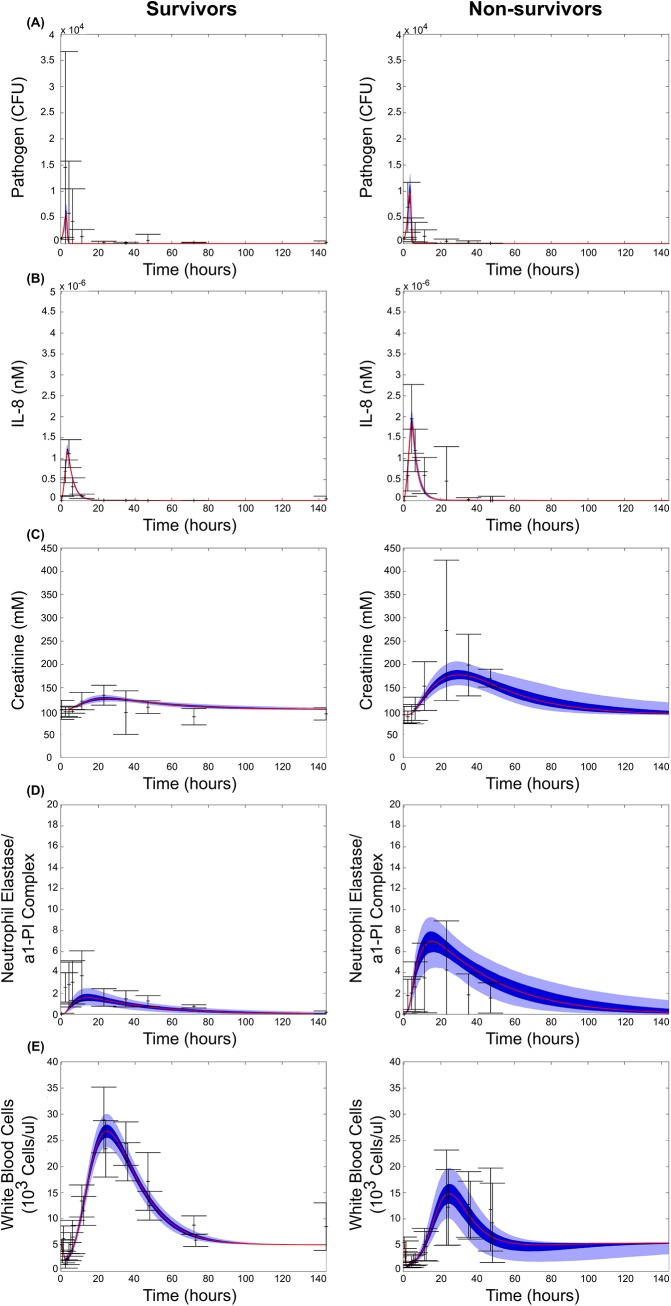
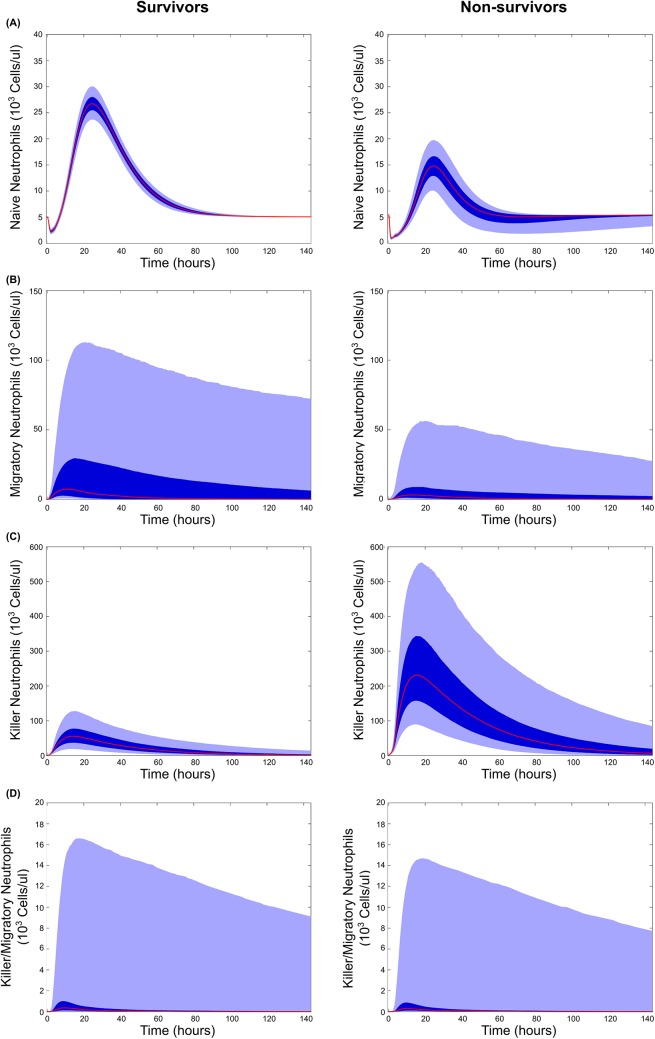
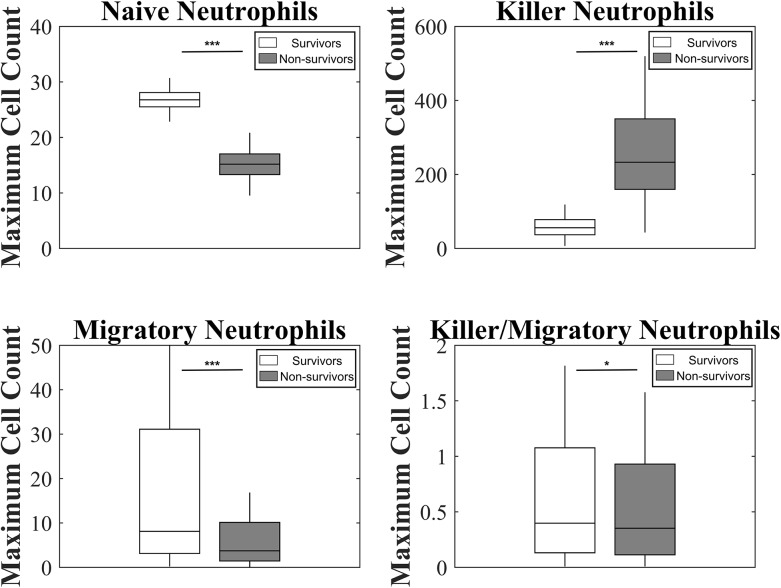
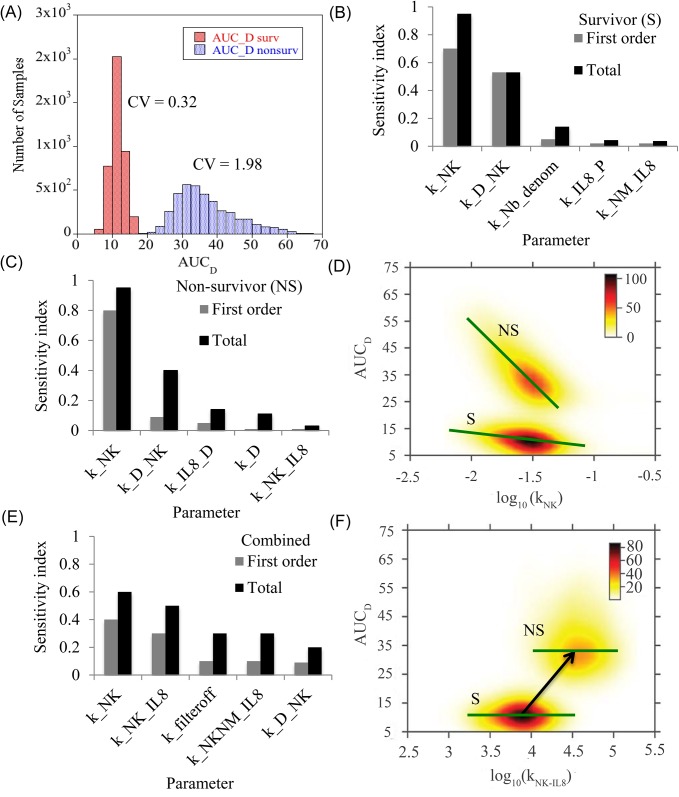
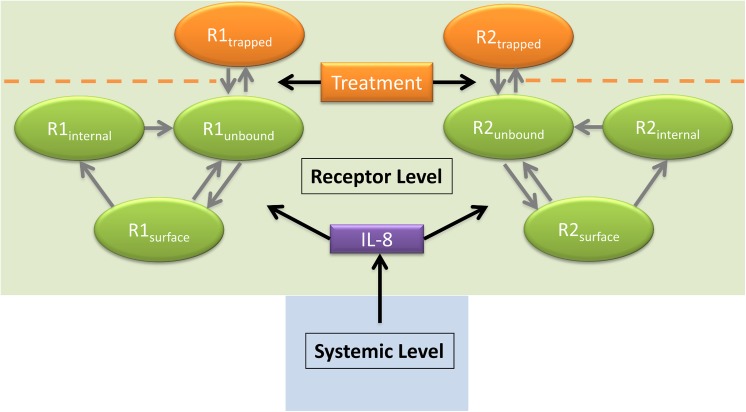
Neutrophils play a central role in eliminating bacterial pathogens, but may also contribute to end-organ damage in sepsis. Interleukin-8 (IL-8), a key modulator of neutrophil function, signals through neutrophil specific surface receptors CXCR-1 and CXCR-2. In this study a mechanistic computational model was used to evaluate and deploy an extracorporeal sepsis treatment which modulates CXCR-1/2 levels. First, a simplified mechanistic computational model of IL-8 mediated activation of CXCR-1/2 receptors was developed, containing 16 ODEs and 43 parameters. Receptor level dynamics and systemic parameters were coupled with multiple neutrophil phenotypes to generate dynamic populations of activated neutrophils which reduce pathogen load, and/or primed neutrophils which cause adverse tissue damage when misdirected. The mathematical model was calibrated using experimental data from baboons administered a two-hour infusion of E coli and followed for a maximum of 28 days. Ensembles of parameters were generated using a Bayesian parallel tempering approach to produce model fits that could recreate experimental outcomes. Stepwise logistic regression identified seven model parameters as key determinants of mortality. Sensitivity analysis showed that parameters controlling the level of killer cell neutrophils affected the overall systemic damage of individuals. To evaluate rescue strategies and provide probabilistic predictions of their impact on mortality, time of onset, duration, and capture efficacy of an extracorporeal device that modulated neutrophil phenotype were explored. Our findings suggest that interventions aiming to modulate phenotypic composition are time sensitive. When introduced between 3-6 hours of infection for a 72 hour duration, the survivor population increased from 31% to 40-80%. Treatment efficacy quickly diminishes if not introduced within 15 hours of infection. Significant harm is possible with treatment durations ranging from 5-24 hours, which may reduce survival to 13%. In severe sepsis, an extracorporeal treatment which modulates CXCR-1/2 levels has therapeutic potential, but also potential for harm. Further development of the computational model will help guide optimal device development and determine which patient populations should be targeted by treatment.
中性粒细胞在清除细菌病原体方面发挥着核心作用,但在脓毒症中也可能导致终末器官损伤。白细胞介素-8(IL-8)是中性粒细胞功能的关键调节因子,通过中性粒细胞特异性表面受体CXCR-1和CXCR-2发出信号。在本研究中,使用了一个机制性计算模型来评估和应用一种调节CXCR-1/2水平的体外脓毒症治疗方法。首先,开发了一个简化的IL-8介导的CXCR-1/2受体激活机制性计算模型,包含16个常微分方程和43个参数。受体水平动态和系统参数与多种中性粒细胞表型相结合,以生成可减少病原体负荷的活化中性粒细胞动态群体,以及在错误导向时会导致不良组织损伤的预激活中性粒细胞群体。该数学模型使用来自接受两小时大肠杆菌输注并随访最多28天的狒狒的实验数据进行校准。使用贝叶斯并行回火方法生成参数集合,以产生能够重现实验结果的模型拟合。逐步逻辑回归确定了七个模型参数作为死亡率的关键决定因素。敏感性分析表明,控制杀伤细胞中性粒细胞水平的参数影响个体的整体系统损伤。为了评估挽救策略并提供其对死亡率、发病时间、持续时间和调节中性粒细胞表型的体外装置捕获效率影响的概率预测,对其进行了探索。我们的研究结果表明,旨在调节表型组成的干预措施对时间敏感。在感染后3 - 6小时之间引入并持续72小时时,存活群体从31%增加到40 - 80%。如果在感染后15小时内未引入,治疗效果会迅速降低。治疗持续时间为5 - 24小时可能会造成严重伤害,这可能会将存活率降低到13%。在严重脓毒症中,一种调节CXCR-1/2水平的体外治疗具有治疗潜力,但也有造成伤害的可能性。计算模型的进一步开发将有助于指导优化装置的开发,并确定哪些患者群体应作为治疗目标。